
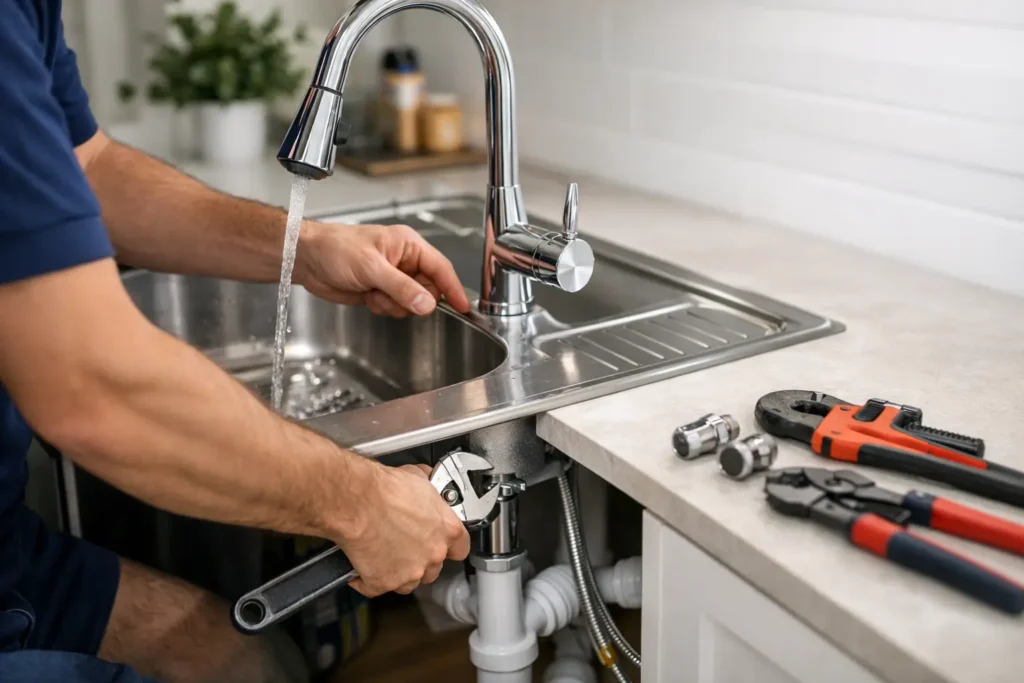
A leaking sink rarely stays a sink problem for long. What starts as a drip under the cabinet can turn into swollen wood, damaged countertops, musty odors, and a bigger plumbing bill than expected. That is why sink installation and repair should be handled with precision from the start, especially in busy kitchens and bathrooms where every day of downtime creates more frustration.
Why sink problems get expensive fast
Most homeowners notice the obvious signs first – water pooling under the basin, a slow drain, rust around the rim, or a faucet connection that never quite stays dry. The hidden damage is what usually costs more. Water can sit behind the cabinet wall, soak particleboard, loosen caulk lines, and stain flooring before the problem becomes visible.
A poor installation can create the same trouble as an old, worn-out sink. If the sink is not leveled correctly, if the drain assembly is not tightened properly, or if the seal between the sink and countertop fails, small leaks can keep working in the background for weeks. That is why repair and installation are closely connected. The quality of the setup determines how often you deal with problems later.
Sink installation and repair is not one-size-fits-all
Every sink setup has different requirements. A drop-in kitchen sink installs differently than an undermount model. A bathroom vanity sink has a different drain configuration than a deep utility sink in a laundry area. Even when two sinks look similar from above, the space below can change the job completely.
That matters because the work is not only about placing a sink in a cutout. It often includes checking shut-off valves, replacing drain components, aligning the faucet, sealing edges, confirming cabinet clearance, and making sure the new sink works with the countertop and plumbing already in place. In some homes, installation is straightforward. In others, older plumbing, uneven surfaces, or water damage underneath turn a simple project into a repair-first job.
When a sink should be repaired instead of replaced
Not every sink issue calls for a full replacement. If the basin itself is in good condition, a targeted repair may be the smarter move. Loose drain fittings, worn plumber’s putty, failed caulk, clogged traps, dripping supply lines, and unstable mounting hardware can often be corrected without removing the entire unit.
This is usually the better route when the sink matches existing countertops or cabinetry and the homeowner wants to avoid unnecessary disruption. It is also a practical option when the goal is to restore function quickly. A well-done repair can extend the life of the sink and protect surrounding materials from water damage.
That said, repair has limits. If the sink is cracked, heavily corroded, badly stained, or no longer fits the way the space is being used, replacement often makes more sense than putting money into a fixture that is already near the end of its lifespan.
Signs it is time for a new sink installation
Some sink problems keep coming back because the fixture itself is no longer doing its job. Recurring leaks around the edges, visible cracks, rust that has spread beyond the finish, and mounting failure are all signs that replacement should be considered.
Function matters too. Many homeowners replace sinks during kitchen or bathroom updates because the old layout no longer works. A shallow kitchen sink may be frustrating in a busy household. A bathroom sink with limited surface space may create daily clutter. If the fixture is outdated, hard to clean, or incompatible with a new faucet or countertop, replacement can improve both appearance and performance.
A new installation also gives you the chance to fix issues that the old sink may have been hiding, such as poor drain slope, weak shut-off valves, or deteriorated plumbing connections below the cabinet.
What a professional installation should include
A proper sink installation starts before the sink is set in place. Measurements need to be confirmed, the surrounding materials need to be checked, and the plumbing needs to be evaluated so there are no surprises halfway through the job.
Once work begins, the sink should be installed with attention to fit, support, and sealing. That includes secure mounting, correct drain assembly, proper connection to supply lines, and careful sealing at all contact points. In kitchens, faucet placement and countertop compatibility are especially important. In bathrooms, tight vanity space often makes precision even more critical.
Just as important is testing. The system should be checked for leaks, drainage performance, stability, and proper alignment before the work is considered complete. A sink can look finished and still have a slow drip underneath. That is not a small detail. It is the difference between a job that lasts and one that causes another service call.
The value of one company handling supply and installation
One of the biggest delays in sink projects is not labor. It is waiting on materials, coordinating different contractors, or finding out too late that the selected sink does not match the cabinet or countertop opening. Homeowners feel that delay immediately.
Working with one team that can supply the sink, handle the installation, and address related plumbing issues keeps the project moving. It also reduces finger-pointing. If a leak appears later, you do not want to hear that the installer blames the product supplier and the supplier blames the plumbing setup.
That all-in-one approach matters even more during larger kitchen and bathroom updates. When cabinets, countertops, faucets, and sink installation are handled together, there is less room for measurement mistakes, scheduling gaps, and installation conflicts. For homeowners, it means fewer calls, fewer delays, and clearer accountability.
Emergency repairs need speed and accuracy
Some sink issues can wait a day or two. Others cannot. A burst supply line, a failed drain connection, or a sink leak that is flooding the vanity base needs immediate attention. In those situations, speed matters, but rushed work that misses the real cause only creates another emergency later.
The right response is fast diagnosis and a repair that actually solves the problem. That may mean replacing worn valves, rebuilding the drain connection, resealing the sink, or identifying water damage that needs to be addressed before the fixture is reinstalled. Emergency plumbing service is not only about stopping water. It is about protecting the rest of the room from avoidable damage.
Kitchen and bathroom sinks have different demands
Kitchen sinks take heavy daily use. They deal with grease, food debris, larger cookware, and more frequent cleaning. Installation has to account for workload, depth, faucet compatibility, and how the sink interacts with countertops and cabinet storage.
Bathroom sinks usually operate in tighter spaces and often involve vanity tops, mirror placement, and compact plumbing connections. The work may look simpler, but small clearances leave less room for error. A misaligned drain or poor seal can quickly damage the vanity below.
That is why sink installation and repair should always be matched to the room, the fixture type, and the way the household actually uses the space.
What homeowners should expect from the right contractor
Homeowners should not have to chase updates, coordinate separate suppliers, or wonder whether the work was done correctly behind the cabinet doors. The right contractor shows up prepared, explains what needs to be done, and handles the job with accountability.
That means clear recommendations, realistic timelines, and workmanship that holds up after the crew leaves. It also means being ready to handle related issues if they appear during the job, whether that is replacing worn plumbing parts, adjusting for countertop conditions, or correcting an old installation that was never done properly.
Cobo Kitchen Master & Home Repair is built around that kind of service – fast response, in-stock materials, skilled installation, and repair work that does not leave loose ends behind.
A sink is one of the most used fixtures in your home. When it is installed right and repaired the right way, daily life stays simple. When it is not, the damage spreads quietly. If your sink is leaking, outdated, unstable, or holding up a larger remodel, the best next step is straightforward: fix it properly now before it becomes a bigger project later.