
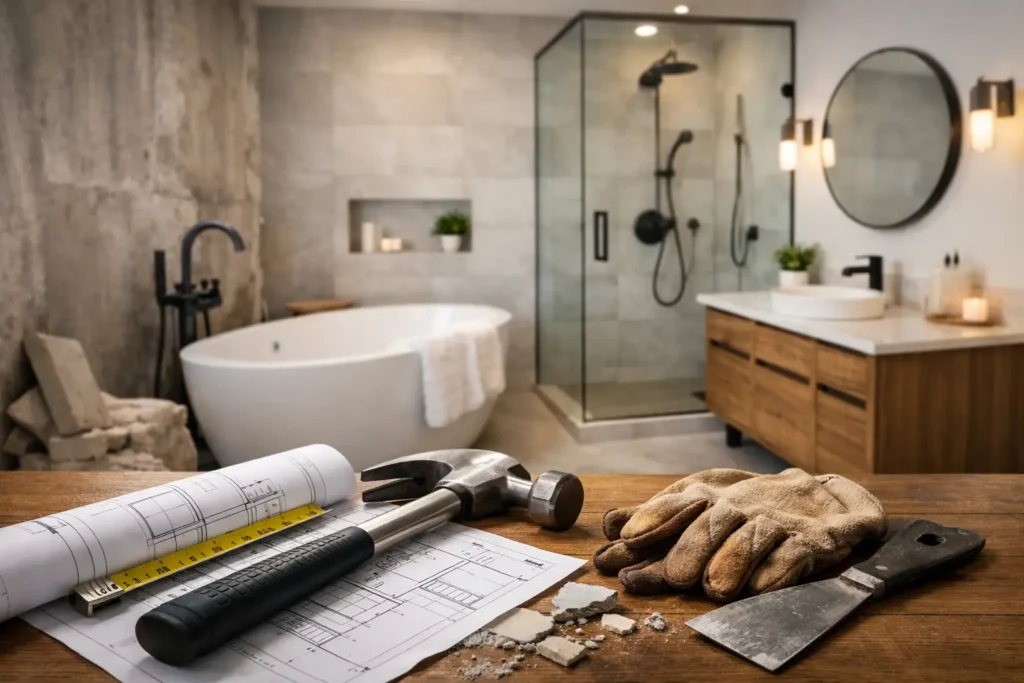
A bathroom can look like a simple room until you open a wall, move a drain, or discover water damage behind the vanity. That is why a homeowner guide to bathroom remodeling should start with the work behind the finished surfaces. Tile, paint, and fixtures matter, but the quality of the plumbing, waterproofing, electrical work, and installation determines whether your new bathroom holds up.
For busy homeowners, the goal is not to turn a renovation into a second job. The goal is a clear plan, available materials, one accountable team, and work completed without unnecessary delays.
Start With the Problems You Need to Solve
Before choosing a vanity color or shower tile, identify what is not working in the current bathroom. A cramped layout, poor storage, weak water pressure, recurring leaks, outdated plumbing, damaged flooring, or poor ventilation each call for a different scope of work.
Be direct about how the bathroom is used. A primary bathroom may need a larger shower, double vanity, and better lighting. A family bathroom needs durable finishes, storage, and fixtures that can handle daily use. A guest bathroom may benefit most from a practical update that improves appearance without moving plumbing.
Changing the layout can improve the room, but it also raises the cost and complexity. Moving a toilet, shower, or sink may require new drain lines, venting, framing, permits, and repairs to surrounding walls and floors. Keeping core plumbing in place often saves time and money. It depends on whether the current layout is inconvenient or simply outdated.
Build a Budget Around the Work, Not Just the Look
Bathroom remodeling costs are driven by more than fixtures. Demolition, plumbing corrections, electrical upgrades, subfloor repair, wall preparation, waterproofing, tile labor, cabinetry, countertops, and finishing work all need room in the budget.
Start with a target investment, then separate your needs from upgrades. Necessary work includes leak repair, safe electrical connections, proper ventilation, sound plumbing, and waterproofed shower construction. Upgrades might include heated flooring, custom glass, premium tile, or a larger vanity. Both can be worthwhile, but they should not compete with the essentials.
Keep a contingency amount for conditions that cannot be seen before demolition. Older homes may have hidden water damage, corroded pipes, mold, weak framing, or outdated wiring. A contractor who promises an exact final number without discussing potential hidden conditions is not giving you the full picture.
You should also ask what is included in the estimate. Confirm whether it covers material supply, delivery, demolition, disposal, plumbing, electrical work, wall repair, tile installation, fixture installation, cleanup, and warranty support. A lower quote can become expensive when critical steps are treated as extras.
The Homeowner Guide to Bathroom Remodeling Materials
Material availability affects your schedule more than most homeowners expect. A renovation can stall for weeks when a cabinet, countertop, shower base, faucet, or tile is backordered. Choose products early and confirm that they are in stock before demolition begins whenever possible.
For vanities and cabinets, prioritize construction, usable storage, and moisture resistance. A good-looking cabinet is not a good investment if its doors swell or its hardware fails after regular bathroom use. Measure carefully around door swings, toilet clearances, drawers, and outlets. A larger vanity can add storage, but only if it does not make the room feel tight.
Countertop selection should balance appearance with maintenance. Quartz is a popular choice because it is durable and easy to clean. Natural stone offers a distinct look but may require more care. The right choice depends on your budget, the desired style, and how much maintenance you are willing to handle.
For showers, waterproofing is non-negotiable. Tile and grout are not waterproof on their own. The waterproofing system behind the finished surface is what protects framing and adjacent rooms from moisture damage. Ask how the shower will be waterproofed, how corners and transitions are handled, and whether the work will be tested before tile goes up.
Flooring needs traction, durability, and proper installation. Large-format tile can create a clean look with fewer grout lines, but it may require more floor preparation to sit correctly. Smaller tile can provide better grip in wet areas. Avoid making a decision on appearance alone.
Choose Fixtures That Work Every Day
A bathroom renovation should improve daily routines, not create new frustrations. Think about water flow, cleaning, storage, lighting, and access before selecting fixtures.
A shower niche can reduce clutter, but it must be placed where bottles are easy to reach and where it will not interfere with plumbing. Wall-mounted faucets free up counter space but can make future repairs more involved because the valve is inside the wall. A floating vanity can make a small room feel more open, while a floor-mounted vanity may offer more storage and a simpler installation.
Lighting should be layered. Overhead lighting handles general visibility, while properly placed vanity lighting helps with shaving, makeup, and grooming. An exhaust fan is equally practical. It removes moisture that can lead to peeling paint, mildew, and long-term damage. If the bathroom is frequently humid, make sure the fan is sized correctly and vents outside, not into an attic or wall cavity.
Hire One Team That Can Handle the Full Scope
Bathroom work crosses multiple trades. If one company handles demolition while another handles plumbing, another installs cabinets, and another sets tile, the homeowner often ends up managing schedule conflicts and finger-pointing when something goes wrong.
A full-service contractor gives you one point of contact and clearer accountability. Ask who will coordinate the work, whether licensed plumbing and electrical professionals are involved when required, how changes are approved, and what workmanship guarantee is provided.
Before work starts, get answers to five practical questions:
- What materials are in stock and ready to install?
- What work requires permits or inspections?
- What is the expected sequence from demolition through final cleanup?
- How will unexpected damage or plumbing issues be handled?
- Who is responsible for correcting installation concerns after completion?
Cobo Kitchen Master & Home Repair is built around this all-in-one approach, combining available cabinets, countertops, fixtures, installation, plumbing, and interior repair work under one team. That reduces the delays that come from chasing separate suppliers and subcontractors.
Plan the Schedule Before Demolition
The fastest bathroom remodel is not the one where work begins first. It is the one where decisions, measurements, and materials are ready before the old bathroom is removed. Finalize the vanity size, sink configuration, faucet style, tile, shower components, lighting, mirror, accessories, and countertop before demolition whenever possible.
A typical project follows a logical order: protection and demolition, plumbing and electrical rough-in, inspections if required, wall and floor preparation, waterproofing, tile, cabinetry and countertop installation, fixture connections, finishing work, and final walkthrough. The sequence can change based on the room and materials, but skipping steps to save a day often creates expensive repairs later.
If this is your only full bathroom, make a temporary plan. Coordinate shower access, protect nearby rooms from dust, and ask when water will be off. Clear communication matters most when the work affects your daily routine.
Do Not Skip the Final Walkthrough
Before the project is considered complete, operate everything. Turn on hot and cold water, check drainage, test switches and outlets, run the exhaust fan, open every cabinet and drawer, inspect caulk lines, and look closely at tile edges and grout joints. Doors should align, fixtures should be secure, and water should not pool where it should drain.
A professional bathroom remodel is not just a room that photographs well on the final day. It is a room that stays dry, functions properly, and gives your household fewer things to worry about. Plan the work carefully, choose materials that are ready, and put the job in the hands of a team prepared to finish it right.