
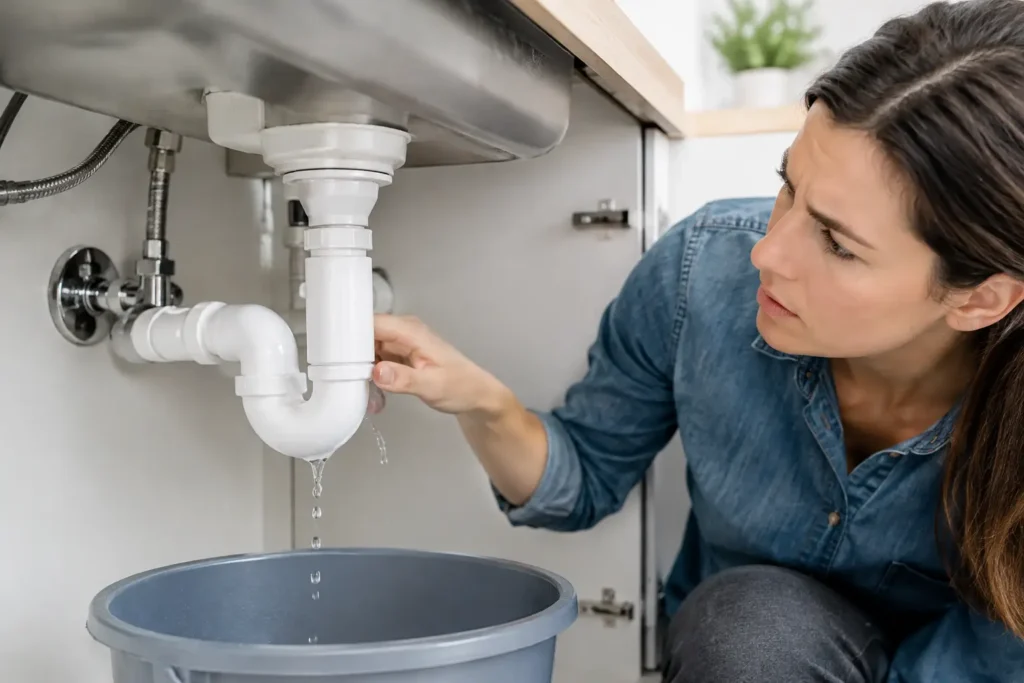
A few drops under the cabinet can turn into swollen flooring, damaged cabinets, mold, and an expensive repair faster than most homeowners expect. If you are asking, why is my sink leaking, do not assume the sink itself is the problem. The location of the water – at the faucet, around the drain, beneath the cabinet, or inside the wall – usually points directly to the failed part.
The good news is that many sink leaks have a clear cause. The key is finding it before water damages the areas you cannot see. Start by drying everything thoroughly, then use the sink one function at a time. Run the faucet, fill the basin, drain it, operate the sprayer, and check the cabinet after each step. That simple process can separate a minor connection issue from a repair that needs a professional immediately.
Why Is My Sink Leaking Under the Cabinet?
Water under the sink usually comes from the drain assembly, the water supply lines, the faucet connections, or an appliance connection such as a dishwasher drain hose. Do not rely on the size of the puddle. A slow leak can run down a pipe, collect behind stored items, and soak cabinet material for weeks before it becomes obvious.
Place dry paper towels beneath the drain pipes and around each connection. Then run cold water, hot water, and finally a full basin of water. Paper towels reveal the first point of moisture better than your eyes alone.
A loose or worn drain connection
The curved pipe beneath the sink, called the P-trap, has slip-joint nuts that can loosen over time. A loose connection may drip only while water is draining. Hand-tightening the nut may stop a minor drip, but do not overtighten it. Plastic fittings can crack, and overtightened metal fittings can damage washers.
If the connection still leaks after a careful adjustment, the washer inside may be worn, crooked, or missing. Replacing the washer or the trap assembly is often more reliable than repeatedly tightening a failing connection.
A cracked drainpipe or corroded fitting
Older metal drainpipes can corrode from the inside out. Plastic pipes may crack after being bumped by cleaning supplies, storage bins, or a garbage disposal that has shifted. These leaks often leave staining, rust, or a chalky buildup around the damaged section.
A cracked pipe should be replaced, not taped as a long-term fix. Tape and sealants may slow the drip temporarily, but they cannot restore a pipe that has lost its structural integrity.
A leaking basket strainer or sink drain
If water appears around the top of the drainpipe only when the sink is full, the seal between the sink basin and the drain may have failed. In a kitchen sink, this is often the basket strainer. In a bathroom, it may be the pop-up drain flange.
The repair requires removing the drain hardware, cleaning away old plumber’s putty or sealant, and reinstalling it with the correct materials. This is manageable for an experienced homeowner, but a poor seal can send water directly into a cabinet base. If your cabinet is already particleboard and showing swelling, it is worth having the repair done correctly the first time.
Faucet Leaks: Drips, Handles, and Sprayers
Not every sink leak ends up under the cabinet. A faucet that drips from the spout, leaks around the handle, or sprays water at the base can waste water and damage the countertop or backsplash.
A drip from the faucet spout usually means an internal part is worn. Depending on the faucet type, that may be a cartridge, washer, O-ring, valve seat, or ceramic disc. Replacing the correct part can solve the issue, but identifying the faucet model matters. Similar-looking cartridges are not always interchangeable.
Water collecting at the faucet base can be more deceptive. It may be splashback from normal use, but if it returns after the counter is dried and no one is using the sink, the faucet body or supply connection may be leaking. Water can travel through the faucet mounting holes and appear underneath the counter, where it damages cabinets without leaving a visible drip above.
Pull-down and side sprayers also develop leaks at the hose, spray head, or connection beneath the faucet. Run the sprayer while someone watches inside the cabinet with a flashlight. If water appears only when the sprayer is activated, you have narrowed the problem quickly.
Check the Water Supply Lines Carefully
The hot and cold supply lines connect the shutoff valves to the faucet. A leak here can be small, but it is pressurized, which means it may continue even when the faucet is off.
Look for moisture at the valve, the nut connecting the supply line, and the faucet connection above. Signs of trouble include green corrosion on copper components, rust, mineral deposits, a damp cabinet floor, or water beading around a braided hose.
If a supply line is actively dripping, close the shutoff valve beneath the sink. Turn it clockwise until it stops, then test the faucet to confirm the water is off. If the valve will not close or is leaking at the valve stem, shut off the home’s main water supply and arrange for plumbing service. Forcing an old valve can make the situation worse.
Supply lines are inexpensive compared with cabinet and floor repairs. If a braided line is old, kinked, corroded, or showing any damage, replacement is usually the smart decision. This is not an area where a temporary patch provides much protection.
Leaks From the Garbage Disposal or Dishwasher Connection
Kitchen sinks add a few more possible failure points. A garbage disposal can leak from the sink flange at the top, the dishwasher inlet, the discharge tube, or the disposal housing itself. If the disposal housing is cracked, replacement is generally the practical repair.
Check the disposal only after turning off power at the switch and breaker. Never put your hand inside the unit. Run water through both sink basins, then operate the disposal briefly while inspecting the connections below.
A dishwasher drain hose can also leak beneath the sink, especially where it connects to the disposal or drain tailpiece. If the leak happens during a dishwasher cycle rather than while using the sink, inspect that hose and clamp first. Keep in mind that a dishwasher leak may be caused by a backup in the sink drain, not just a loose hose.
When a Sink Leak May Be Coming From the Wall
If the cabinet is wet but pipes and connections are dry, do not ignore it. The water may be coming from inside the wall, from the countertop seam, or from another nearby fixture. This is more likely when you see staining on the wall, bubbling paint, a persistent musty smell, or moisture that returns even when the sink has not been used.
A hidden leak needs prompt attention. Waiting to see whether it gets worse can allow mold growth and damage framing, drywall, insulation, and flooring. A professional can isolate the water source without opening more wall than necessary.
What to Do Before the Damage Spreads
Once you find a leak, protect the area while you decide on the repair. First, stop the water source if the leak is active. Clear out the cabinet, dry the area completely, and remove wet mats, boxes, or stored products. Run a fan if the cabinet base or nearby flooring is damp.
Do not keep using the sink if the leak is tied to a drain connection, faucet base, supply line, or disposal. A small drip may seem manageable, but repeated use gives water more time to reach cabinet seams and subflooring. Take clear photos of the leak and any visible damage before repairs begin, especially if you may need to document the issue for insurance or a property manager.
For a simple loose drain nut, a careful adjustment may be enough. For cracked pipes, failed seals, corroded shutoff valves, disposal leaks, or any water coming from a hidden location, professional repair is the safer route. The trade-off is straightforward: a quick fix may save time today, but the wrong repair can create a larger water-damage job tomorrow.
When to Call a Plumber Right Away
Call for help promptly if you cannot identify the source, the leak continues with the faucet off, a shutoff valve does not work, water is reaching electrical components, or cabinet materials are swelling. You should also call if you see mold, smell sewage, notice water near walls or flooring, or have a leak from a newly installed sink, faucet, countertop, or disposal.
Cobo Kitchen Master & Home Repair can handle the plumbing repair and the surrounding kitchen or bathroom work when water has affected cabinets, sinks, faucets, or countertops. One team means less time coordinating separate suppliers and repair crews.
A sink leak is rarely something to put off until the weekend. Find the source, stop the water, and make the repair before a small plumbing problem becomes a cabinet, floor, and renovation problem.