
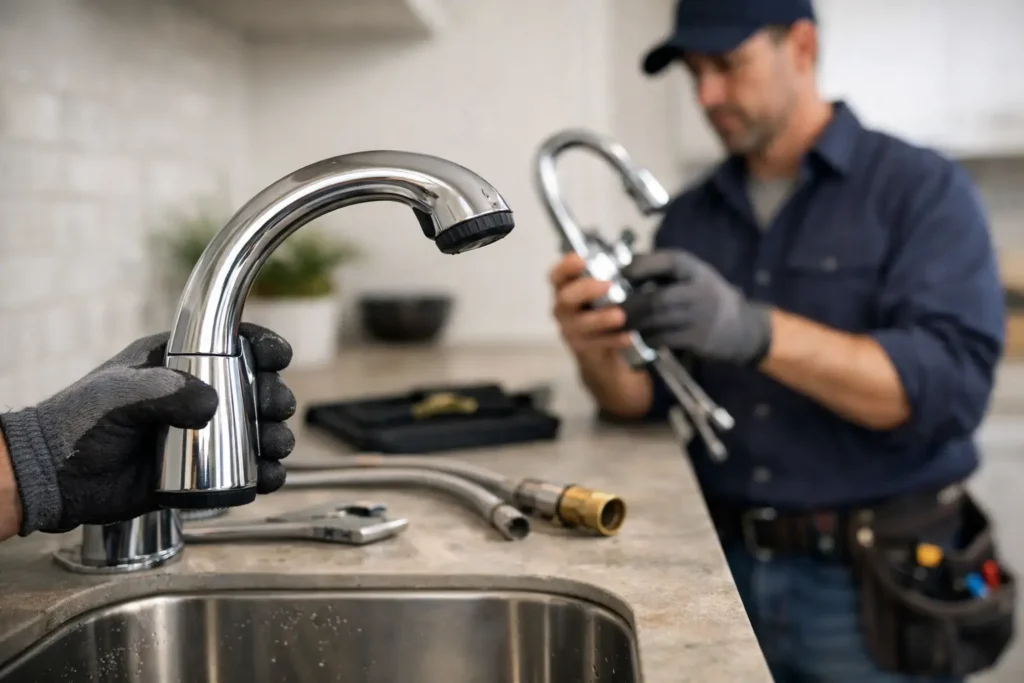
A faucet can look like a small problem until it starts dripping all night, leaking under the sink, or refusing to shut off completely. That is usually when a faucet replacement service stops being optional and starts feeling urgent. For most homeowners, the real issue is not just the fixture itself – it is the time, water damage risk, and hassle of figuring out who can supply the right faucet and install it correctly without dragging the job out.
What a faucet problem is really costing you
A worn-out faucet does more than waste water. In kitchens, it can slow down daily cleanup, make cooking harder, and leave you dealing with puddles around the sink base. In bathrooms, a faulty faucet can stain fixtures, damage vanities, and create the kind of constant annoyance that should have been fixed weeks ago.
Some problems are obvious, like a visible crack or a handle that no longer works. Others build up slowly. You may notice lower water pressure, rust around the base, loose mounting, or recurring leaks even after a quick repair. Those are usually signs that the faucet is past the point where a simple adjustment makes sense.
This is where homeowners often lose time. They try one more patch, one more store visit, one more online part order. Meanwhile, the faucet keeps failing. In many cases, replacement is the faster and more cost-effective move.
When a faucet replacement service makes more sense than a repair
Not every faucet needs to be replaced right away. A minor cartridge issue or a worn washer can sometimes be repaired. But there is a point where repair turns into repeat spending. If the faucet is older, visibly corroded, or leaking from multiple areas, replacement is usually the better call.
A faucet replacement service is also the right move when the fixture no longer matches the way you use the space. Maybe your kitchen faucet has poor reach, no sprayer, or weak flow. Maybe your bathroom faucet is outdated and you are already upgrading the vanity or countertop. Replacing the faucet during a broader update saves labor and avoids doing the same area twice.
There is also the issue of compatibility. Older faucets are not always worth chasing parts for, especially if the finish is deteriorating or the mounting hardware is failing underneath. A new faucet gives you a clean installation, current performance, and fewer surprise issues.
Common signs replacement is the better option
If your faucet drips constantly, leaks under the sink, squeals when turned on, wobbles at the base, or shows visible rust, replacement should be on the table. The same goes for faucets with broken handles, inconsistent hot and cold control, or damage caused by hard water buildup.
If you have already repaired the same faucet once and the problem came back, that is another clear sign. At that point, the fixture is usually telling you it is done.
Why proper installation matters more than most homeowners expect
A faucet swap sounds simple until the shutoff valves are stuck, the mounting nuts are corroded, or the sink opening does not match the new fixture. What starts as a quick project can turn into a half-day problem fast, especially in older kitchens and bathrooms.
Proper installation is not just about tightening connections. The faucet has to sit correctly, seal properly, align with the sink, and connect without stressing the supply lines. If any part of that is off, you can end up with hidden leaks, cabinet damage, or premature wear.
This is one reason homeowners often prefer a full-service company instead of trying to coordinate product selection, plumbing work, and any related sink or countertop adjustments separately. One team can evaluate the setup, confirm fit, and handle the installation without delays caused by back-and-forth scheduling.
Speed matters when the faucet is actively failing
A lot of service calls happen after a faucet problem has already interrupted the household. Maybe the kitchen sink is barely usable. Maybe the bathroom faucet will not shut off. Maybe water is showing up inside the vanity cabinet. In those situations, waiting days just to get started is not a good option.
Fast response matters, but so does readiness. A company that can install a faucet quickly is only helpful if it can also move the job forward without material delays or finger-pointing between suppliers and installers. That is where a one-call approach makes a difference.
For homeowners who are already dealing with a plumbing issue, speed is not about convenience alone. It is about limiting damage, restoring function, and getting the room back in service.
Choosing the right faucet for the space
A faucet should fit the room, the sink, and the way you use it. In kitchens, that often means looking at spout height, reach, spray function, and clearance under cabinets or windows. In bathrooms, it means matching the faucet to the sink type, countertop drilling, and daily traffic in the room.
Looks matter, but performance matters more. A stylish faucet that splashes badly, feels flimsy, or does not fit the existing sink layout is not a smart upgrade. On the other hand, a well-chosen replacement can improve the way the whole space works without requiring a full remodel.
There are trade-offs. A taller kitchen faucet may be more useful for filling pots, but it can create splash issues with a shallow sink. A wall-mounted bathroom faucet can look clean and modern, but installation is more involved than a standard deck-mounted model. The best choice depends on the plumbing setup, the sink configuration, and how much you want to change.
Kitchen and bathroom replacements are not the same job
Kitchen faucets usually see heavier daily use and often involve additional features like pull-down sprayers, soap dispensers, or filtered water connections. Bathroom faucets are often more compact, but they can be tied into vanity upgrades, backsplash work, or sink replacement.
That difference matters because installation conditions change from room to room. Access under a kitchen sink may be tight because of disposal units or storage. A bathroom vanity may have limited clearance or older plumbing that needs attention at the same time. An experienced installer plans for those details instead of treating every faucet as a basic swap.
What to expect from a professional faucet replacement service
A professional service should start by identifying the actual condition of the existing faucet and the surrounding plumbing. If the issue is isolated and a repair truly makes sense, you should hear that clearly. If replacement is the smarter move, the recommendation should be based on condition, function, and value – not guesswork.
Once the faucet choice is confirmed, the work should include removal of the old unit, secure installation of the new one, connection testing, and a check for leaks and proper flow. If shutoff valves, supply lines, or sink components are also worn, those issues should be flagged before they turn into a callback.
This is also where accountability matters. Homeowners do not want a rushed install that creates a new leak behind the scenes. They want a finished job that works the way it should and holds up.
Why homeowners choose one company instead of juggling multiple vendors
A faucet replacement is often part of a bigger issue. Maybe the sink is being updated. Maybe the vanity is being replaced. Maybe the countertop opening needs attention, or the plumbing underneath has to be corrected. Coordinating separate companies for each step slows everything down.
That is why many homeowners prefer a contractor that can handle materials, plumbing work, and related repairs under one roof. It removes confusion and keeps the job moving. Cobo Kitchen Master & Home Repair is built around that kind of service – fast execution, in-stock materials, and one team that can take care of the work without unnecessary delays.
If your faucet is leaking, outdated, or simply no longer worth fixing, the best next step is usually the simplest one: replace it properly, before a small plumbing issue turns into cabinet damage, wasted water, or another week of inconvenience.