
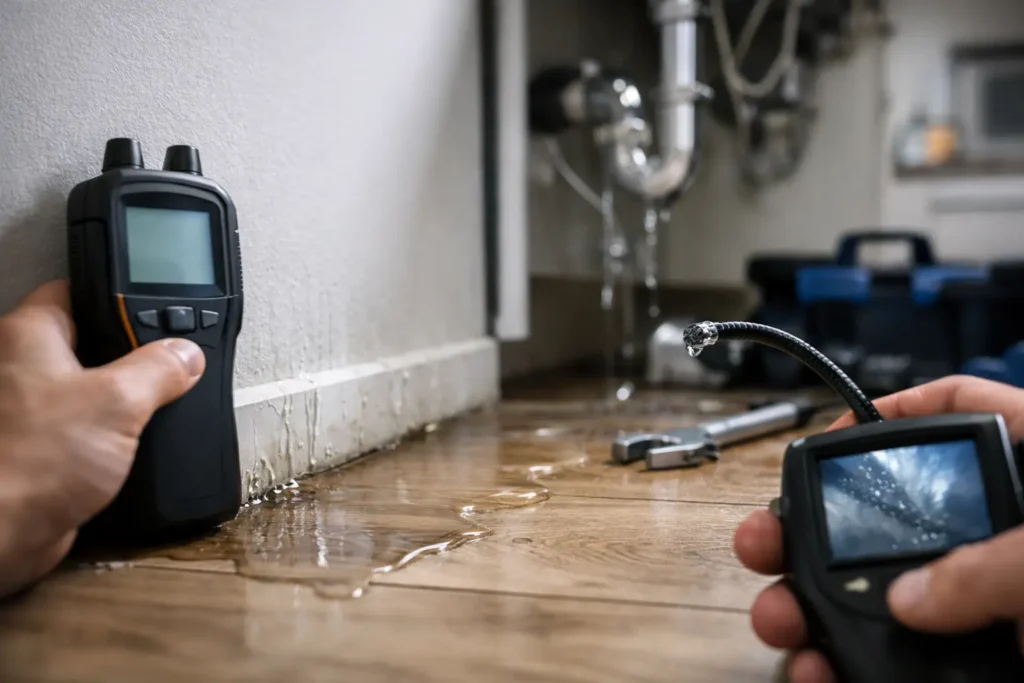
A water stain under the kitchen sink, a bathroom floor that stays warm or damp, or a water bill that suddenly climbs can point to one problem: water is escaping where it should not. Water leak detection gives homeowners a chance to stop that problem before it reaches cabinets, drywall, flooring, and the rooms below.
A small leak rarely stays small. Water follows gravity, seeps behind finished surfaces, and creates damage long before a pipe finally bursts or a ceiling starts dripping. The right response is fast inspection, clear answers, and a repair that addresses the source instead of covering up the evidence.
Why Early Water Leak Detection Saves Money
Leaks do not always announce themselves with a flood. A slow drip from a supply line, drain connection, toilet seal, or pipe inside a wall can waste water every day while quietly weakening the materials around it. Wood cabinet bases can swell, drywall can soften, paint can blister, and flooring can separate from the subfloor.
Early detection reduces the scope of the repair. Catching a loose fitting under a sink may require a straightforward plumbing repair. Waiting until moisture damages the vanity, countertop, wallboard, and adjacent flooring can turn one repair into a larger bathroom or kitchen renovation.
There is also a health concern. Ongoing moisture can lead to mold growth, especially in dark, enclosed areas behind cabinets, inside vanity bases, and beneath flooring. The goal is not just to dry the visible surface. It is to find the active source, stop it, and make sure affected materials are properly repaired.
Signs You May Have a Hidden Leak
Homeowners often notice the results of a leak before they see the water itself. If one of these issues appears, do not assume it is only a cosmetic problem.
- Unexplained higher water bills: If household water use has not changed but the bill has, a running toilet, underground line issue, or hidden plumbing leak may be responsible.
- Musty odors: A persistent damp smell in a kitchen, bathroom, laundry area, or basement often means moisture is trapped behind a finished surface.
- Stains, bubbling paint, or warped materials: Discoloration on ceilings and walls, peeling paint, soft baseboards, and swollen cabinet panels are all warning signs.
- Low water pressure or a constantly running meter: Pressure changes can signal a supply line issue. If the water meter moves when every fixture is off, water may be leaking somewhere on the property.
- Warm spots on floors or unexplained puddles: A warm patch can point to a hot water line leak. Damp flooring around toilets, tubs, dishwashers, and refrigerators needs immediate attention.
Not every stain means there is an active leak. It could be old damage from a repair that was already completed. That is why professional inspection matters. A qualified plumber can determine whether moisture is current, where it is coming from, and what needs to be opened or replaced.
Water Leak Detection Methods That Find the Source
Good water leak detection is not guesswork. The process starts with the simplest checks and moves toward more targeted testing when the source is hidden.
Fixture and cabinet inspections
Many leaks begin at accessible connections. A plumber will inspect shutoff valves, supply lines, drain traps, disposal connections, dishwasher hoses, refrigerator water lines, faucets, toilets, and tub or shower plumbing. Under-sink cabinet bases are a common trouble spot because a slow leak can remain unnoticed until the wood has already deteriorated.
In bathrooms, the toilet supply line, fill valve, wax ring, and shower valve connections deserve close attention. Water around the base of a toilet may be caused by condensation or a missed splash, but it can also indicate a failing seal that is allowing water into the floor.
Meter and pressure testing
When no visible source is found, meter testing can help confirm whether water is escaping. With fixtures and appliances off, a moving meter is a strong sign that water is still flowing somewhere. Pressure testing may also help identify problems in supply lines that are concealed behind walls or beneath floors.
These checks help narrow the search before unnecessary demolition begins. That matters in finished kitchens and bathrooms, where opening walls or removing cabinets without a clear reason creates added cost and disruption.
Moisture and targeted access checks
Moisture readings can identify damp areas behind walls, under flooring, or inside cabinet structures. Once the likely source is located, a small targeted opening may be needed to inspect and repair the pipe or fitting. The best approach protects as much of the finished room as possible while still allowing the repair to be done correctly.
A leak from a drain line behaves differently from a pressurized water line. Drain leaks may only show up when a sink, shower, dishwasher, or washing machine is running. Supply line leaks can continue around the clock. Identifying when the moisture appears is one of the fastest ways to narrow down the cause.
What to Do When You Find Water
Start by protecting the home and limiting further damage. If water is actively flowing, turn off the fixture shutoff valve if it is safe and accessible. For a major leak, shut off the main water supply. Move towels, storage items, and small appliances away from the affected area, but do not use electrical equipment near standing water.
Then document what you see. Photos of the water source, damaged area, and any affected belongings can be useful for repair planning and insurance discussions. Avoid repeatedly running the fixture to test the problem. A drain leak, for example, can send more water into a wall or floor every time the sink is used.
Call for professional plumbing help promptly, especially if water is coming through a ceiling, pooling near electrical outlets, spreading into cabinets, or affecting a bathroom floor. Emergency plumbing service is the right call when there is active water damage or a risk of a burst pipe. Waiting overnight can turn a contained repair into a much larger project.
Repair the Leak, Then Repair the Room
Stopping the leak is step one. The next decision is whether surrounding materials can be dried and saved or need replacement. It depends on how long the leak was active, what materials were affected, and whether swelling, mold, or structural deterioration is present.
For example, a repaired kitchen supply line may leave a cabinet base that has absorbed water and begun to buckle. Replacing only the plumbing would leave the homeowner with a damaged cabinet that can continue to deteriorate. In a bathroom, a leaking toilet or shower line may require repairs to the subfloor, vanity, tile, drywall, or baseboards.
This is where working with one capable team makes a real difference. Cobo Kitchen Master & Home Repair can address plumbing repairs along with cabinet, countertop, bathroom, and interior repair work, so homeowners do not have to coordinate separate providers after water damage is discovered. Materials that are in stock also help prevent a repair from sitting unfinished while replacements are delayed.
Prevent Leaks From Catching You Off Guard
A few routine checks can prevent expensive surprises. Look under sinks monthly, inspect appliance hoses and shutoff valves, and pay attention to water bill changes. Replace aging supply lines before they fail, and do not ignore a toilet that runs after flushing. It may seem minor, but it wastes water and can signal a component that needs repair.
If you are planning a kitchen or bathroom update, use the project as an opportunity to inspect exposed plumbing, replace worn valves, and correct old drain connections. Plumbing is easier to access before new cabinets, countertops, and finishes are installed.
When water shows up where it does not belong, act on it early. A fast inspection today can protect the kitchen, bathroom, and home you have worked hard to maintain.