
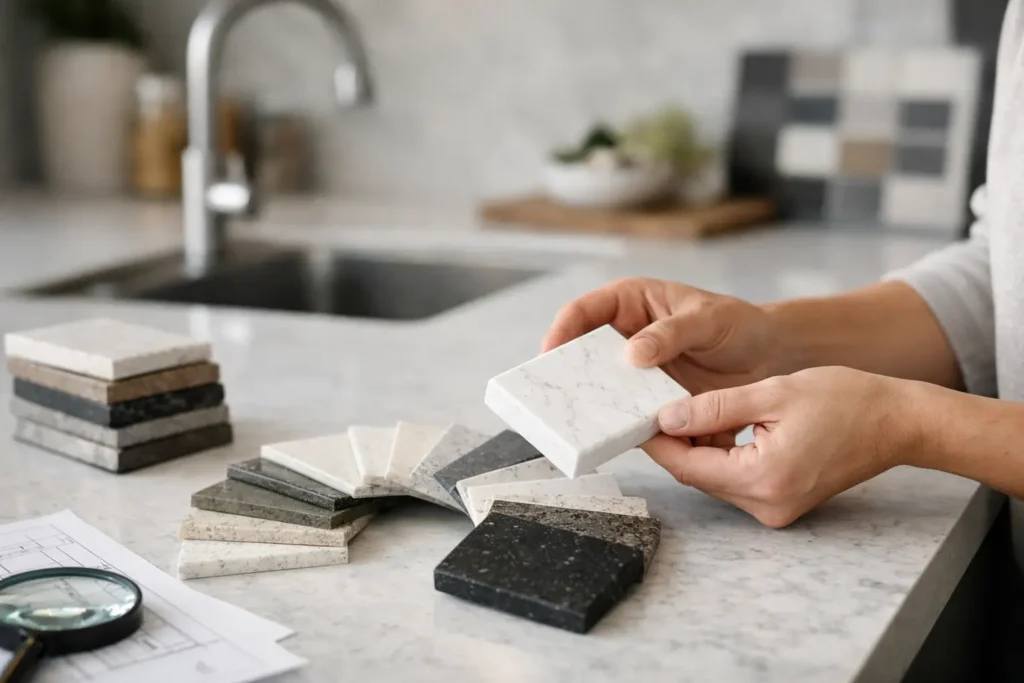
A quartz countertop can look perfect in a showroom and completely different once it is installed beside your cabinets, backsplash, flooring, and lighting. That is why learning how to choose quartz countertops is not just about picking a color from a small sample. It is about choosing a surface that fits how your household cooks, cleans, gathers, and lives – then making sure it is measured and installed correctly.
Quartz is a strong choice for busy kitchens because it is nonporous, low-maintenance, and available in a wide range of looks. But no two slabs, fabricators, or installation plans are the same. A good decision starts with the full picture, not the display rack.
How to Choose Quartz Countertops for Your Kitchen
Start with the practical requirements of the room. Think about how often the kitchen is used, whether it gets strong natural light, how much counter space you have, and what cabinets or appliances will stay in place. A bright white slab may look clean and high-end, but it can show dark crumbs, coffee drips, and cooking residue more easily than a soft gray or lightly patterned design.
Also consider the scale of the kitchen. Large veining can make a dramatic statement on a wide island, while it may look crowded or broken up in a smaller kitchen with several seams and cutouts. Fine speckling or subtle movement often works better when the counter is divided around a cooktop, sink, or corner.
Bring cabinet doors, backsplash samples, flooring pieces, and paint swatches when selecting your slab. If that is not possible, take clear photos in natural light. A countertop should support the entire room, not compete with every other finish in it.
Choose a Color That Works in Real Lighting
Lighting changes quartz more than many homeowners expect. A warm white quartz can look creamy under yellow-toned bulbs and cooler in daylight. Gray slabs may pick up blue, green, or beige undertones depending on the room. Dark colors can look rich and polished in a showroom but may make a small kitchen feel heavier.
Ask to see a full slab whenever possible. Small samples cannot show the complete pattern, vein placement, or level of variation. This matters most with marble-look quartz. The vein that looks balanced on a hand sample may land directly at your sink cutout or stop awkwardly at a seam if the slab layout is not planned carefully.
For households that want a clean, dependable choice, soft white, warm gray, taupe, and low-contrast stone patterns usually offer the most flexibility. They work with changing decor and tend to hide everyday use better than solid black or pure bright white.
Understand What You Are Buying
Quartz countertops are engineered surfaces made from crushed natural quartz, resins, pigments, and other materials. The exact composition, appearance, warranty, and performance can vary by manufacturer and product line. Do not assume every quartz slab is the same simply because the color looks similar.
Look closely at the slab surface. Check for consistent color, realistic patterning if you want a natural-stone appearance, and a finish that matches your goals. Polished quartz reflects light and is the most common option. Honed or matte finishes offer a softer look, but they can show fingerprints, oils, and smudges more readily, especially in darker colors.
Quartz resists staining well because it is nonporous, but it is not indestructible. It can chip at exposed edges, and excessive heat can damage the resin. Use trivets for hot pans, especially cast iron cookware or items taken directly from the oven. Quartz also is generally not the right material for uncovered outdoor kitchens because prolonged sun and weather exposure can affect its color and finish.
Pick the Right Thickness and Edge Profile
Most residential quartz countertops are available in 2-centimeter or 3-centimeter thicknesses. A 3-centimeter slab has a substantial appearance and is commonly used without added buildup at the edge. It is a practical, popular option for kitchen counters and islands.
A 2-centimeter slab can work well too, especially for certain designs or budget plans, but it may need a built-up edge to create a thicker visual profile. That detail should be discussed before fabrication so there are no surprises in the finished look or price.
The edge profile changes both style and durability. A simple eased edge is clean, modern, and easy to maintain. A rounded edge can be more forgiving in a family kitchen because it has no sharp corner. More decorative profiles add detail, but they usually increase fabrication cost and can collect more dust or residue.
Keep the edge proportional to the room. A thick, elaborate profile may overpower simple shaker cabinets, while a narrow profile can look too light against large traditional cabinetry. The best option is usually the one that fits the cabinet style and makes everyday cleaning easy.
Plan for Seams, Overhangs, and Cutouts
Seams are normal in quartz countertop installation. They are often necessary because slabs have size limits, kitchens have long runs, and moving one oversized piece through a home may not be possible. The goal is not always to eliminate seams. The goal is to place them thoughtfully and make them as unobtrusive as possible.
Ask where seams are likely to go before the slab is fabricated. A good layout avoids putting a seam in the most noticeable location when possible and considers the direction of veining. With patterned quartz, seams require more planning because the design may not continue perfectly from one piece to the next.
Overhangs deserve the same attention. A modest island overhang may not need extra support, but larger seating areas often require brackets, corbels, or other reinforcement. Never assume cabinetry alone will support a deep overhang. Proper support protects the stone from cracking and keeps the finished kitchen safe.
Sink and cooktop cutouts must be measured precisely. Undermount sinks create a clean, easy-to-wipe surface, but the installation must be secure and well sealed. If you are replacing counters while keeping an existing sink or cooktop, verify the exact dimensions early. A last-minute mismatch can delay installation or create added cost.
Set a Budget for the Complete Job
The slab price is only one part of the project. Your final cost may include measurement, fabrication, delivery, demolition and disposal of old counters, sink cutouts, faucet holes, edge work, seam work, backsplash pieces, plumbing reconnection, and installation.
Get a clear scope of work before approving the job. A low initial quote may not include removal, support for an island overhang, reconnecting a sink, or repairs needed to prepare cabinets for new countertops. Those details affect both price and schedule.
Do not choose quartz on price alone. A less expensive slab can be a smart value, but poor fabrication or rushed installation can ruin the result. Uneven seams, weak sink support, bad caulking, and inaccurate cutouts are costly problems to fix after the fact.
For homeowners who want fewer moving parts, working with one company that can supply materials, coordinate fabrication, install countertops, and handle related cabinet or plumbing work can prevent unnecessary delays. Cobo Kitchen Master & Home Repair is built for that kind of practical coordination, with in-stock core materials and one team accountable for the finished work.
Inspect the Installation Plan Before Work Begins
Quartz countertops rely on a stable base. Before templating, cabinets should be installed, secured, and level. If cabinets are out of level or walls are uneven, the installer needs to address that during planning. Quartz is rigid. It will not flex to hide major cabinet or wall problems.
Confirm the timeline in advance. Templating typically happens after cabinets are set. Fabrication follows, then installation. Avoid scheduling tile backsplash, final plumbing hookups, or appliance installation in a way that conflicts with the countertop work. The right sequence keeps trades from undoing each other’s work.
On installation day, inspect the slab before the crew leaves. Look at seam placement, edge finish, wall gaps, sink mounting, and overall alignment. Minor wall variations can be covered by backsplash or a small caulk line, but visible flaws should be discussed immediately. A professional installer should explain what is normal, what needs adjustment, and how the countertop should be cared for after installation.
Choose for Daily Life, Not Just the Photo
The right quartz countertop should look good on day one and still make sense after hundreds of meals, school projects, grocery bags, and quick cleanups. Choose a color you can live with, a thickness and edge that fit your cabinetry, and an installation team that plans the details before cutting the slab. That is how a countertop becomes a reliable part of your home instead of another project you have to manage.