
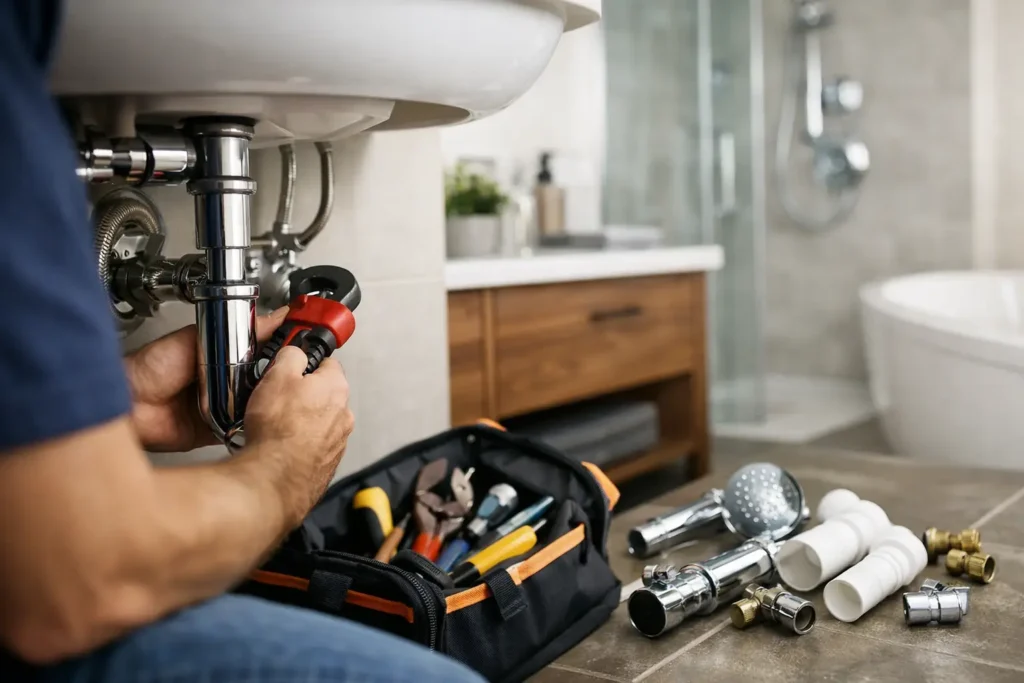
A bathroom renovation can look complete on the surface while hiding old shutoff valves, corroded supply lines, slow drains, and weak connections behind the wall. That is why knowing how to upgrade bathroom plumbing before tile, cabinets, and fixtures are installed can prevent expensive rework later. The right plan improves daily performance, protects your home from leaks, and keeps the project moving without waiting on separate suppliers and contractors.
Start With the Plumbing You Cannot See
New faucets and a modern vanity will not solve a failing drain line or a water supply pipe that is nearing the end of its service life. Before selecting finishes, inspect the plumbing system serving the bathroom. Look for recurring clogs, low water pressure, rusty water, drain odors, moisture under the vanity, dripping valves, or stains on the ceiling below the bathroom.
Older homes may have galvanized steel pipes, aging copper connections, cast-iron drains, or outdated valves that no longer shut off fully. These systems can work for years, but a remodel is often the best time to replace problem sections while walls and floors are already open. Waiting until after new tile is installed can turn a small plumbing repair into a demolition job.
A professional assessment should confirm the condition of the hot and cold water lines, drain and vent connections, toilet flange, main bathroom shutoff, and fixture-specific valves. It should also identify whether the planned layout requires moving pipes. Keeping fixtures in the same locations generally controls labor costs. Moving a toilet, shower, or main drain line can be worthwhile, but it requires more planning and may involve structural access, permits, and code requirements.
How to Upgrade Bathroom Plumbing in the Right Order
Bathroom plumbing upgrades work best when the rough-in work is completed before walls are closed and finish materials arrive. A rushed sequence is where delays, damaged materials, and costly changes begin.
First, decide which fixtures are staying and which are being replaced. A new vanity may need different supply line locations. A deeper tub may need a revised drain connection. A wall-mounted faucet requires piping inside the wall, while a modern shower system may need a pressure-balancing or thermostatic valve. Confirm these requirements before installation starts.
Next, shut off water properly and create a clear work area. The plumbing team can remove old fixtures, inspect hidden conditions, and replace worn components. This is the stage for pipe upgrades, drain repairs, valve replacement, and any layout changes. Once the rough plumbing is pressure-tested and inspected where required, wallboard, waterproofing, tile, cabinetry, countertops, and final fixtures can move forward with confidence.
The final step is trim installation. This includes setting the toilet, connecting the faucet, installing shower trim, attaching the sink drain, and testing every connection. Do not treat this as a quick finishing task. A careful final test checks water flow, drainage speed, valve operation, caulking, and leaks under normal use.
Choose Materials That Fit the Job
The best pipe material depends on the home, local code, budget, and the extent of the work. There is no single material that is right for every bathroom.
PEX is a common choice for water supply lines because it is flexible, durable, and efficient to install in many remodeling situations. It can reduce the number of fittings needed behind walls, which may reduce potential leak points. Copper remains a proven option and may be preferred for certain applications or existing systems. CPVC is used in some homes, though compatibility with the current plumbing system and local requirements should be reviewed before making changes.
For drain lines, PVC and ABS are commonly used in modern construction, while older homes may have cast iron. Replacing every old drain pipe is not always necessary. If the existing line is sound, properly sloped, and sized correctly, a targeted repair may be the smarter investment. If there are repeated backups, cracks, heavy corrosion, or major layout changes, replacing the affected drain section can save trouble down the road.
Material choice should never be based on price alone. The least expensive option can become costly if it does not match the building, the fixture requirements, or the installation conditions. A qualified plumber can explain what needs replacement now and what can remain in service.
Upgrade the Small Parts That Prevent Big Problems
A bathroom plumbing upgrade is not only about pipes. Small components do a lot of the work, and neglecting them is a common mistake during a renovation.
Replace old angle stops under sinks and toilets with reliable quarter-turn shutoff valves. If a faucet supply line fails or a toilet needs repair later, you should be able to stop water at that fixture without shutting off the whole house. Install new braided supply lines with new fixtures instead of reusing old ones.
Check the toilet flange carefully, especially when replacing flooring. The flange must sit at the correct finished-floor height and be secured properly. A damaged or improperly positioned flange can cause rocking, failed wax seals, odors, and leaks around the toilet base.
Shower valves also deserve attention. Older two-handle controls may not provide the temperature protection expected in a modern bathroom. A pressure-balancing valve helps prevent sudden temperature swings when someone runs water elsewhere in the home. A thermostatic valve offers more precise temperature control, but it may add cost and requires compatible trim.
Do not overlook the drain trap and venting. A correctly installed trap blocks sewer gases, while proper venting helps the fixture drain smoothly. Gurgling, slow drainage, and sewer odors can point to a drain or vent issue that should be corrected before the renovation is closed up.
Plan for Water Efficiency Without Sacrificing Performance
Modern plumbing fixtures can lower water use, but performance varies. A low-flow toilet with strong flushing performance can reduce water waste without creating frequent clogs. A WaterSense-style faucet or showerhead can reduce consumption, although some homeowners prefer a higher-flow shower experience where local regulations allow it.
The practical approach is to choose fixtures based on how the bathroom is used. A busy family bathroom needs durable valves, easy-to-clean drains, dependable toilet performance, and enough storage around the plumbing layout. A guest bath may prioritize simple operation and a clean appearance. In a primary bathroom, comfort features such as a handheld shower, body sprays, or a larger shower valve may be worth the added planning.
Keep in mind that advanced shower systems can demand more water volume and pressure than the existing plumbing can provide. Installing multiple showerheads without checking pipe sizing and water supply can leave you with a costly system that performs poorly. Fixture specifications should be reviewed before rough-in work begins.
Avoid Delays During a Bathroom Plumbing Upgrade
Most plumbing-related renovation delays come from late decisions, unavailable materials, hidden damage, or poor coordination between trades. The simplest way to avoid them is to finalize the fixture list and plumbing layout early. The plumber, cabinet installer, countertop team, and tile installer should all be working from the same measurements.
Order or secure key items before demolition: the vanity, sink, faucet, toilet, shower valve, trim kit, tub or shower base, and any specialty drains. A faucet that arrives late or a vanity with an unexpected drawer configuration can stop work even when the rest of the room is ready.
It also helps to keep one team accountable for the full scope. When material supply, plumbing work, cabinetry, countertops, and installation are managed separately, homeowners often end up chasing schedules and solving conflicts between contractors. Cobo Kitchen Master & Home Repair provides an all-in-one approach, with in-stock core materials and professional installation that helps keep renovation work from stalling.
Know When to Call a Professional
Changing a faucet or replacing a supply line may be manageable for an experienced homeowner, but most bathroom plumbing upgrades should be handled by a licensed professional. Moving water lines, altering drains, replacing shower valves, working inside walls, and correcting venting can affect safety, code compliance, and insurance coverage.
Call for professional help when you see active leaks, water damage, mold, cracked drain pipes, recurring backups, a loose toilet, or a shutoff valve that will not close. These are not finish issues. They are warning signs that the plumbing system needs attention before new materials cover the problem.
A well-planned bathroom should give you more than a better-looking space. It should give you reliable water flow, fast drainage, accessible shutoffs, and plumbing that is ready for years of daily use. Handle the hidden work first, and the finished bathroom has a much better chance of staying finished.