
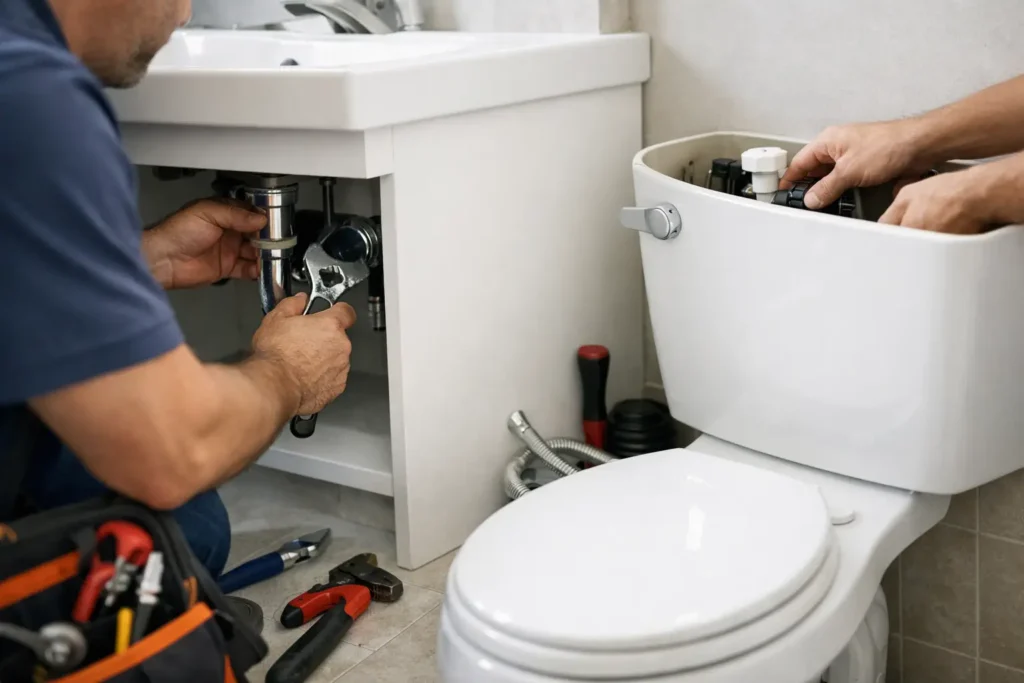
A bathroom leak rarely stays a bathroom problem. Water can move behind a vanity, under tile, through drywall, and into the room below long before the damage is obvious. Fast bathroom plumbing repairs protect more than your sink or toilet. They protect your floors, cabinets, walls, and the daily routine your household depends on.
Know Which Bathroom Problems Need Fast Action
Some plumbing issues can wait for a scheduled repair. Others should be handled right away to prevent water damage, mold growth, or an unexpected loss of service. The key is knowing the difference before a small issue turns into a renovation-level expense.
A dripping faucet is frustrating and wasteful, but it may not be an emergency if the water is contained and the shutoff valve works. A leak under the sink, on the other hand, can soak the vanity base and damage cabinet materials quickly. If you see standing water, warped flooring, a spreading ceiling stain, or water that will not stop running, shut off the closest valve if possible and call for professional help.
Toilet problems also deserve attention. A toilet that runs continuously increases your water bill, while one that rocks at the base may have a failed seal or loose mounting. Water around the toilet base is never something to ignore. It may be condensation in limited cases, but it can also point to a failing wax ring, cracked bowl, supply-line leak, or drainage issue.
The Most Common Bathroom Plumbing Repairs
Bathroom plumbing systems work hard every day. Faucets, drains, valves, shower controls, and toilets all wear down over time. Professional diagnosis matters because the visible symptom is not always the actual source of the problem.
Leaking Faucets and Shower Fixtures
A faucet that drips after being turned off often has a worn cartridge, washer, seal, or valve component. In a shower, the issue may be inside the wall behind the handle. Replacing a fixture without checking the valve can leave the underlying problem unresolved.
If your shower head drips for a few minutes after use, residual water may simply be draining from the fixture. If it continues for hours, the shower valve likely needs service. Addressing it early avoids wasted water and prevents a minor internal leak from becoming a wall repair.
Clogged or Slow Drains
Hair, soap residue, toothpaste, and grooming products commonly build up in bathroom sink and tub drains. A slow drain is a warning sign, not just an inconvenience. Store-bought chemical drain cleaners can be harsh on older pipes, seals, and finishes, especially when used repeatedly.
A professional can clear the blockage properly and determine whether the problem is limited to one fixture or connected to a larger drain-line issue. If more than one bathroom drain is slow, or flushing a toilet causes water to rise in a tub, the problem may be farther down the line.
Toilet Repairs and Replacement
Many toilet repairs involve simple working parts inside the tank, such as a fill valve, flapper, flush valve, or supply line. But recurring clogs, weak flushing, leaks at the base, or cracks require a closer inspection. Replacing one tank component will not solve a toilet that has a damaged flange or an improperly seated base.
For older toilets, replacement can be the better value when repairs become frequent. A new, properly installed toilet can improve flushing performance, reduce water use, and give you a clean finish during a bathroom update.
Leaks Under the Sink or Behind the Vanity
Leaks under a bathroom sink can come from supply hoses, shutoff valves, drain traps, pop-up assemblies, or faucet connections. The water may appear only when the faucet runs, when the drain is used, or at all times. That distinction helps identify whether the issue is on the supply side or the drain side.
Do not place a bucket under a leak and assume the problem is contained. Even a small drip creates humidity inside the cabinet, damages particleboard, and can lead to odors or mold. A proper repair addresses the failed connection and checks nearby components for corrosion or wear.
Low Water Pressure and Temperature Problems
Weak water flow at one fixture may be caused by a clogged aerator or shower head. Weak flow throughout the bathroom can involve supply valves, old piping, pressure issues, or a problem with the water heater if only hot water is affected.
Temperature swings in the shower are another issue worth fixing correctly. The cause may be a worn mixing valve, an imbalanced system, or a failing pressure-balance cartridge. A reliable repair should restore stable water flow and comfortable temperature control, not just provide a temporary adjustment.
When a Repair Becomes Part of a Bathroom Upgrade
Plumbing repairs and bathroom renovations often overlap. Opening a wall to repair a shower valve, replacing a damaged vanity from a hidden leak, or removing an old toilet creates an opportunity to improve the room properly. It makes sense to coordinate the work when fixtures, cabinets, countertops, or flooring are already being updated.
This does not mean every leak requires a full remodel. It depends on the extent of damage, the age of the fixtures, and your plans for the space. If the bathroom is in good condition and the issue is isolated, a targeted repair is usually the right call. If repeated leaks, outdated plumbing, worn cabinets, and failing finishes are all present, addressing them in one project can prevent repeated disruption and duplicate labor costs.
The advantage of working with one capable team is accountability. The same provider can inspect the plumbing, repair the leak, replace damaged materials, install a new vanity or sink, and finish the room without making you coordinate separate contractors.
What to Expect From Professional Bathroom Plumbing Repairs
A quality repair starts with finding the source, not guessing at the symptom. The technician should inspect the fixture, connections, shutoff valves, drain components, and nearby surfaces that may have been affected by water. For concealed leaks, that may include checking the wall, cabinet base, or ceiling below the bathroom.
Once the issue is identified, you should receive a clear explanation of what failed, what needs to be repaired, and whether related parts should be replaced while the area is accessible. There is a real trade-off here. The cheapest immediate fix may restore function, but replacing an aging valve, corroded supply line, or damaged drain assembly at the same time may save a second service call later.
Professional work also means testing before the job is finished. Faucets should run without leaks. Drains should clear properly. Toilets should fill, flush, and remain stable at the base. Shower controls should deliver consistent flow and temperature. The repair is not complete until the fixture works as it should and the work area is left clean.
Prevent Problems Before They Spread
A few practical habits reduce the chance of unexpected bathroom damage. Check beneath sink cabinets monthly for dampness, swelling, or musty odors. Watch for toilets that begin running longer than usual. Clean hair from stoppers and drain covers before it becomes a clog. Avoid treating recurring drain problems with repeated chemical cleaners.
Pay attention to changes that seem minor: a cabinet door that starts sticking, loose tile near a shower, peeling caulk, or a water stain on the ceiling below. These signs often show up after moisture has been present for some time. Early action is usually less invasive and less expensive than waiting for visible failure.
When water is leaking, a toilet is backing up, or a shower fixture stops working, delays do not help. Cobo Kitchen Master & Home Repair provides dependable plumbing support along with the repair, replacement, and bathroom improvement work needed to get your home back in order. One call can move the job from diagnosis to a finished, functional space.