
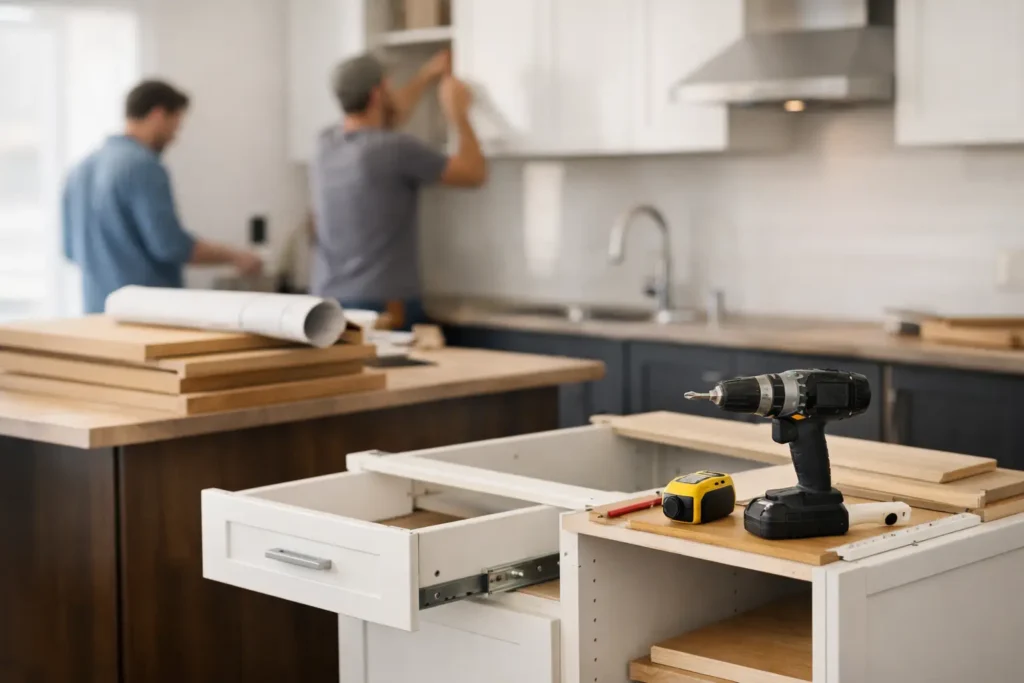
A kitchen remodel can stall before the first cabinet is installed. The layout is approved, the old cabinets are gone, and then the replacement order is backordered for weeks. Kitchen cabinets should move your project forward, not hold your home hostage. The right choice comes down to more than door color or style. You need cabinets that fit the room, support how your household works, and can be supplied and installed without unnecessary delays.
For homeowners who want clear answers and dependable execution, the best cabinet plan starts with availability, accurate measurements, and one team responsible for the work.
Start With Kitchen Cabinets That Fit the Room
A cabinet layout must work with the actual kitchen, not just a drawing. Every wall, window, doorway, appliance, plumbing connection, and electrical outlet affects the final design. A few inches can determine whether a drawer opens fully, a refrigerator door clears the island, or a sink base lines up with existing plumbing.
That is why measuring comes before selecting finishes. A professional cabinet team should confirm the room dimensions and identify conditions that may affect installation, such as uneven floors, out-of-square walls, water damage, or outdated plumbing. Addressing these issues early prevents costly changes after cabinets arrive.
The layout should also reflect how you use the kitchen. A family that cooks every night may need more drawer storage near the range and deeper pantry space. A smaller kitchen may benefit from tall cabinets, corner storage solutions, or a layout that improves movement between the sink, refrigerator, and cooktop. There is no single “best” design. The best layout is the one that makes daily use easier without crowding the space.
Choose Cabinet Construction for Daily Use
Cabinets are opened, closed, cleaned, bumped, and loaded every day. Looks matter, but construction matters more once the project is complete. A low initial price can become expensive if doors sag, drawer boxes weaken, or finishes fail under normal use.
Pay attention to the cabinet box, shelves, drawers, hinges, and hardware. Strong cabinet boxes, durable shelving, properly aligned doors, and dependable drawer glides all affect how the kitchen performs over time. Soft-close hardware is popular because it reduces slamming and gives the kitchen a more finished feel, but it should not be used to hide weak construction.
Door style is a separate decision from cabinet quality. Shaker doors remain a practical choice because they work with many home styles and are easy to update with different hardware. Flat-panel doors create a cleaner, more modern look. Raised-panel options can suit more traditional homes. The right finish depends on lighting, surrounding floors, countertops, and how much maintenance you want to take on.
White cabinets can brighten a compact room, but they may show spills and wear more quickly in a busy household. Dark finishes can add contrast, but they can make a small kitchen feel heavier if natural light is limited. Wood tones bring warmth and can hide minor marks well, although the exact color should be reviewed alongside countertop samples before installation begins.
Storage Is Where a Kitchen Earns Its Keep
A beautiful kitchen that lacks storage becomes frustrating fast. Before choosing cabinet sizes, think about what needs a home: pots, food containers, small appliances, cleaning products, trash bins, baking sheets, and pantry items. Standard cabinets can handle many needs, but targeted storage upgrades often make the biggest difference.
Deep drawers are usually more useful than lower cabinets with fixed shelves because they make heavy cookware easier to reach. A pull-out trash cabinet keeps bins out of sight and away from walkways. Tall pantry cabinets can add major storage where the floor plan allows. Drawer organizers and tray dividers help prevent clutter, especially near cooking and prep areas.
Do not add every available accessory simply because it is offered. Specialty inserts can increase the budget quickly, and some are not useful for every household. Prioritize the features that solve a real problem in your current kitchen. If you are always bending to find pots, invest in drawers. If counter space disappears under appliances, plan proper cabinet storage for them.
In-Stock Cabinets Can Protect Your Timeline
Cabinet lead times are one of the most common reasons kitchen projects drag on. Custom orders may be worthwhile for unusual room dimensions, specific finishes, or highly detailed design requirements. But they can require a long wait, and a single damaged or missing component may delay the entire schedule.
In-stock cabinets are often the smarter choice when speed matters. They allow the project to move from planning to installation without waiting on a distant supplier. This is especially valuable after a leak, water damage, appliance failure, tenant turnover, or a renovation that needs to be completed before a major family event.
Availability does not mean settling for a poor result. The key is working with a provider that has quality cabinet options ready and knows how to build a functional plan around the available sizes and finishes. A skilled installer can make stock cabinetry look intentional, clean, and properly fitted. The goal is not to wait longer for the sake of waiting. The goal is a kitchen that is built right and ready for use.
Cabinet Installation Is Not a Job to Rush
Fast service only works when the installation is handled correctly. Cabinets must be leveled, secured to the wall structure, aligned with each other, and checked before countertops are measured or installed. A cabinet that is slightly out of level can create gaps, affect door alignment, and cause problems for countertop installation.
The installation process may also uncover repair needs behind the old cabinets. Water-stained drywall, weak subflooring, damaged shutoff valves, old drain connections, or electrical issues should be addressed before the new kitchen is closed up. Ignoring those problems may save a day now, but it can lead to a much larger repair later.
A one-company approach reduces that risk. When the same team can supply cabinets, install them, handle plumbing adjustments, and coordinate countertop work, there is less finger-pointing between separate contractors. You have a clearer timeline, one point of contact, and a team that is accountable for the finished result.
Plan the Budget Around the Full Project
Cabinets are a major part of a kitchen budget, but they are not the only cost. Countertops, demolition, installation, plumbing work, electrical changes, backsplash, flooring repairs, and appliance adjustments all need to be considered. A cabinet quote that looks low may not include the work required to make the kitchen functional.
Ask what is included before work begins. Confirm whether demolition, removal, cabinet assembly, delivery, installation, hardware, sink cutouts, plumbing reconnection, and countertop coordination are part of the plan. Clear scope prevents surprises and helps you compare options fairly.
It also helps to reserve part of the budget for conditions that cannot be seen until the old kitchen is removed. Homes often have hidden issues, especially around sinks and dishwashers. A dependable contractor will explain what may change, why it matters, and what the repair options are before moving ahead.
Get the Result Without the Runaround
Your kitchen should not require calls to a cabinet warehouse, an installer, a plumber, and a countertop fabricator just to get one room completed. Cobo Kitchen Master & Home Repair provides a practical path forward with in-stock materials, professional installation, repair support, and workmanship built around the actual needs of your home.
The strongest cabinet project is not always the most expensive or the most customized. It is the one that fits your space, supports your routine, stays within a realistic budget, and gets completed without avoidable delays. Start with a clear plan, choose materials that are ready when you are, and make sure the team installing them is prepared to stand behind the work.