
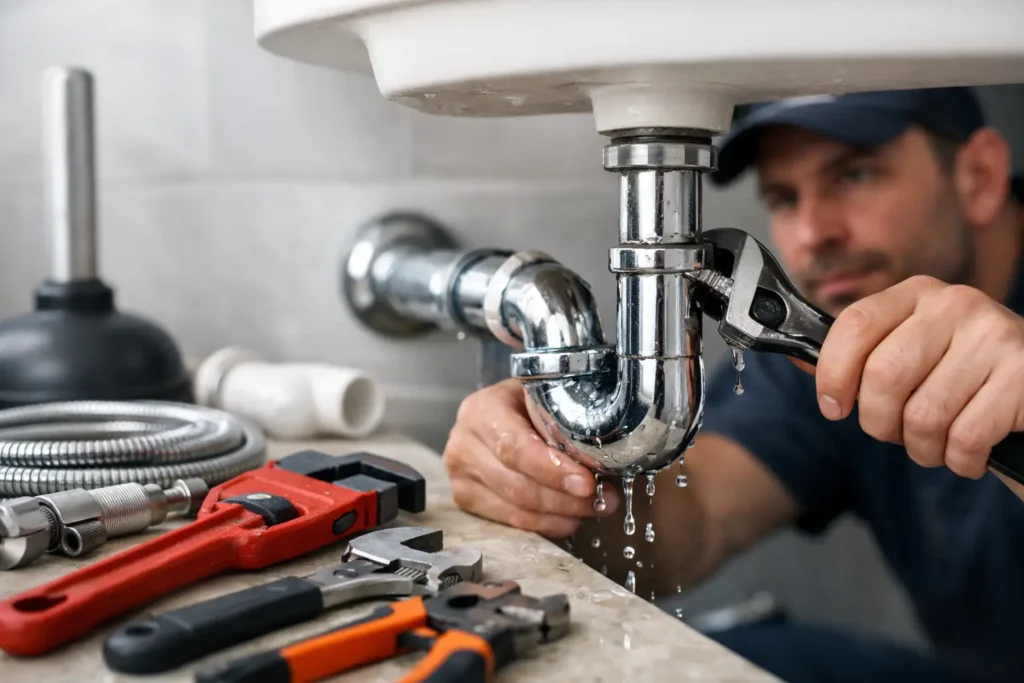
A drip under the kitchen sink or a toilet that will not stop running can turn from an annoyance into water damage fast. This guide to fixing common plumbing problems helps homeowners handle simple issues safely, recognize what needs professional repair, and avoid the costly mistake of waiting too long.
The rule is simple: control the water first, then diagnose the problem. Do not force fittings, pour random chemicals into drains, or keep using a fixture that is leaking into a cabinet, wall, or floor.
Start With the Water Shutoff
Before touching a supply line, trap, valve, or toilet part, know how to stop the water. Most sinks and toilets have local shutoff valves near the fixture. Turn the valve clockwise until it stops, then test the faucet or flush the toilet to confirm the supply is off.
If water is coming through a ceiling, a pipe has burst, or the local valve does not work, shut off the main water supply to the home. It is usually located near the water meter, in a utility area, basement, garage, or outside wall. Every homeowner should identify this valve before an emergency happens.
Put down towels or a shallow bucket before loosening any connection. Even a small repair can release standing water from a drain line. If you see active flooding, sewage backup, a wet electrical area, or water near a water heater, stop troubleshooting and call for emergency plumbing service.
Fixing Common Plumbing Problems at Home
A slow or clogged sink drain
A slow sink usually starts with soap residue, grease, hair, or food debris collecting near the drain opening or inside the P-trap. Begin with the least aggressive option. Remove the stopper if possible and pull out visible buildup. For a bathroom sink, a plastic drain-cleaning tool often reaches the hair that a plunger cannot.
For a kitchen sink, do not send grease down the drain, even with hot water. Grease cools farther down the pipe and creates a stubborn blockage. Use a sink plunger with enough water in the basin to cover the cup, then plunge firmly several times. If the sink has two basins, block the second drain with a wet cloth so pressure stays where it is needed.
If that does not work, place a bucket under the P-trap and carefully remove it. Clean out the trap, inspect the washers, and reassemble it hand-tight before testing for leaks. Skip harsh chemical drain cleaners when possible. They can damage older pipes, harm finishes, and make later repairs more hazardous for the person opening the line.
A clog that returns quickly may be farther down the branch line. That is the point where a professional drain cleaning is usually the faster, safer fix.
A running toilet
A running toilet wastes water every hour it is left alone. In many cases, the repair is inside the tank and does not require removing the toilet.
Lift the tank lid and check the flapper first. If it is warped, cracked, coated with mineral buildup, or not sitting flat over the flush valve opening, water will keep slipping into the bowl. Replacing a worn flapper is a straightforward repair when the replacement matches the flush valve size.
Next, check the chain. It should have a little slack when the flapper is closed. A chain that is too short holds the flapper open; one that is too long can get caught beneath it. Also look at the fill valve and float. If the water level rises into the overflow tube, adjust the float or replace the fill valve.
If water is leaking from the base of the toilet, do not keep flushing. The issue may be a failed wax ring, loose mounting hardware, a cracked toilet, or damage to the floor around the flange. That repair requires a closer inspection because moisture can weaken subflooring before it becomes visible.
A dripping faucet
A faucet drip is often caused by a worn cartridge, washer, O-ring, or valve seat. Shut off the hot and cold supply valves below the sink, plug the drain so small screws do not disappear, and remove the handle according to the faucet design.
The key is using the correct replacement part. Faucet cartridges vary by brand and model, and a nearly identical piece may not seal correctly. Take the old part with you when sourcing a replacement, or have a plumbing professional identify it. Once reassembled, turn the water on slowly and test both hot and cold sides.
If the leak is coming from beneath the handle rather than the spout, the cartridge or O-rings are still likely suspects. If it is coming from a supply connection below the sink, check whether the fitting is loose. Tighten gently. Overtightening can crack plastic components or damage compression fittings.
A garbage disposal that hums or will not run
First, turn off power at the switch and unplug the disposal if the outlet is accessible. Never put a hand inside the unit. Use tongs to remove visible items, then use the disposal wrench or the correct Allen key in the opening at the bottom of the unit to rotate the mechanism back and forth.
If it has overheated, press the reset button on the bottom of the disposal after it cools. Restore power and run cold water before testing it. A disposal that hums but will not turn may be jammed. One that trips the breaker, leaks from its body, or still will not start after a reset may need repair or replacement.
Keep fibrous food scraps, grease, coffee grounds, bones, and large amounts of rice or pasta out of the disposal. It is not a substitute for the trash can.
Low water pressure at one fixture
When low pressure affects only one faucet or shower, the cause is often mineral buildup in the aerator or showerhead. Unscrew the aerator, rinse out sediment, and soak the screen if needed. Reinstall it and test the flow.
If pressure is low throughout the house, the problem may involve the main shutoff, pressure regulator, supply pipe condition, or municipal supply. Sudden whole-house pressure loss deserves prompt attention, especially if it follows a leak, renovation work, or a change in water color.
When a DIY Plumbing Fix Should Stop
A basic repair can save time, but plumbing problems do not always stay basic. Call a professional when you have repeated clogs, water stains on walls or ceilings, foul drain odors, poor water pressure across multiple fixtures, a leaking water heater, or any sign of sewage backup.
Hidden leaks are another reason to act quickly. A cabinet floor that feels soft, a rising water bill, peeling paint, or a musty smell may point to water behind finished surfaces. The visible drip is not always the full problem.
For homeowners planning a kitchen or bathroom update, plumbing work should also be coordinated with the larger project. Moving a sink, replacing a vanity, installing a new faucet, or changing cabinets and countertops can expose old valves, corroded supply lines, and drain connections that should be corrected before the new finishes go in. Cobo Kitchen Master & Home Repair can supply and install core kitchen and bathroom materials while handling the plumbing work in one coordinated job.
Prevent the Next Plumbing Call
Small habits protect pipes and fixtures. Use sink strainers, keep grease and wipes out of drains, repair drips promptly, and avoid hanging heavy items from exposed supply lines. Once or twice a year, look under sinks, around toilets, and near the water heater for moisture, corrosion, or discoloration.
Know where your main shutoff valve is, keep a plunger available for each bathroom, and do not ignore a problem just because it seems minor. Fast action protects your cabinets, flooring, walls, and peace of mind when water starts going where it should not.