A bathroom sink that takes longer and longer to empty is usually giving you an early warning. If you are asking, “why is my bathroom sink draining slowly,” the most likely answer is a buildup of hair, toothpaste, soap residue, and grooming products near the stopper or inside the drain trap. Left alone, that minor slowdown can turn into a complete blockage, a leak under the cabinet, or water backing up when your household is busiest.
The good news is that many slow bathroom sink drains have a simple, local cause. The key is knowing what you can safely check yourself and when the problem points to plumbing work that needs a professional.
Why Is My Bathroom Sink Draining Slowly?
Bathroom sinks handle more than water. Every day, the drain collects hair, shaving cream, toothpaste, hand soap, face wash, cosmetics, and lotions. These materials do not always wash through the pipe. Instead, they cling to the pop-up stopper and the curved pipe below the sink, gradually narrowing the path for water.
A slow drain can also come from mineral scale, especially in homes with hard water. Over time, minerals coat the interior of the drain pipe and make it easier for soap residue to stick. Older metal pipes may have internal corrosion as well. In those cases, cleaning may improve the flow temporarily, but replacing a damaged section of pipe is often the more dependable repair.
If only one bathroom sink is slow, the clog is usually close to that fixture. If several drains are draining slowly, gurgling, or backing up, the issue may be farther down the branch line or main sewer line. That is not a problem to ignore or treat with repeated store-bought chemicals.
The Most Common Causes
Hair and residue around the stopper
The pop-up stopper is the number one trouble spot in many bathroom sinks. It catches hair, but the hair does not sit there alone. Soap, toothpaste, and skincare products bind to it and create a sticky mass that blocks water from entering the drain quickly.
You may notice water draining better after you lift the stopper. That is a strong sign the blockage is on or immediately below it.
A clogged P-trap
The P-trap is the curved section of pipe under the sink. It holds a small amount of water to prevent sewer gases from entering your bathroom. It also catches heavy debris before it travels farther into the plumbing system.
That design is necessary, but it makes the P-trap a common place for sludge and buildup. If you recently dropped something small into the sink, such as jewelry, a razor cap, or a cosmetic item, it may also be sitting in the trap.
Buildup farther down the drain line
When the stopper and trap are clear but the sink is still slow, the restriction may be deeper in the wall pipe. Hair and residue can accumulate there over months or years. A short drain snake may reach it, but forcing a tool through the pipe can damage older connections or push a partial clog into a worse position.
A blocked drain vent
Your plumbing system uses venting to help wastewater move freely. A blocked vent can cause slow drainage, gurgling, or water level changes in nearby fixtures. This is less common when one sink is the only problem, but it becomes more likely when multiple fixtures show symptoms.
Vent issues require proper diagnosis. The apparent clog may not be in the sink drain at all.
Pipe damage or poor installation
A sagging drain line, corroded pipe, improper slope, or poorly fitted connection can trap debris repeatedly. If you clean the sink and it slows down again within a few weeks, the issue may be the pipe condition rather than everyday buildup. Repeated clogs are a repair signal, not just a cleaning chore.
Safe First Steps to Improve Drainage
Start with the simplest inspection. Remove items from under the sink, place a bucket beneath the plumbing, and look for visible leaks or corrosion. If there is standing water in the cabinet, avoid taking apart the pipes until the leak source is identified.
First, lift out the stopper if your sink design allows it. Pull away any hair and residue, then rinse the stopper thoroughly. Some pop-up assemblies are connected to a pivot rod behind the drain. If the stopper does not lift out easily, do not force it. You can usually access it by loosening the retaining nut on the back of the drain assembly, but this is where homeowners often create a small leak by reinstalling parts incorrectly.
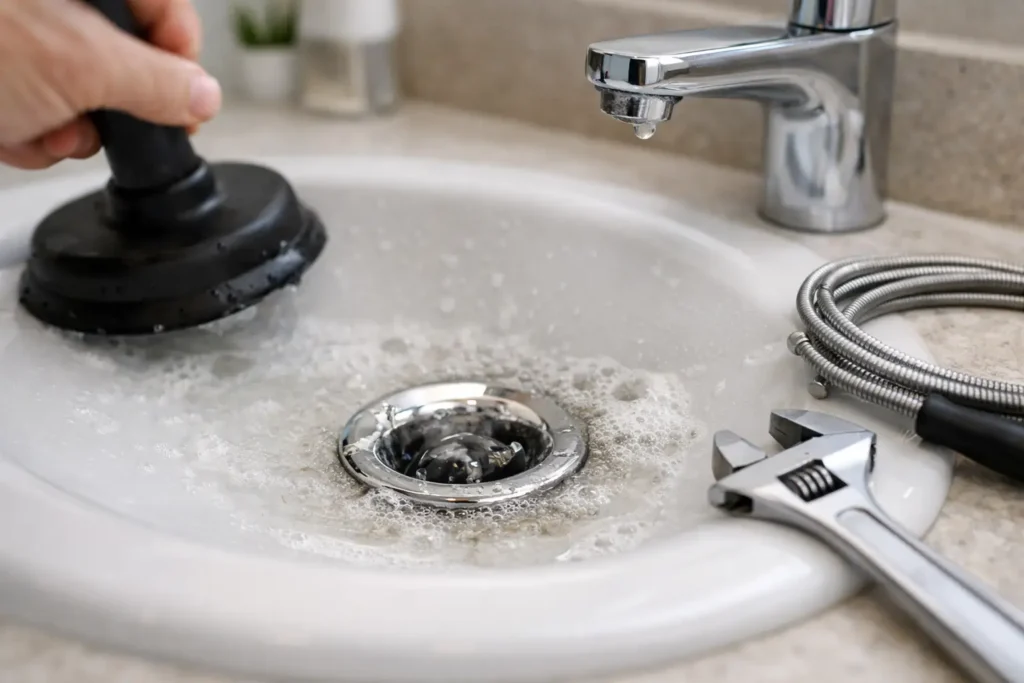
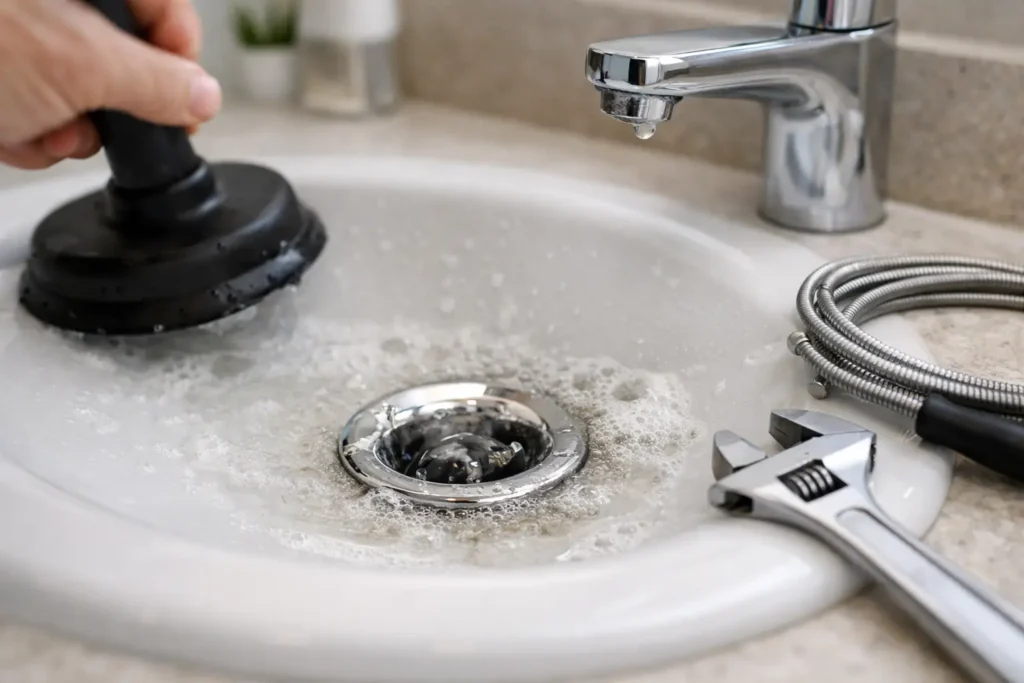
Next, try a sink plunger. Use a small cup plunger made for sinks, not a large toilet plunger. Cover the sink overflow opening with a wet rag so the plunger can create pressure. Add enough water to cover the plunger cup, then use several firm, controlled plunges. Check whether the water begins to drain normally.
For light buildup, flushing the drain with very hot tap water can help loosen soap residue. Avoid pouring boiling water into a sink with older plastic drain components, loose fittings, or a porcelain basin that may be sensitive to sudden temperature changes. Hot tap water is the safer choice.
A baking soda and vinegar mixture is sometimes useful for odor and minor residue, but it will not remove a dense hair clog or repair a damaged pipe. Treat it as a light maintenance option, not a solution for a drain that is barely moving.
What Not to Do With a Slow Sink Drain
Chemical drain cleaners can look like the fastest answer, but they create real trade-offs. Strong acidic or caustic products can harm older pipes, weaken seals, and create a hazard for anyone who later opens the trap or works on the line. They also often fail against hair-heavy clogs, leaving corrosive liquid sitting in the plumbing.
Do not keep using the sink while it is nearly blocked. More soap, toothpaste, and water can compact the clog and make cleanup harder. Avoid jamming wire hangers, sharp tools, or large drain snakes into the sink drain. They can scratch the fixture, damage the stopper assembly, or puncture thin pipe material.
If you decide to remove the P-trap, do it only if the connections are accessible and in good condition. Put a bucket and towels underneath first. Hand-tightened slip nuts should generally not require excessive force. If a fitting is seized, corroded, or leaking, stop there. Replacing a trap is straightforward for a trained technician, but a cracked wall connection can become a larger repair.
When It Is Time to Call a Plumber
Call for professional plumbing service if the sink has standing water that will not clear, the drain repeatedly clogs after cleaning, or you see water leaking under the cabinet. You should also schedule service if the sink gurgles, smells like sewer gas, or causes water to back up in another fixture.
Multiple slow drains deserve faster attention. When the bathroom sink, tub, shower, or toilet are all acting differently at the same time, the problem may involve a shared drain line, venting issue, or sewer blockage. A surface-level fix at one sink will not resolve the underlying cause.
For homeowners planning a bathroom renovation, a recurring slow drain is a good reason to inspect the plumbing before new cabinets, countertops, faucets, or sinks are installed. It is far easier to correct aging drain components and poor connections before the finished space is in place. One team that can handle the plumbing repair and the installation helps prevent finger-pointing between separate contractors.
Cobo Kitchen Master & Home Repair can diagnose the source of a slow drain, repair worn plumbing, and complete bathroom upgrades without making you coordinate multiple providers. The goal is not to make water disappear for a day. It is to restore dependable drainage and leave the work properly finished.
A sink should drain quickly enough that your morning routine does not stop for a pool of cloudy water. Clean the stopper regularly, pay attention to repeat symptoms, and get the drain checked before a small blockage becomes the repair you did not plan for.