
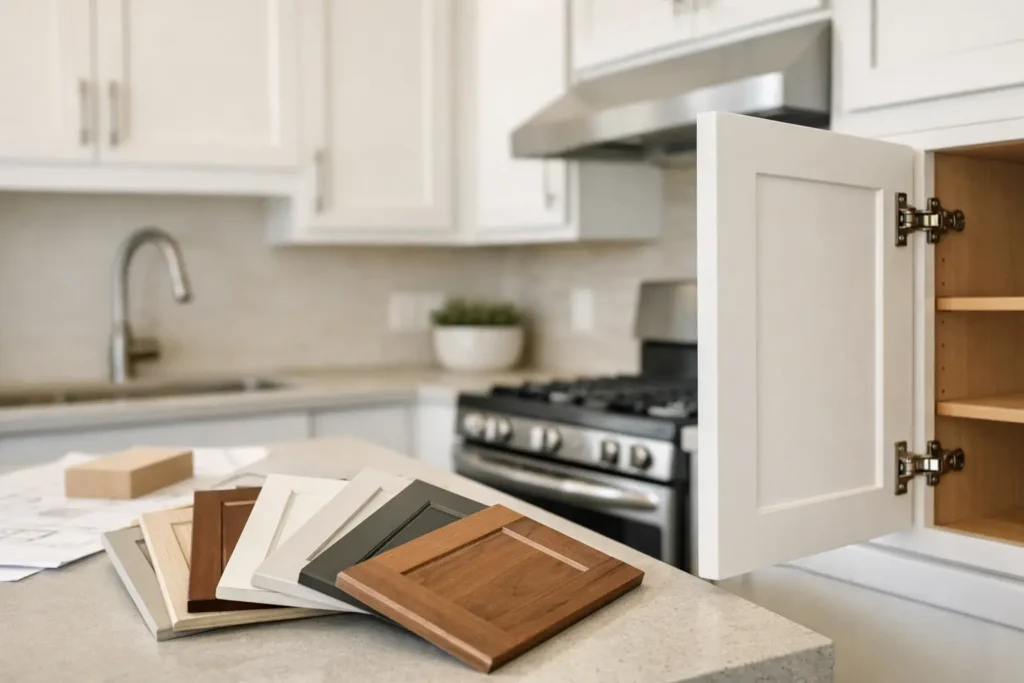
A low cabinet price can feel like a warning sign when you are planning a kitchen remodel. Homeowners often ask, are wholesale kitchen cabinets good quality, or are they simply the cabinets that did not make the cut? The honest answer is that wholesale cabinets can be an excellent value, but quality depends on the cabinet construction, materials, finish, supplier standards, and installation – not whether the cabinets are sold wholesale.
Wholesale means the cabinets move through a shorter sales chain or are sold in higher volume. It does not automatically mean lower quality. It can mean you pay less because there is less retail markup, materials are stocked in volume, and the supplier has established relationships with manufacturers. The real job is knowing what to inspect before cabinets are ordered and installed.
What Wholesale Actually Means for Your Kitchen
Wholesale cabinets are commonly sold to contractors, remodelers, property owners, and homeowners who want a better price than a traditional showroom model. Some are ready-to-assemble cabinets, while others arrive assembled. Some are stock-size lines designed for fast availability, and others are semi-custom products with more finish and configuration options.
That range matters. A basic wholesale cabinet line may be a smart fit for a rental property, a quick kitchen refresh, or a homeowner with a tight budget. A higher-grade wholesale line may use plywood cabinet boxes, solid-wood doors, soft-close hardware, and durable factory finishes suitable for a long-term family kitchen.
The label “wholesale” does not tell you enough. Ask what the cabinet is made of, how it is joined, what hardware it uses, and who is responsible if there is a product issue. Those answers tell you far more than the price tag.
Are Wholesale Kitchen Cabinets Good Quality? Check the Build
Cabinet quality shows up in the parts you cannot always see after installation. Doors and paint colors matter, but the cabinet box, drawer system, and joinery carry the daily workload.
Start With the Cabinet Box
Plywood is generally a stronger, more moisture-resistant material for cabinet sides and bottoms than particleboard, particularly around sinks, dishwashers, and active family kitchens. That does not mean every particleboard cabinet will fail. High-density engineered wood can perform well in dry areas when it is properly sealed and supported. But it is more vulnerable to swelling when plumbing leaks occur.
Look at the thickness of the box material as well. A cabinet with a thin back panel and minimal reinforcement may flex under the weight of dishes, cookware, or a heavy countertop. Better cabinets typically include a substantial back, solid attachment rails, and a stable base that allows the installer to fasten each cabinet securely to the wall.
Look at Door and Drawer Construction
Solid wood doors, plywood center panels, and quality veneer products can all be good choices. What matters is whether the material is appropriate for the cabinet style and is finished well. Natural wood can expand and contract with seasonal humidity, while engineered door components can offer more consistency for painted finishes.
Drawers deserve close attention because they are opened thousands of times over the life of a kitchen. Dovetail drawer boxes are a strong quality signal, especially when paired with full-extension, soft-close glides. Stapled or thin drawer boxes may work in a light-use kitchen, but they are less likely to hold up under heavy pots and utensils.
Do Not Treat Hardware as a Small Detail
Hinges and drawer glides determine how cabinets feel every day. Soft-close hardware is not just about a quieter kitchen. Quality hinges help doors stay aligned, while full-extension glides let you use the entire drawer instead of losing items at the back.
Open several sample doors and drawers if possible. They should move smoothly, close evenly, and feel securely attached. A door that drags, rattles, or needs force to close before installation is not a good sign.
Inspect the Finish, Especially Near Water
A clean factory finish should look even across doors, face frames, and edges. Check corners and routed details for thin paint, rough sanding, exposed seams, or inconsistent color. Inexpensive finishes can chip more easily, but even a premium cabinet finish can be damaged by harsh cleaners, constant steam, or standing water.
For painted cabinets, ask how the finish is applied and whether touch-up material is available. Small nicks can happen during normal use. The ability to make a clean repair can protect the appearance of the kitchen over time.
The Installation Can Make or Break Good Cabinets
Even well-built cabinets will look poor and perform badly if they are installed without proper leveling, fastening, and adjustments. Uneven floors, bowed walls, and out-of-plumb corners are common in real homes. A professional installer accounts for those conditions with shims, fillers, secure wall fastening, and careful door and drawer alignment.
Poor installation creates problems homeowners often blame on the cabinet itself: doors that will not stay closed, drawers that rub, countertops that do not sit flat, gaps at the wall, and cabinets that shift under weight. Plumbing and electrical work also need to be planned before the final cabinet layout is locked in. A sink base has different demands than a standard base cabinet, and dishwasher clearance cannot be guessed.
This is why buying cabinets and hiring an unrelated installer can add risk. When one company supplies the cabinets and handles the installation, there is clearer accountability for measuring, product fit, scheduling, and final adjustments. Cobo Kitchen Master & Home Repair works from that practical approach: materials that are available, one team to install them, and fewer handoffs that slow the job down.
When Wholesale Cabinets Are the Right Choice
Wholesale cabinets make the most sense when you want dependable materials without paying for an oversized retail markup. They are especially useful for homeowners who need to move quickly, landlords preparing a property, and families who want a functional remodel without waiting months for a special-order cabinet line.
Stock cabinet sizes can also be a benefit rather than a compromise. Common widths and heights allow a kitchen to be planned efficiently, and in-stock options reduce the risk that one delayed cabinet holds up countertops, appliances, or final inspections. The trade-off is that stock lines may offer fewer widths, colors, decorative details, and specialty storage options than fully custom cabinetry.
If your kitchen has unusual angles, very limited space, historic features, or a highly specific design plan, custom cabinets may be worth the extra cost. Wholesale cabinets can still work in many challenging rooms, but the layout needs to be measured carefully and designed around available sizes.
Questions to Ask Before You Buy
Before choosing a wholesale cabinet line, get direct answers about the product and the work around it. Ask whether cabinets are in stock, whether they come assembled, what the box and drawer materials are, and what kind of hinges and glides are included. Confirm the warranty and ask who handles damaged parts, missing pieces, or finish defects.
You should also ask who measures the kitchen, whether installation is included, and when countertops can be templated after cabinet installation. A cabinet price that looks low can become expensive if it leaves out delivery, assembly, trim, demolition, plumbing reconnection, or installation corrections.
A reliable provider should be comfortable showing you samples, explaining material differences, and giving you a clear scope of work. Vague answers about construction or pricing are a reason to slow down.
Quality Is Value That Holds Up
The best wholesale kitchen cabinets are not the cheapest cabinets available. They are the cabinets that fit the room, handle everyday use, arrive when the project needs them, and are installed correctly the first time. Focus on construction and service instead of the wholesale label alone. A well-built, properly installed cabinet line can give your kitchen the durability and finished look you expect without putting your project on hold.