
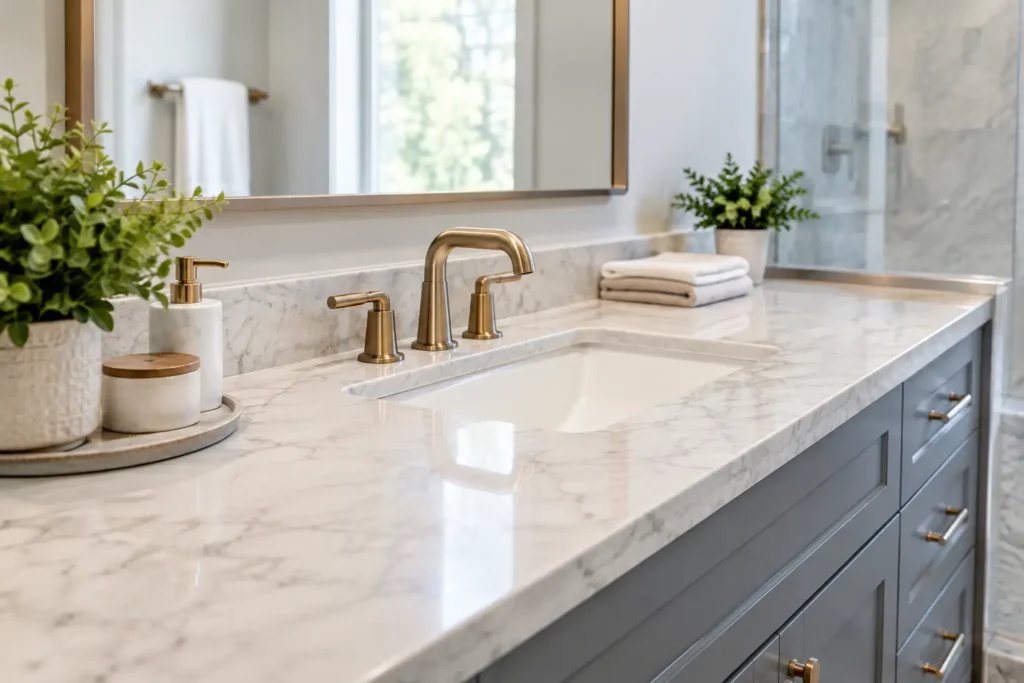
A bathroom countertop can look perfect on installation day and become a daily frustration six months later. Water around the faucet, makeup spills, hot styling tools, children’s toothpaste, and cleaning products all put the surface to work. This guide to choosing bathroom countertops focuses on what holds up, what requires more care, and how to avoid paying for a look that does not fit your household.
The right choice is not always the most expensive material. It is the one that matches the way the bathroom is used, the condition of the vanity, and the level of maintenance you are willing to handle. A guest bathroom, a busy family bath, and a primary suite should not automatically get the same countertop.
Start With How the Bathroom Is Used
Before comparing colors or samples, identify who uses the bathroom and what happens there every day. A low-traffic powder room gives you more freedom to choose a dramatic material that needs careful upkeep. A main bathroom used by several people needs a surface that can take water, dropped items, and frequent cleaning without showing every mark.
Think about the vanity setup, too. A single sink often leaves more usable counter space and gives the room a cleaner appearance. Double sinks are practical for shared bathrooms, but they reduce open surface area and increase the number of cutouts that must be measured and finished correctly.
Water exposure matters more than most homeowners expect. Countertops around undermount sinks, widespread faucets, and wall-mounted fixtures need clean seams, proper caulking, and a professional fit. Even a durable material can develop problems if water reaches the cabinet below. If the vanity is swollen, out of level, or poorly secured, repair or replace it before installing a new top.
Guide to Choosing Bathroom Countertops by Material
Material affects the price, appearance, maintenance, and installation process. There is no one-size-fits-all answer, but the trade-offs are clear when you compare the most common options.
Quartz: Reliable for Busy Bathrooms
Quartz is one of the strongest all-around choices for a bathroom renovation. It is an engineered stone made from natural quartz and resin, giving it a consistent appearance and a nonporous surface. It does not need regular sealing, and it stands up well to water, makeup, soap, and ordinary bathroom cleaners.
For homeowners who want a polished stone look without a lot of upkeep, quartz is usually the practical answer. It comes in solid colors, soft marble-style veining, and patterns that work with modern, traditional, or transitional cabinets. Because slabs can vary by manufacturer, always view the actual sample beside your cabinet color and tile.
Quartz does have limits. It can cost more than laminate, and its weight requires a sound vanity and proper installation. Avoid placing very hot tools directly on the surface, especially near seams. A heat-resistant pad is a simple habit that protects the finish.
Granite: Natural Character With Added Care
Granite gives a bathroom real natural-stone variation. No two slabs are exactly alike, which appeals to homeowners who want the countertop to make a statement. It is durable and handles normal bathroom use well when it is properly sealed.
The trade-off is maintenance. Granite is porous, so sealing helps protect it from moisture and staining. Some darker granites may be more forgiving, while lighter slabs can show cosmetic changes more easily if spills sit too long. Ask about the specific slab, not granite as a general category, because density and pattern vary.
Granite works well in a primary bathroom, powder room, or higher-end renovation where natural movement is part of the design goal. It may be less practical for homeowners who want a surface that requires almost no attention.
Marble: Beautiful, but Not Carefree
Marble has a classic appearance that many homeowners want in a vanity top. Its soft veining can make a small bathroom feel more finished and upscale. But marble is not the right choice for every household.
It is softer and more porous than quartz, which means it can scratch, etch, or stain more easily. Acidic products, certain cosmetics, and cleaners can leave dull spots that cannot simply be wiped away. Sealing helps, but it does not make marble maintenance-free.
Choose marble when you understand and accept the patina that develops over time. In a lightly used bathroom, it can be a worthwhile design choice. In a bathroom used by children or multiple family members every morning, quartz often delivers a similar visual effect with fewer worries.
Solid Surface: Clean Lines and Repairable Seams
Solid-surface countertops are made from acrylic or polyester resins and minerals. They offer a smooth, nonporous finish and can often be installed with integrated sinks and nearly invisible seams. That makes them a strong option for homeowners who prefer a clean, simple look.
The material is easier to repair than natural stone if it receives light scratches or minor surface damage. It is also comfortable for practical bathroom layouts where hygiene and easy cleaning matter most. The downside is that it may scratch more easily than quartz or granite, and some homeowners prefer the depth and movement of stone.
Laminate: Budget-Friendly With More Design Options
Laminate has improved far beyond the basic patterns many homeowners remember. It is available in stone-look, wood-look, and solid-color designs at a lower initial cost than most stone surfaces. For a rental property, a quick refresh, or a bathroom renovation with a tight budget, it can make sense.
Its weakness is water at seams and edges. Once water penetrates the substrate, the material can swell or separate. A quality installation, a well-fitted sink, and prompt attention to failed caulk are essential. Laminate is not a poor choice, but it demands realistic expectations about lifespan and moisture exposure.
Match the Countertop to the Vanity and Sink
A countertop is only as dependable as the base under it. Before ordering material, confirm the vanity width, depth, level, and condition. Stone tops are heavy, and an old particleboard cabinet with water damage may not be worth saving. A new countertop cannot correct a failing vanity box.
Sink selection also changes the final result. Undermount sinks create a clean edge and make it easier to wipe water into the basin, but they require precise support and sealing. Drop-in sinks have a visible rim and are often easier to replace, though the rim can collect grime. Vessel sinks create a bold look but affect faucet height, splash control, and usable counter space.
Do not treat the backsplash as an afterthought. A short matching backsplash protects the wall behind the faucet and gives the installation a finished appearance. In bathrooms with tile walls, the countertop edge and tile joint must be planned together so the room does not end up with awkward gaps or oversized caulk lines.
Set a Budget That Includes the Finished Job
The countertop price is only part of the project. Accurate budgeting includes the material, fabrication, sink cutouts, edge profile, backsplash, removal of the old top, plumbing disconnection and reconnection, and any vanity repair needed before installation.
A lower-priced countertop can become expensive if the cabinet needs rebuilding or the plumbing must be moved. On the other hand, choosing a durable material the first time can prevent another replacement job a few years down the road. Ask for the full scope of work so there are no surprises after the material is selected.
If speed matters, ask what materials are available now. A beautiful slab that is weeks away may not make sense when you have a leaking sink, a damaged vanity top, or a bathroom that needs to be back in service quickly. In-stock cabinets and countertop options can keep the renovation moving without sacrificing professional installation.
Details That Protect Your Investment
A good countertop decision should include the details that make it last. Choose a faucet that reaches far enough into the sink bowl without spraying water across the deck. Use quality caulk where the countertop meets the wall and around the sink. Address slow drains, loose supply lines, and leaking shutoff valves before they damage the new cabinet or countertop.
Cleaning habits matter as well. Use a soft cloth and mild cleaner unless the manufacturer gives different instructions. Avoid harsh abrasives, strong acids, and tools that can scratch the finish. For sealed natural stone, keep up with recommended resealing instead of waiting until stains appear.
The goal is a bathroom that works every morning, not just one that photographs well. Cobo Kitchen Master & Home Repair can help homeowners coordinate the countertop, vanity, sink, plumbing, and installation through one accountable team. Choose the surface that fits your real routine, then make sure the preparation and installation are done right.