
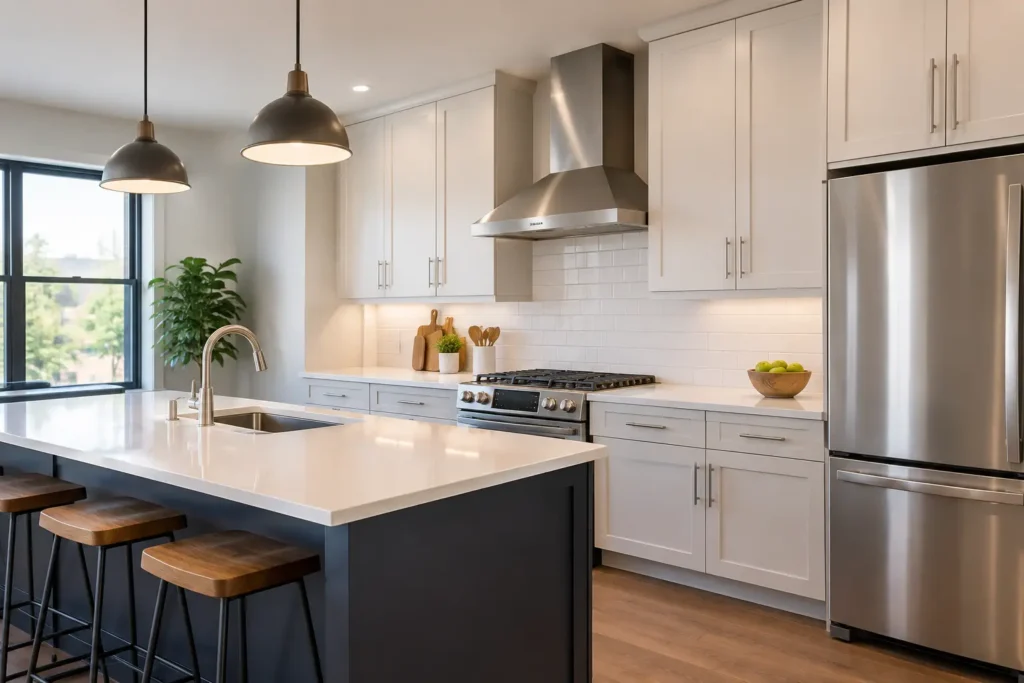
A tenant moves out, and the kitchen cabinets tell the real story. Swollen bases under the sink, peeling doors, loose hinges, and chipped corners can turn a routine turnover into an expensive delay. The best cabinets for rental properties are not always the cheapest option on the showroom floor. They are the cabinets that hold up to daily use, clean up quickly, look current to prospective tenants, and can be replaced or repaired without stopping your next lease.
For landlords, investors, and homeowners preparing a rental unit, cabinet selection should be a business decision. You need durable materials, practical storage, a finish that hides normal wear, and professional installation that does not create problems later.
What Rental Cabinets Need to Handle
Rental kitchens work hard. Tenants may not treat cabinets with the same care an owner would, and kitchens see moisture, grease, heat, cleaning chemicals, slammed doors, and overloaded shelves. A cabinet that looks good on installation day but breaks down after one turnover is not a cost-saving choice.
Start with the cabinet box. The box is the structure behind the doors and drawers, and it matters more than decorative details. Look for sturdy construction, secure back panels, dependable shelf supports, and materials that resist sagging. Lower cabinets near sinks need extra attention because a small plumbing leak can ruin low-grade particleboard quickly.
Hardware matters just as much. Hinges and drawer slides take the daily impact. Soft-close hardware is a good upgrade for many rentals because it reduces slamming and protects doors, but it should be quality hardware that can be adjusted or replaced easily. A weak soft-close hinge is worse than a reliable standard hinge.
Best Cabinet Materials for Rental Properties
Material choice should match the property, expected rent level, and how long you plan to hold the investment. There is no single right answer for every unit, but some materials consistently perform better than others.
Plywood Cabinet Boxes: Best for Long-Term Durability
Plywood cabinet boxes are often the strongest choice for rental properties, especially in kitchens that will see frequent use. Quality plywood handles screws well, resists warping better than low-density particleboard, and offers more protection when minor moisture issues occur.
This option costs more upfront, but it can reduce replacement costs during future turnovers. Plywood is especially worthwhile for higher-end rentals, family rentals, and properties where you want cabinets to remain in service for many years.
Not all plywood is equal. Ask about the thickness, construction, and interior finish. A well-built plywood box with a durable interior surface is a practical investment. Thin panels and weak joints can still fail, even when the material is labeled plywood.
Furniture-Grade Particleboard: A Budget Option With Limits
Furniture-grade particleboard can work in lower-cost rental renovations when it is properly sealed and installed. It offers a clean, consistent surface and can keep initial costs down. For dry areas and lightly used units, it may be a reasonable choice.
The trade-off is moisture resistance. Water damage is particleboard’s biggest weakness. A leaking sink supply line, overflowing dishwasher, or wet mop left against the toe kick can cause swelling that cannot be repaired. If you choose this material, protect sink bases, address plumbing issues immediately, and avoid the lowest-grade cabinet construction.
MDF Doors: Smooth, Paint-Friendly, and Practical
Medium-density fiberboard, or MDF, is commonly used for painted cabinet doors. Its smooth surface produces a clean finish without the grain patterns seen in wood. For rental properties, MDF doors can be a smart value when paired with a solid cabinet box and durable paint or thermofoil finish.
MDF does not handle standing water well, so it is not the best choice for areas with chronic moisture problems. However, it is stable, affordable, and easy to match when a single replacement door is needed. For many standard rental kitchens, it is a practical middle-ground option.
Solid Wood Doors: Best for Higher-End Rentals
Solid wood cabinet doors offer strength, repairability, and a premium look. They are a strong fit for luxury rentals, furnished rentals, or homes competing for higher monthly rents. Wood doors can often be touched up, refinished, or repaired instead of fully replaced.
They also cost more and may expand or contract with humidity changes. If the unit will not command a higher rent because of the upgrade, solid wood may not deliver the best return. Use it where the property level supports it.
Best Cabinet Door Styles for Rentals
A rental kitchen should appeal to the broadest possible group of tenants. That usually means clean lines, neutral colors, and styles that will not look dated after one trend cycle.
Shaker cabinets remain one of the best choices. They work in traditional, transitional, and modern kitchens, and the simple recessed panel is easier to maintain than doors with heavy carving or detailed trim. White, warm white, light gray, natural oak, and medium wood tones are dependable choices depending on the property’s overall finish level.
Flat-panel or slab doors are another excellent option, particularly in modern apartments and smaller kitchens. They are easy to wipe down, have fewer edges to collect grease, and create a straightforward, updated appearance. A matte or low-sheen finish helps hide fingerprints better than high gloss.
Avoid highly customized colors, ornate raised-panel profiles, and fragile decorative accents unless the rental is positioned as a premium property. A bold cabinet color may photograph well, but it can limit tenant appeal and make future touch-ups difficult.
Features That Reduce Turnover Repairs
The best cabinets for rental properties include details that make maintenance easier after installation. These are not flashy upgrades, but they protect the budget.
Choose full-extension drawer slides when possible. Tenants can reach the back of drawers without forcing them, and maintenance teams can spot spills or damage more easily. Adjustable hinges are also valuable because doors can be realigned after years of use rather than replaced.
A finished cabinet interior is easier to clean than raw or rough surfaces. Durable edge banding is another detail worth checking. Cabinet edges near doors, drawers, and sink bases receive constant contact. Poorly applied edge banding peels early and makes an otherwise decent cabinet look worn out.
Under-sink protection is one of the smartest additions to a rental kitchen. A removable waterproof liner or fitted sink-base tray can contain small leaks and alert the property owner before water reaches the cabinet floor. It will not replace proper plumbing work, but it can prevent a minor issue from becoming a cabinet replacement.
Where to Spend and Where to Save
Spend money on the cabinet box, hinges, drawer slides, installation, and moisture protection. Those elements determine whether the cabinets stay functional. A cabinet door can be replaced. A failed box, sagging drawer system, or poorly secured installation creates a larger repair.
Save on complicated accessories, specialty organizers, decorative molding, and expensive custom finishes when the rental price point does not justify them. Basic roll-out trays may be useful in some units, but elaborate inserts can break, go missing, or add little value to the tenant experience.
Stock cabinet sizes are often the smartest choice for rental renovations. They are usually more affordable, faster to source, and easier to replace than fully custom cabinetry. Custom cabinets make sense when the room has difficult dimensions or when the property is a high-end rental where every inch of storage affects marketability.
Installation Is Part of the Cabinet Decision
Even durable cabinets fail early when installation is rushed. Cabinets must be level, securely fastened to wall studs, properly shimmed, and aligned so doors and drawers operate correctly. Countertops, sinks, plumbing connections, and backsplash work also need to be coordinated so the kitchen is finished without creating gaps or water entry points.
This is where using one accountable team saves time. Cobo Kitchen Master & Home Repair can supply in-stock cabinet options and coordinate installation, countertop work, and needed plumbing repairs without sending you to multiple providers. That matters when a vacant unit needs to be rent-ready, not waiting on separate schedules.
Before installation begins, measure appliances carefully. A new refrigerator, range, dishwasher, or microwave can affect cabinet layout, filler requirements, and clearance. Confirm sink size and faucet placement before the countertop is cut. Fix any active plumbing issue before the new base cabinets go in.
A Practical Cabinet Plan for Most Rentals
For many standard rental properties, a strong plan is a plywood or quality furniture-grade cabinet box, Shaker or flat-panel doors, neutral painted or wood-look finishes, reliable adjustable hardware, and under-sink moisture protection. This combination keeps the kitchen appealing without turning a turnover renovation into an overbuilt custom project.
If the unit is a higher-end rental, upgrade the door material, drawer hardware, and interior storage only where tenants will notice and where the rent supports the expense. If the property is a budget rental, do not cut costs on installation or sink-base protection just to afford decorative upgrades.
The right cabinets should make the next turnover easier, not create another repair list. Choose construction that fits the property’s use, protect it from water, and install it correctly the first time. That is how a rental kitchen stays marketable, functional, and ready when the next tenant is.