
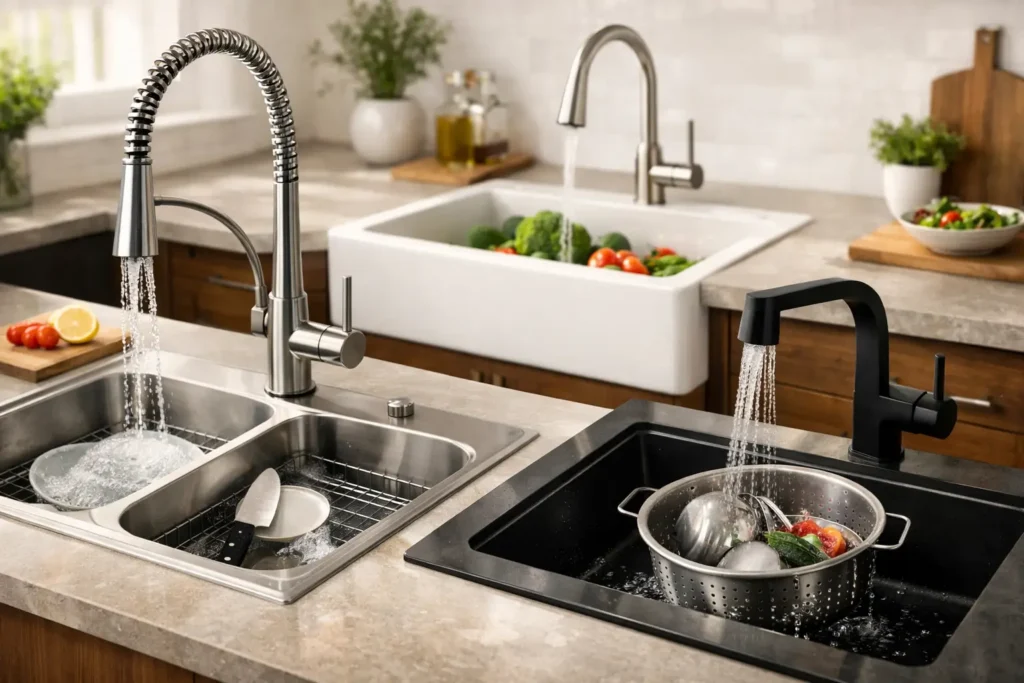
A kitchen sink that sees breakfast dishes, lunch prep, pots, baking sheets, and evening cleanup cannot be chosen for looks alone. The best kitchen sinks for heavy daily use are built to absorb impact, resist stains, drain properly, and give you enough working room without creating another hard-to-clean surface in the kitchen.
For a busy home, the right choice usually comes down to material, configuration, mounting method, and installation quality. A sink can be made from excellent material and still become a daily frustration if it is too shallow, poorly supported, or paired with a weak faucet and undersized drain setup.
What Heavy Daily Use Really Demands
Heavy use is not just a large family. It can mean frequent cooking, hand-washing cookware, filling stockpots, rinsing garden produce, cleaning bottles, or managing a rental property where durability matters more than delicate finishes. These sinks take repeated contact from metal pans, sharp utensils, hot water, food residue, and cleaning products.
A practical sink should have a deep enough bowl for real cookware, corners that are easy to reach, sound control if noise is a concern, and a finish that will not show every water spot. It also needs professional support underneath. A large single-bowl sink full of water and cast-iron cookware is heavy. The cabinet, countertop cutout, clips, and plumbing connections all need to be ready for that load.
1. 16-Gauge Stainless Steel Single-Bowl Sinks
For many active kitchens, a quality 16-gauge stainless steel single-bowl sink is the most dependable all-around choice. It handles heat, does not crack from normal impacts, and gives you a wide open space for baking sheets, roasting pans, and large pots. Stainless steel also works with nearly any cabinet and countertop style, making it a sensible option during a remodel.
Gauge matters. Lower numbers mean thicker steel, so 16-gauge steel is generally a stronger choice than thinner 20- or 22-gauge models. Look for a sink with sound-deadening pads and an undercoating to reduce the drum-like noise of running water and dishes.
The trade-off is visible scratching and water spotting. Fine scratches usually blend into the finish over time, but homeowners who want a sink that always looks untouched may prefer granite composite. Daily drying and occasional cleaning with a non-abrasive product keep stainless looking its best.
2. Granite Composite Single-Bowl Sinks
Granite composite sinks are a strong option for homeowners who want a darker, more substantial look without moving to a delicate natural-stone sink. Made from crushed stone and resin, quality composite sinks resist scratches, stains, and normal household impacts very well. They are also quieter than stainless steel.
This material is especially useful in kitchens where dishes pile up and appearances still matter. Black, gray, brown, and cream finishes can coordinate with many countertop colors while hiding minor water marks better than polished metal.
Composite is not maintenance-free. Hard-water buildup can show on dark colors, and very heavy impact can chip a poor-quality unit. It is also important to follow the manufacturer’s guidance on heat exposure. Do not assume every composite sink should take a scorching-hot pan straight from the stove. With the right product and installation, though, it is one of the best kitchen sinks for heavy daily use when durability and a finished look carry equal weight.
3. Deep Stainless Steel Double-Bowl Sinks
A double-bowl sink remains practical for households that prefer to separate tasks. One side can hold soapy water or drying dishes while the other remains clear for rinsing vegetables, filling a coffee pot, or washing hands. This separation can make cleanup easier when several people are working in the kitchen at once.
For daily use, avoid shallow bowls. A deeper double-bowl model, often around 8 to 10 inches depending on cabinet and plumbing conditions, reduces splashing and makes a noticeable difference with cookware. An offset design with one larger bowl and one smaller bowl is often more useful than two equal compartments because it preserves room for larger pans.
The limitation is simple: a divider can get in the way. If you regularly wash oversized sheet pans, griddles, or roasting racks, a single large bowl will be easier to live with. Measure your most-used cookware before making the final choice, not just the available countertop opening.
4. Fireclay Farmhouse Sinks
A true fireclay farmhouse sink is a solid choice for homeowners who want a traditional apron-front appearance but still need a hard-working work zone. High-quality fireclay is fired at very high temperatures, producing a dense surface that resists stains, fading, and everyday scratches. Its deep bowl is excellent for big cookware and family-size cleanup.
This is not a casual replacement project. Fireclay sinks are heavy and often require a cabinet built or modified specifically to support them. The front apron also changes the cabinet layout and countertop fabrication. If the existing base cabinet is not designed for the sink, forcing the installation can lead to poor alignment, stress on the countertop, and expensive corrections later.
Fireclay can chip if hit hard enough by heavy cookware, especially on an exposed edge. It is best for homeowners who value the apron-front design and are willing to invest in the cabinet and countertop work required to install it correctly.
5. Enameled Cast-Iron Sinks
Enameled cast iron brings weight, heat resistance, and a smooth, glossy finish. It holds up well to normal heavy use and can be an excellent fit in a traditional kitchen. The dense material also helps reduce noise, and the finish is easy to wipe down after messy food prep.
The concern is impact damage to the enamel. A dropped pan or heavy object can chip the coating, exposing the iron underneath. Once that happens, repair should not be ignored because exposed metal can rust. Like fireclay, cast iron needs serious structural support and is not always the right fit for an existing cabinet without reinforcement.
Choose this option when you want its classic appearance and are prepared for a professional installation. It is durable, but it is not the lowest-maintenance answer for a household that is hard on every surface.
6. Workstation Sinks for High-Volume Kitchens
A workstation sink adds built-in accessories such as cutting boards, colanders, drying racks, and sliding ledges. In a compact kitchen, this can create valuable prep space and keep food preparation contained over the sink. For homeowners who cook often, that is more than a design feature. It can improve how the kitchen functions every day.
Most workstation models are stainless steel, though other materials are available. A large single bowl is usually the most useful format because the accessories can be moved aside when it is time to wash oversized items. Look closely at the quality of the included accessories and replacement availability. Thin cutting boards, poorly fitted racks, and hard-to-clean ledges can turn a good idea into clutter.
A workstation sink makes the most sense when counter space is limited or food prep is frequent. If you already have ample workspace and prefer a simple sink to clean, a standard single-bowl model may serve you better.
Choose the Mounting Style With the Countertop in Mind
Undermount sinks are popular because crumbs and water can be wiped directly from the counter into the bowl. They create a clean look and work especially well with granite, quartz, and solid-surface countertops. But the adhesive, mounting hardware, and countertop support must be handled correctly. A failed undermount installation is not a minor cosmetic issue.
Top-mount, or drop-in, sinks rest on the countertop edge and are generally easier to replace. They can be a good choice for laminate countertops and budget-conscious repairs. The rim does create a ledge that needs regular cleaning, but a properly installed top-mount sink can perform reliably for years.
Farmhouse sinks require the most planning because the cabinet and counter must be cut around the apron front. Confirm the sink selection before cabinet and countertop work begins. Changing dimensions late in the project is a common source of delays and added cost.
Do Not Overlook the Faucet, Drain, and Cabinet Base
The sink is only part of the work zone. A high-arc pull-down faucet with a durable spray head makes a deep sink more useful, while a weak faucet can make even an expensive sink frustrating. Make sure faucet reach matches the bowl size so water lands where you need it rather than splashing against the back wall.
Drain placement matters, too. A rear-set drain often creates more usable cabinet space below and gives dishes a flatter working surface inside the sink. Garbage disposal compatibility, dishwasher connections, shutoff valves, and aging drain lines should all be checked before installation.
At Cobo Kitchen Master & Home Repair, the practical approach is to match the sink, cabinet, countertop, faucet, and plumbing work before installation starts. That avoids the familiar problem of discovering too late that a selected sink does not fit the base cabinet or conflicts with existing plumbing.
The right sink should make the busiest part of your kitchen easier to manage, not demand extra care every time dinner is done. Start with how you actually cook, clean, and use your cabinets, then choose a material and bowl layout that can keep up with that routine for years.