
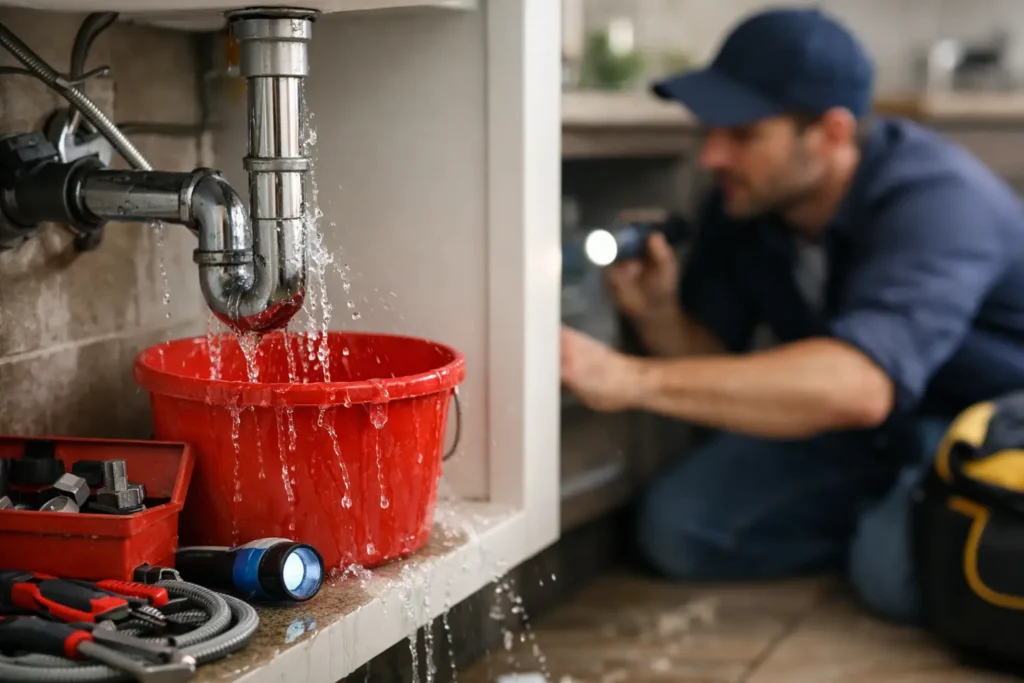
A burst supply line can send gallons of water across a kitchen floor before you find the right towel. A backed-up toilet can turn from inconvenient to unsanitary just as fast. This guide to emergency plumbing response gives homeowners a clear plan: stop the water, protect the home, avoid costly mistakes, and get qualified help moving.
The goal is not to perform a major repair under pressure. The goal is to limit damage until the problem can be diagnosed and corrected properly.
What Counts as a Plumbing Emergency?
Not every drip requires an after-hours call. A faucet that drips into the sink can usually wait for a scheduled repair. But plumbing problems become emergencies when they threaten the structure of your home, create a health hazard, or leave your household without an essential service.
Call for urgent plumbing service when water is actively leaking or flooding, a pipe has burst, sewage is backing up into a fixture, a toilet will not stop overflowing, or you have no water where water service should be available. A failed water heater that is leaking heavily also needs immediate attention, especially if water is spreading near electrical connections or finished flooring.
The right response depends on the source. A slow leak under a bathroom vanity may be contained for a few hours. Water coming through a ceiling, however, may be traveling from a failed pipe, drain, appliance line, or bathroom fixture above. Treat it as urgent until the source is identified.
Your First 10 Minutes Matter
When water is moving where it should not, act in order. Do not spend time searching online for a permanent fix while the floor is soaking.
Shut Off the Water
For a leak at a sink, toilet, dishwasher, refrigerator line, or washing machine, look first for the local shutoff valve. Under-sink valves are usually inside the cabinet. Toilet valves are typically behind the fixture near the floor. Turn the valve clockwise until it stops, but do not force a corroded valve.
If you cannot isolate the fixture, shut off the main water supply to the home. Every homeowner should know where this valve is before an emergency happens. It is often near the water meter, in a utility room, basement, garage, crawlspace, or along an exterior wall. Turning off the main supply may interrupt water throughout the house, but it can prevent a much larger repair bill.
If a toilet is overflowing, remove the tank lid and push the flapper closed at the bottom of the tank. Then close the toilet shutoff valve. Do not flush again to “check” whether the problem is fixed.
Protect People Before Property
Water and electricity are a dangerous combination. If water is near outlets, appliances, a breaker panel, or exposed wiring, do not step into the affected area. Turn off power only if you can do so without entering standing water. Otherwise, keep people away and call for professional help.
For sewage backups, keep children and pets out of the area. Raw sewage can carry harmful bacteria and contaminants. Do not use the affected sink, toilet, shower, or washing machine, because additional water may worsen the backup.
If you smell gas near a water heater or hear a hissing sound from a gas line, leave the home and contact the gas utility or emergency services. That is not a plumbing repair you should attempt yourself.
Limit the Spread
Once the water is shut off, use towels, buckets, and a wet/dry vacuum if it is safe to do so. Move rugs, furniture, stored items, and electronics away from the wet area. Open cabinet doors below leaking sinks so trapped moisture can escape.
Take photos and short videos before cleanup if the damage may involve an insurance claim. Document the source, affected rooms, damaged materials, and any personal property. Then focus on drying. Water that remains behind cabinets, under flooring, or inside walls can create mold and material damage long after the visible puddle is gone.
A Guide to Emergency Plumbing Response by Problem
A fast response is useful only when it matches the problem. These common emergencies require different decisions.
Burst or Leaking Pipes
Shut off the local valve or the main water supply immediately. If the pipe is visible and accessible, place a bucket underneath it and dry surrounding surfaces. A temporary pipe clamp or repair tape may slow a small leak, but it is not a permanent repair and should not be trusted overnight.
Pipes can fail because of freezing, corrosion, high water pressure, loose fittings, or accidental damage during a renovation. The visible split is often only part of the issue. A professional should inspect nearby fittings, pressure conditions, and hidden water damage before restoring service.
Overflowing Toilet
Close the flapper in the tank, shut off the valve behind the toilet, and avoid repeated plunging if the bowl is already high. A standard plunger can help with a simple localized clog, but it will not solve a main sewer blockage.
If multiple fixtures are draining slowly, gurgling, or backing up at the same time, stop using water throughout the home. That pattern points to a larger drain or sewer issue. Chemical drain cleaners are not the answer. They can damage pipes, create fumes, and make professional repair more hazardous.
Water Heater Leak or Failure
Turn off the cold-water supply valve above the unit if it is accessible. For an electric water heater, shut off power at the breaker. For a gas unit, set the gas control to off only if you can do so safely and follow the manufacturer instructions.
A small amount of water at the pressure relief valve may indicate pressure or temperature trouble. Water at the bottom of the tank may mean a failed drain valve, connection, or a corroded tank. Tank corrosion cannot be repaired reliably. It usually means replacement is the practical solution.
No Water or Sudden Low Pressure
First, check whether the issue affects one fixture or the entire home. A single faucet may have a clogged aerator, failed fixture valve, or localized supply issue. No water throughout the house may involve the main shutoff, water meter, well equipment, frozen piping, or a utility interruption.
Do not keep opening and closing valves or taking apart fittings while the cause is unclear. If water service stops suddenly and neighbors still have water, professional diagnosis is the safer next step.
What Not to Do During a Plumbing Emergency
Pressure leads homeowners to make expensive decisions. Avoid using duct tape as a long-term pipe repair, pouring chemical cleaners into a blocked drain, or opening walls and ceilings before the water source is stopped. Those actions can increase damage or make the repair more complicated.
Do not ignore a ceiling bulge filled with water. Keep clear of the area and move belongings below it. A water-filled ceiling can collapse without much warning. A plumbing professional can help identify the source, while a restoration specialist may be needed for extensive drying and material removal.
It is also wise to avoid hiring based on the fastest promise alone. Emergency service should include clear communication about the problem, the immediate repair, and any follow-up work needed to restore walls, cabinets, flooring, or fixtures.
What a Professional Emergency Plumber Should Address
The emergency repair is the first step, not always the whole job. A dependable plumbing team should locate the true source, stop the active leak or backup, inspect connected components, and explain what needs attention next.
For example, a leaking kitchen sink may involve more than a loose drain. Water may have damaged the cabinet base, swollen particleboard, affected a countertop seam, or reached flooring behind the toe kick. Handling the plumbing and the surrounding repair through one accountable team reduces delays and prevents the common handoff problem between separate contractors.
Cobo Kitchen Master & Home Repair approaches urgent plumbing work with that practical view. The immediate problem needs to be controlled, but the finished repair should also protect the kitchen or bathroom from repeat damage and unfinished details.
Prepare Before the Next Emergency
A little preparation makes a major difference when water is running. Make sure every adult in the home knows the main water shutoff location. Test fixture shutoff valves gently during routine maintenance so you know whether they operate. Keep a plunger, bucket, towels, flashlight, and basic wet/dry vacuum accessible.
Pay attention to early warnings: recurring drain clogs, cabinet moisture, staining below fixtures, banging pipes, changing water pressure, rust around water heater connections, and unexplained increases in the water bill. These issues are often cheaper to fix before they become a late-night emergency.
If you are remodeling a kitchen or bathroom, do not treat plumbing access as an afterthought. Quality shutoff valves, properly installed supply lines, secure drains, and accessible connections make future service faster and less disruptive. Good workmanship is not just about how the finished room looks. It is about how well the systems behind the walls perform when your home needs them most.
When water is where it should not be, act quickly, stay safe, and get the right repair in place. A calm first response can save your floors, cabinets, and the time you cannot afford to lose.