
A shower that leaves water around your ankles is not a minor inconvenience. It is usually the first warning that hair, soap scum, and residue are restricting the drain. Knowing how to unclog a shower drain early can prevent odors, standing water, and a complete backup when your household needs the bathroom most.
Start with the least aggressive method. Many shower clogs are close to the drain opening and can be removed without harsh chemicals or major plumbing work. If the drain remains slow after basic cleaning, treat it as a plumbing issue rather than repeatedly pouring products down the pipe.
What Is Clogging Your Shower Drain?
In most homes, the blockage is a combination of shed hair, soap residue, body oils, and mineral buildup. Hair catches on the drain cover, stopper, or pipe walls. Soap and oils bind it together until water can no longer move freely.
The location of the clog matters. A shallow clog near the drain is often a simple cleanup. A clog farther down the line may need a drain snake or professional service. If more than one fixture is draining slowly, the problem may be in a shared branch line or main sewer line, not the shower itself.
Before you begin, remove bath mats and clear the shower floor. Have old towels nearby, wear gloves, and keep children and pets away from the work area. Do not mix drain cleaners, vinegar, bleach, or other chemicals. Mixed products can create dangerous fumes and damage plumbing components.
How to Unclog a Shower Drain Step by Step
1. Remove the drain cover and visible hair
Take off the shower drain cover or stopper. Some covers lift out, while others are held by one or two screws. Put the screws somewhere safe so they do not fall into the drain.
Use gloved fingers, a bent wire hook, or a plastic drain-cleaning tool to pull out hair and debris. Move slowly. The goal is to pull the clog up and out, not push it farther into the pipe. It may be unpleasant, but this step solves a large number of slow-drain problems immediately.
Rinse the cover separately and clean away any buildup before reinstalling it. If the drain begins flowing normally after removal, run hot tap water for a few minutes to carry away loosened residue.
2. Flush the drain with hot water and dish soap
If water is still moving but slowly, add a small amount of grease-cutting dish soap to the drain, then follow it with hot water. Use hot tap water, not boiling water. Boiling water can crack some acrylic shower pans, damage certain pipe connections, or stress older plumbing.
Let the water run for several minutes. This method works best when soap film and oily residue are narrowing the pipe, not when a dense hair clog is blocking it completely.
3. Use a plunger correctly
A standard cup plunger can help dislodge a clog deeper in the shower trap. Add enough water to the shower floor to cover the rubber cup. If your shower has an overflow opening or a nearby secondary drain opening, cover it with a wet rag to improve suction.
Place the plunger flat over the drain and make 10 to 15 firm, controlled strokes. Lift it and check whether the water begins to drain. Repeat once or twice if needed. Excessive plunging can force dirty water back into the shower, so stop if the backup gets worse.
4. Use a drain snake for a deeper clog
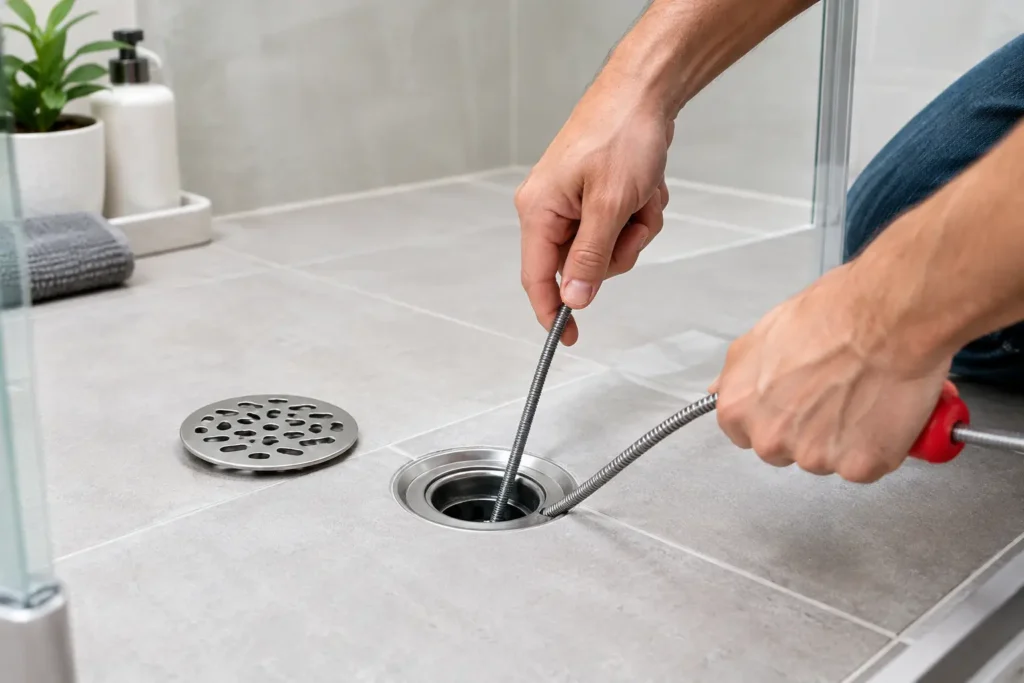
When hair is beyond reach, a hand-crank drain snake is usually more effective than another round of chemicals. Feed the cable into the drain slowly. When you feel resistance, turn the handle gently to catch or break apart the blockage.
Do not force the cable. Aggressive twisting can damage a drain assembly, scratch a finished surface, or cause the cable to bind in the pipe. Pull the snake back out carefully, remove debris, and flush the drain with hot tap water.
For a typical shower, a small hand snake is often enough. Longer or powered equipment should be left to a plumber, especially in older homes with fragile or unknown pipe conditions.
5. Test the drain before putting everything back
Run the shower for several minutes and watch the water level. A clear drain should move water away quickly without gurgling, bubbling, or sending odors back into the bathroom.
If the drain improves but remains slow, there may still be buildup farther down the line. Repeatedly attacking it with stronger products can turn a manageable clog into damaged piping or a more difficult repair.
When Not to Use Chemical Drain Cleaners
Chemical drain cleaners may look like the fastest answer, but they are rarely the best first choice for a shower drain. Many products generate heat or use highly corrosive ingredients. They can harm older metal pipes, weaken seals, damage some plastic plumbing, and create a hazard for anyone who later opens the drain.
They also do not always dissolve a heavy mass of hair. Instead, the chemical may sit above the blockage, leaving behind caustic liquid that can splash when you remove the drain cover or use a snake.
Avoid chemical cleaners if you have already used another product, if the drain is completely blocked with standing water, or if you suspect the pipe is leaking. Mechanical removal and professional drain clearing are safer choices in those situations.
Signs the Clog Needs a Professional Plumber
A single slow shower drain is often a local clog. The situation changes when there are signs of a larger plumbing issue. Call for service if you notice recurring clogs after cleaning, water backing up into the tub or shower, sewage-like odors, gurgling drains, or slow drainage in sinks and toilets as well.
Those symptoms can point to a blocked branch line, a venting problem, tree-root intrusion, or a main-line restriction. If you live in a multi-unit property, a shared plumbing line may also be involved. The wrong DIY method can push a blockage into another section of the system and create a more expensive emergency.
For urgent backups or plumbing problems that keep returning, Cobo Kitchen Master & Home Repair can assess the source of the issue and handle the repair with accountable workmanship. A proper diagnosis matters more than a temporary fix.
Keep the Shower Drain Clear After the Repair
Prevention is simple and far less frustrating than dealing with standing water before work or school. Install a hair catcher that fits your drain and empty it regularly. Clean visible hair from the cover after each shower if anyone in the household has long hair.
Once a month, remove the cover and rinse away buildup. Follow that with hot tap water and a small amount of dish soap if soap residue is a regular issue. In homes with hard water, mineral deposits may require more frequent cleaning around the drain opening and shower fixtures.
Do not treat the drain like a disposal. Avoid rinsing thick hair products, waxes, or construction debris into it during bathroom repairs. Small habits keep the line open, protect your plumbing, and help your shower stay ready when you need it.