
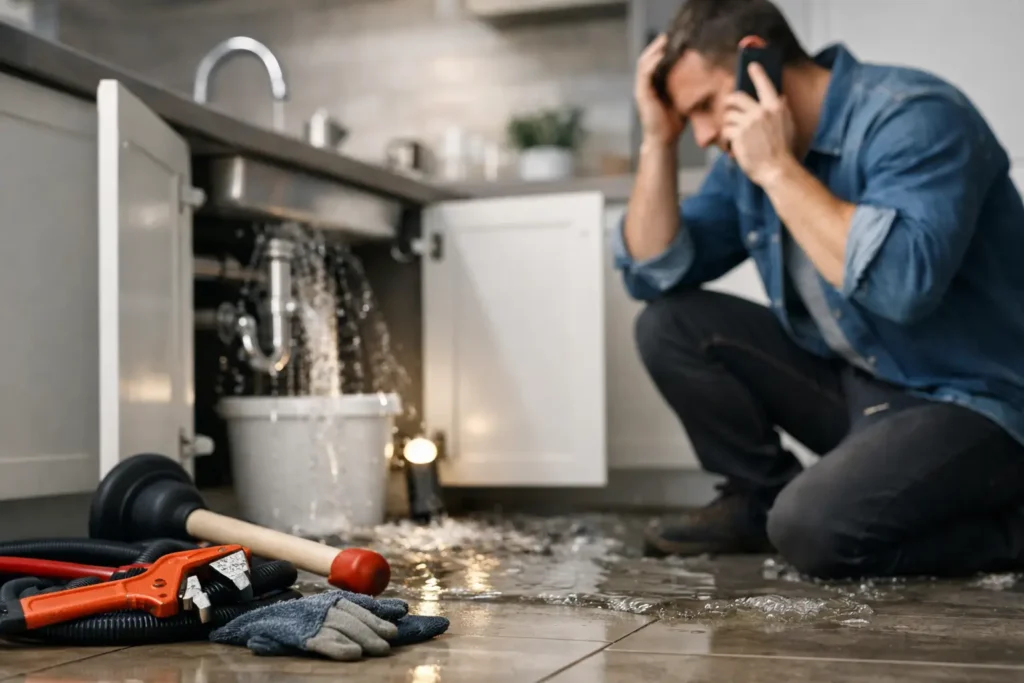
A burst supply line can put gallons of water into a kitchen cabinet before you have time to find a bucket. A toilet overflow can spread contaminated water across a bathroom floor just as fast. Knowing how to handle plumbing emergencies at home gives you a better chance of protecting your property, your belongings, and your family before professional help arrives.
The goal is not to perform a complicated repair under pressure. The goal is to stop the source, make the area safe, limit water damage, and bring in a qualified plumber when the problem is beyond a basic shutoff or cleanup.
How to Handle Plumbing Emergencies at Home: First Actions
Every emergency is different, but the first few minutes usually follow the same order: stop the water, address electrical hazards, protect people, and contain the damage. Do not start taking apart pipes while water is still actively flowing. Control comes first.
Shut off the water at the source
For a leaking sink, toilet, dishwasher, refrigerator line, or washing machine hose, look for the local shutoff valve. Under a sink, these are typically small valves on the supply lines. A toilet shutoff is usually located low on the wall behind or beside the bowl. Turn the valve clockwise until it stops.
If you cannot find the local valve, it will not close, or a pipe has burst, shut off the home’s main water supply. Many homes have a main shutoff near the water meter, in a utility room, basement, garage, crawlspace, or on an exterior wall. Every adult in the home should know where it is before an emergency happens.
Do not force a corroded valve. If it will not turn with normal hand pressure, forcing it can create a larger leak. Shut off the main supply instead and call for service.
Turn off power when water is near electricity
Water and electricity are a dangerous combination. If water is approaching outlets, appliances, a breaker panel, extension cords, or exposed wiring, do not walk through it or touch electrical equipment. Shut off power at the breaker only if you can reach the panel without stepping into water.
If you cannot do that safely, move people away from the area and call for emergency assistance. A plumbing problem becomes more serious when electrical hazards are involved.
Contain what you can
Place buckets, towels, pans, or waterproof containers beneath a controlled leak. Move rugs, furniture, stored items, and electronics away from wet areas. For a leak inside a cabinet, remove everything from the cabinet so moisture does not sit against wood, particleboard, or finished surfaces.
Mop standing water promptly, but do not assume the job is done because the floor looks dry. Water can move below flooring, behind baseboards, inside cabinets, and through ceilings. Early drying reduces the risk of swelling, staining, mildew, and costly repairs.
What to Do for Common Plumbing Emergencies
The right response depends on where the water is coming from and whether the water is clean, gray, or sewage-contaminated.
Burst or leaking pipe
A burst pipe requires immediate action. Shut off the main water supply if the leak is active or difficult to isolate. Open a faucet at the lowest point of the home to relieve pressure and allow remaining water to drain from the lines.
If the leak is minor and accessible, a temporary pipe clamp, repair tape, or rubber patch can sometimes slow it down. That is a short-term measure, not a finished repair. Old fittings, corroded pipes, frozen lines, and failed joints need professional diagnosis so the same issue does not return behind a wall or under a floor.
Take photos of the damage after the water is controlled. Clear documentation can be useful if you need to speak with an insurance provider, landlord, or property manager.
Overflowing toilet
Remove the toilet tank lid and push the rubber flapper closed if water is continuously filling the bowl. Then turn off the toilet’s supply valve. If the bowl is rising but has not overflowed yet, do not flush again. One extra flush can turn a simple clog into a contaminated cleanup.
Use a flange plunger designed for toilets. A few firm, controlled plunges may clear a basic blockage. Stop if the water level remains high, if multiple drains are backing up, or if sewage appears in a tub or shower. Those signs can point to a main drain or sewer line problem, and forcing the issue can spread wastewater further.
Treat overflow water as contaminated. Keep children and pets out of the room, wear gloves if cleanup is necessary, and disinfect hard surfaces after the source is repaired. Soaked drywall, carpet, insulation, or flooring may require more than surface cleaning.
Overflowing sink, tub, or shower
First, turn off the faucet. If the fixture is not running but water is backing up, the issue is likely in the drain line. Remove visible hair or debris from a sink or shower drain only if it is easy to reach. A plunger may help with a simple, localized clog.
Avoid pouring chemical drain cleaners into standing water or repeatedly mixing products. These chemicals can damage some pipes, create harmful fumes, and make later repairs more dangerous for the technician. They also rarely solve a severe blockage farther down the line.
When more than one fixture backs up at the same time, stop using water throughout the home. This often means the blockage is in a shared branch line or the main sewer line.
Water heater leak or failure
A puddle around a water heater may come from a loose connection, a pressure relief valve, condensation, or a failing tank. Shut off the cold-water supply valve above the unit if water is actively leaking. For an electric water heater, turn off power at the breaker. For a gas unit, do not adjust gas controls unless you know exactly how the system operates.
If you smell gas, leave the area and contact the gas utility or emergency services from a safe location. Do not use switches, flames, or electrical devices nearby. A leaking water heater can damage flooring quickly, but a gas concern takes priority over property damage.
Frozen pipes
A frozen pipe can become a burst pipe when ice expands. If a faucet produces only a trickle during freezing weather, open the cabinet doors around nearby plumbing and keep the faucet slightly open. Apply gentle heat to the suspected section with a hair dryer or warm towels.
Never use an open flame, propane torch, or high-heat device on plumbing. If you cannot locate the freeze, the pipe is inside a wall, or you see bulging or dripping, shut off the main water and call a plumber. Waiting for the pipe to thaw on its own can be a costly gamble.
When a DIY Fix Should Stop
Homeowners can often close a valve, use a plunger, or clean a visible trap. Beyond that, know when to stop. Cutting into walls, disconnecting supply lines, using drain machines without experience, or trying to repair a pressurized pipe can create more damage than the original leak.
Call for 24/7 plumbing service when water is actively leaking, sewage is backing up, a pipe has burst, the main shutoff is not working, hot water equipment is leaking, or a clog affects multiple fixtures. Fast professional response matters because water damage gets more expensive by the hour.
Cobo Kitchen Master & Home Repair provides emergency plumbing support with the same practical focus homeowners expect during a stressful repair: control the problem, identify the cause, and complete the work with accountability.
Prepare Before the Next Emergency
The best emergency response starts before anything fails. Locate and label the main shutoff valve. Test accessible fixture valves periodically so you know they move. Keep a flange plunger, gloves, towels, a bucket, and a flashlight in an easy-to-reach place.
Also pay attention to early warning signs: a cabinet that smells musty, recurring drain clogs, a toilet that runs constantly, water stains on a ceiling, reduced water pressure, or a water bill that suddenly rises. These are often repair issues, not emergencies yet. Acting early gives you more options and usually lowers the cost.
When water is where it should not be, speed matters. Shut it off, stay safe, protect the area, and get the right repair underway before a small plumbing failure becomes a major home restoration project.