
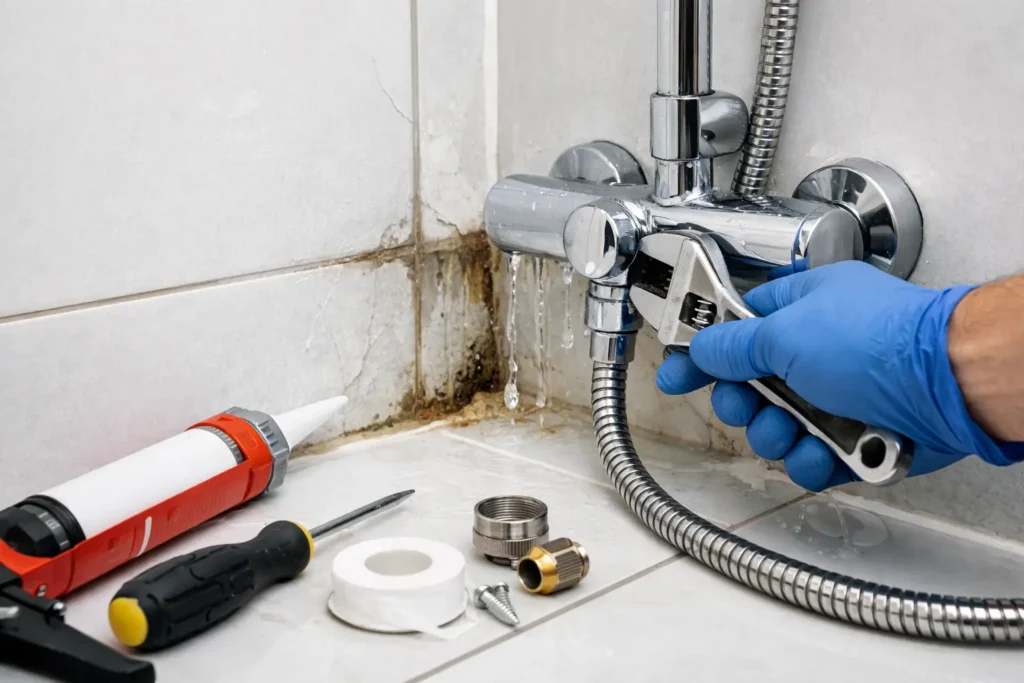
A shower leak rarely stays in the shower. Water can move behind tile, under the base, through a damaged grout line, or into the ceiling below long before a homeowner sees a major stain. Bathroom shower repair is about finding the true source, correcting the failed component, and protecting the structure before a small issue becomes a costly renovation.
The right repair depends on what failed. A dripping showerhead is not the same job as cracked tile, a soft shower floor, a leaking valve, or water appearing on the other side of the wall. Quick fixes can help in limited situations, but covering up a leak without addressing its cause often sends water deeper into the home.
When Bathroom Shower Repair Cannot Wait
Some shower problems are inconvenient. Others demand immediate attention. If water is pooling outside the shower, running through a ceiling, or causing drywall to bubble, stop using the shower until the issue is inspected. Continued use can damage framing, flooring, insulation, and electrical components near the affected area.
A musty smell is another warning sign. Bathrooms naturally hold moisture, but a persistent odor can point to hidden water damage or mold growth behind the wall or under the shower pan. Loose tile, cracked grout, peeling paint near the shower, and a floor that feels soft underfoot also deserve a closer look.
Do not assume the problem is always visible. A shower can look clean and intact while a worn valve seal, failed drain connection, or damaged waterproofing layer allows water to escape behind finished surfaces.
Find the Source Before Starting the Repair
A dependable repair starts with diagnosis. The goal is to separate water escaping from the plumbing from water getting past the shower enclosure.
Signs of a plumbing leak
A plumbing leak may continue even when nobody is showering. Watch for a showerhead that drips after the handle is turned off, reduced water pressure, moisture around the faucet trim, or a water meter that continues moving when fixtures are off. Leaks behind the valve wall may stain the room next door or the ceiling below.
A worn cartridge, loose connection, corroded pipe, or failed valve can be responsible. Replacing caulk or grout will not solve this type of problem. The plumbing needs to be accessed and repaired correctly, then tested under pressure before the wall is closed.
Signs of enclosure or waterproofing failure
If water appears only after someone showers, the issue may be in the shower enclosure. Failed caulk at the tub edge, gaps around a shower door, missing grout, cracked tile, or a damaged shower pan can let water enter areas where it does not belong.
Caulk and grout serve different roles. Caulk is flexible and belongs at movement joints, such as corners, where tile meets a tub, and where a shower wall meets the floor. Grout fills the joints between tiles but is not a complete waterproof barrier. When tile or grout is cracked, the condition behind the tile matters just as much as the surface repair.
Drainage issues that look like leaks
Slow drainage can cause water to rise at the threshold and spill onto the bathroom floor. A clogged drain may be the simple answer, but recurring slow drainage can signal buildup deeper in the line or an improperly sloped drain connection.
A shower floor that holds water after use is different. Standing water may point to an uneven floor, poor tile slope, or a damaged base. That condition should not be ignored because water will eventually find the weakest seam.
Common Shower Repairs and What They Involve
A professional can often complete localized repairs without rebuilding the entire bathroom. However, the extent of water damage determines whether a focused repair or partial renovation is the smarter investment.
Replacing failed caulk and grout
Minor gaps in caulk can be repaired if the surrounding materials are dry, stable, and free from mold damage. The old failed caulk must be fully removed, the area cleaned and dried, and new bathroom-rated silicone applied neatly. Applying new caulk over old caulk usually fails quickly because the new bead cannot bond properly.
Cracked or missing grout can also be repaired, but repeated cracking may indicate movement in the wall or floor. In that case, regrouting the surface alone may only delay the real repair.
Repairing shower valves and fixtures
A handle that is hard to turn, inconsistent hot water, or water that continues to drip often points to a worn shower cartridge or valve component. Depending on the fixture, a cartridge replacement may solve the issue. Older valves with corrosion or internal damage may need a more involved replacement.
This is where experience matters. Accessing a valve from the wrong side, forcing a corroded fitting, or reinstalling trim without proper sealing can create a larger problem. The repair should restore reliable water control and protect the wall opening from moisture.
Fixing shower doors, tracks, and thresholds
A leaking shower door is often caused by worn sweeps, loose hinges, failed seals, or an out-of-level track. These repairs are usually straightforward when caught early. Water should stay inside the enclosure and flow toward the drain, not collect at the door or run across the bathroom floor.
If a door was installed out of square or the threshold is damaged, replacement parts alone may not be enough. The enclosure may need adjustment or reinstallation to create a proper seal.
Replacing damaged tile or a shower base
A single cracked tile can sometimes be replaced. But if tiles are loose, the wall feels soft, or water damage is visible below the shower, the substrate and waterproofing must be inspected. Tile is the finish layer, not the protection behind it.
Shower base problems require the same care. Cracks, flexing, and separation around the drain may mean the base was not properly supported or has reached the end of its service life. Replacing the base may involve removing surrounding wall materials so the drain and waterproofing connection can be rebuilt correctly.
Why Patching Is Not Always the Affordable Choice
Homeowners understandably want the smallest possible repair. That is often the right approach when a failure is contained, such as a worn door sweep, a failed cartridge, or isolated caulk damage. The trade-off changes when water has been entering the wall or floor for weeks or months.
Patching visible damage without correcting wet backing materials can trap moisture where it continues to break down drywall, wood, and insulation. A targeted opening to inspect the area may feel like more work upfront, but it can prevent a much larger repair later.
A good contractor should explain what can be repaired, what should be replaced, and why. Clear recommendations matter more than selling a full remodel when a repair will do the job. At the same time, no one should promise a lasting fix by simply sealing over active damage.
How to Protect Your Shower After the Repair
Once the shower is repaired, regular care helps the work last. Run the bathroom fan during showers and for at least 20 minutes afterward to reduce moisture. Keep the shower door track and drain clear so water can move where it is supposed to go. Check caulk lines periodically, especially around corners, fixtures, and the threshold.
Avoid harsh abrasives that can damage finishes and break down sealants. If grout cracks again soon after repair, or if water returns near the same area, schedule an inspection instead of repeatedly applying more caulk. Recurrence is useful information. It usually means there is movement, drainage trouble, or hidden moisture that needs a more complete solution.
One Team for Shower Repairs and Bathroom Upgrades
Bathroom shower repair often crosses more than one trade. A leak may involve plumbing, tile, drywall, flooring, cabinetry, or a countertop damaged by water. Coordinating separate companies can slow down a repair when time matters.
Cobo Kitchen Master & Home Repair handles the work as one accountable team, from emergency plumbing repairs and shower fixture issues to tile, wall, and bathroom restoration. With core renovation materials available in stock, repairs and upgrades can move forward without waiting on a chain of suppliers.
If your shower is leaking, draining poorly, or showing signs of damage, act while the repair is still manageable. A prompt inspection can protect the bathroom you use every day and prevent water from turning one small failure into a larger home repair.