
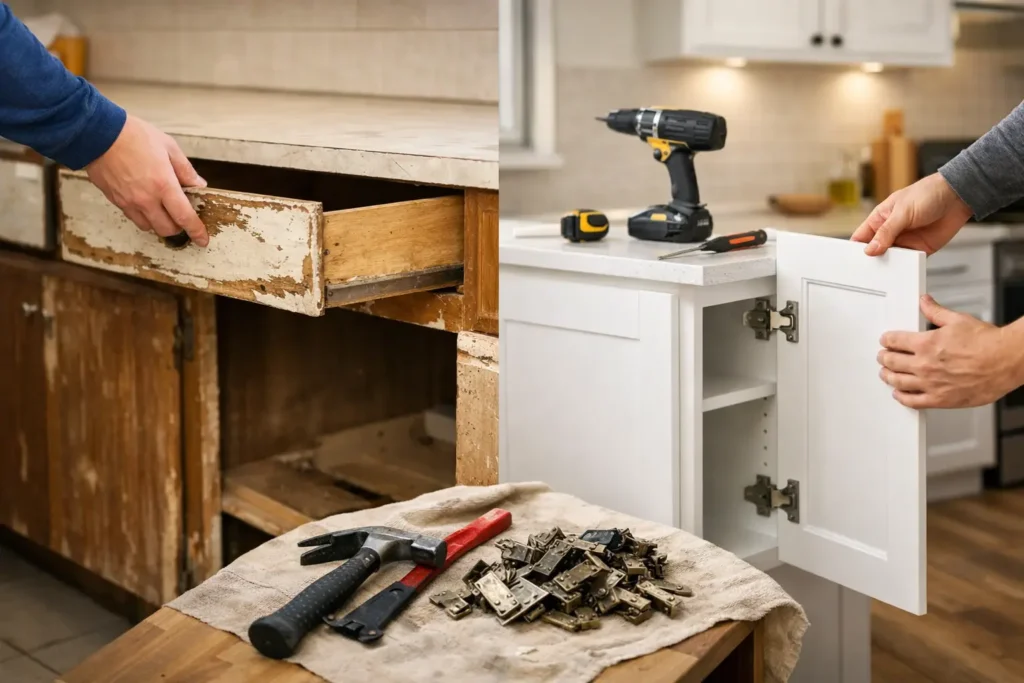
A cabinet door that will not stay closed is frustrating. A cabinet box swollen from a leak, drawers scraping their tracks, or shelves bowing under everyday dishes are bigger warnings. Homeowners often ask, when should you replace kitchen cabinets? The answer depends on the cabinet structure, the extent of damage, and what you need your kitchen to do every day.
New cabinets are a major improvement, but replacement is not automatically the right answer for every worn finish or loose hinge. A professional assessment can separate cosmetic issues from failures that will keep causing trouble. The goal is not to replace cabinets before you need to. It is to avoid spending money patching cabinets that are already at the end of their useful life.
When Should You Replace Kitchen Cabinets? Start With the Boxes
Cabinet doors and drawer fronts get the most attention, but the cabinet boxes tell the real story. If the boxes are solid, square, and securely attached to the wall, repairs or a cosmetic update may make sense. If the boxes are soft, warped, cracked, or pulling away from the wall, replacement is usually the more dependable choice.
Water damage is one of the clearest reasons to replace kitchen cabinets. A slow sink leak, failed dishwasher connection, or plumbing issue behind a cabinet can soak particleboard and weaken it permanently. Once cabinet material swells, flakes, or loses its shape, it does not return to its original strength. Painting over the damage may improve the appearance for a short time, but it will not restore the cabinet’s ability to hold weight.
Look inside the sink base cabinet, around the dishwasher, and at the floor near plumbing connections. Musty odors, dark stains, peeling laminate, and soft spots deserve prompt attention. Before new cabinets are installed, the source of the leak must be repaired. Otherwise, even quality new materials can be damaged by the same unresolved problem.
Signs Replacement Is the Better Investment
Cabinets can often be repaired when the issue is limited to hinges, drawer slides, handles, or surface scratches. Replacement becomes the stronger option when the problems are structural, widespread, or no longer fit the way your household uses the kitchen.
Consider replacing your cabinets if you are seeing several of these signs:
- Cabinet boxes are swollen, sagging, cracked, or deteriorating from water exposure.
- Doors and drawers no longer align or close properly after hinge and hardware adjustments.
- Shelves bow, supports fail, or cabinet bottoms cannot safely hold normal kitchen items.
- The layout wastes usable space, leaves poor access to storage, or creates tight work areas.
- Mold, persistent odors, pest damage, or recurring moisture problems are present inside the cabinets.
- You are planning new countertops, appliances, plumbing, or flooring that will expose cabinet limitations.
One issue alone does not always require a full replacement. A broken drawer slide is a repair. A single damaged door may be replaceable. But when repairs are happening in several places, costs add up while the underlying cabinet structure continues to age. That is when replacement protects your budget better than another temporary fix.
Cosmetic Wear vs. Structural Failure
Faded color, grease buildup, scratched paint, and dated hardware can make a kitchen feel tired without making the cabinets unusable. If the boxes are in good condition, refinishing, repainting, or replacing hardware may extend their life. This can be a practical option for a homeowner preparing a property for sale or improving a kitchen without changing the layout.
There are trade-offs. Refinishing does not fix poor storage, weak cabinet construction, water damage, or a layout that no longer works. It can also be difficult to get a durable finish on cabinets that have years of grease, peeling thermofoil, or previous paint layers. A low-cost refresh is worthwhile only when it solves the problem you actually have.
Replacement gives you the opportunity to correct issues that cosmetic work cannot touch. You can add deeper drawers, better pantry storage, soft-close hardware, pullout organizers, and cabinet sizes that work with your current appliances. For busy households, better access and stronger construction often matter more than a new color.
Replace Cabinets Before Installing New Countertops
Countertops and cabinets work as one system. If your cabinets are weak, uneven, or water-damaged, installing expensive new countertops on top of them is a risk. Stone, quartz, and solid-surface countertops need a level, stable base. Cabinet movement can contribute to gaps, alignment issues, and unnecessary stress on the countertop over time.
If your countertop project includes a new sink, faucet, garbage disposal, or dishwasher, it is also the right time to inspect the sink base and nearby plumbing. These areas take the most moisture and wear. Planning cabinet replacement before countertop installation prevents avoidable removal and reinstallation costs later.
Homeowners sometimes keep cabinets because they look acceptable from the outside, then discover hidden deterioration when the old countertop comes off. A full evaluation before materials are ordered helps prevent that surprise. It also allows the project to be planned in the correct order: repairs and plumbing first, cabinets next, then countertops, sink, faucet, and finishing work.
Timing Matters: Replace Before a Small Problem Spreads
Waiting until a cabinet completely fails can make a kitchen project more disruptive and more expensive. Water-damaged materials can affect the subfloor, drywall, and adjacent cabinets. Loose cabinets can damage walls or create an unsafe condition, especially when heavily loaded. Mold or ongoing leaks should never be treated as a cosmetic problem.
The right timing also depends on your goals. If you are remodeling the kitchen within the next year or two, it may make sense to replace failing cabinets now rather than spend on repairs that will be removed later. If you need only a functional repair to get through the next few years, targeted work can be the right decision.
For investment properties, durability and easy maintenance are usually the priority. For a long-term family home, storage, layout, finish, and daily convenience deserve more weight. There is no single cabinet lifespan that applies to every kitchen. Quality of construction, moisture exposure, installation, and everyday use matter more than the calendar.
Plan the Job Around Real-World Kitchen Use
A cabinet replacement project should start with measurements and a clear plan, not a guess based on what looks good in a showroom. Think about where you prepare food, store cookware, unload groceries, and use small appliances. Identify the daily frustrations. Maybe there is no room for pots, the trash pullout is missing, or upper cabinets are too high to use comfortably.
Material availability matters too. A beautiful cabinet plan is not helpful if the project stalls for weeks waiting on backordered pieces. Working with one company that can supply cabinets, coordinate repairs, install countertops, and address plumbing reduces handoffs and keeps responsibility clear. Cobo Kitchen Master & Home Repair is built for this kind of coordinated work, with in-stock core materials and professional installation focused on keeping projects moving.
Ask for an honest recommendation on what can be repaired and what should be replaced. A dependable contractor should explain the condition of the cabinet boxes, check for moisture concerns, confirm walls and floors are ready, and help you avoid building new work on top of old damage.
A Practical Decision for Your Kitchen
Replace kitchen cabinets when they are no longer safe, structurally sound, or capable of supporting the kitchen you need. Repair them when the issue is limited, the boxes remain strong, and the fix provides real value. The best decision is not always the biggest project. It is the one that solves the source of the problem, fits your plans for the home, and leaves you with a kitchen you can rely on every day.
If cabinet damage is tied to a leak, uneven floors, failing countertops, or outdated plumbing, address those connected issues at the same time. A well-planned project gives you more than new cabinets. It gives you a kitchen that is ready for daily use without the delays, repeat repairs, and loose ends that homeowners should not have to manage.