
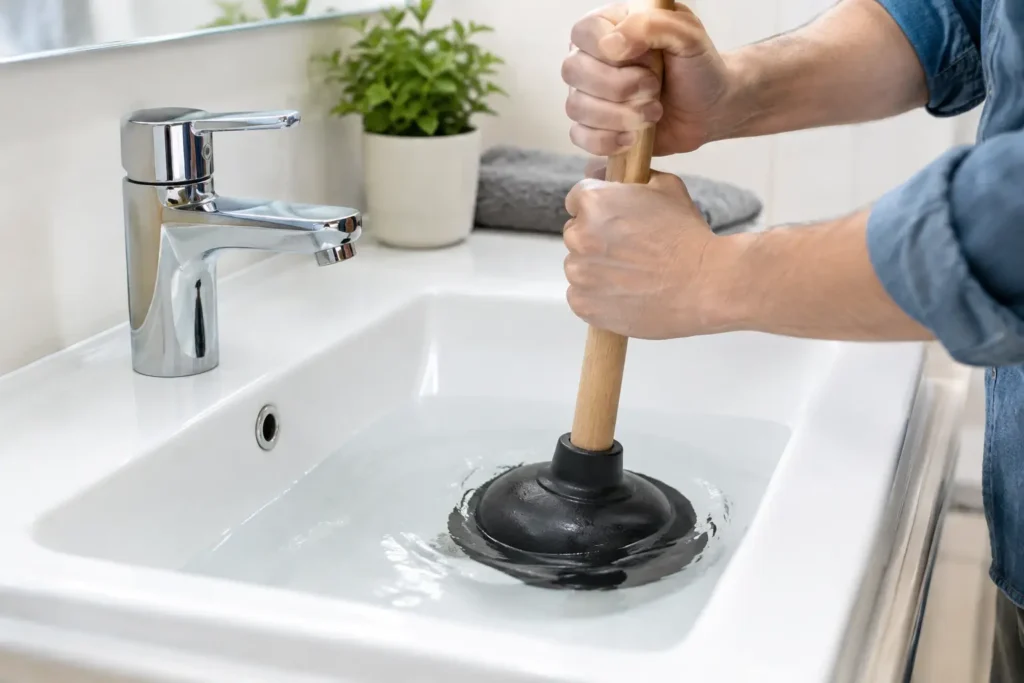
A bathroom sink that drains slowly can turn a two-minute routine into a daily frustration. The good news is that learning how to unclog bathroom sink drains often starts with a few simple checks. The key is knowing when a basic cleanup will solve the problem and when forcing the issue could damage the drain, faucet, or plumbing connections.
Most bathroom sink clogs are caused by hair, soap residue, toothpaste, makeup, and grooming products collecting around the stopper or just below it. Start with the least aggressive method. If the drain still backs up after a careful cleanup, stop before a small clog becomes a leak or a broken pipe.
Start With the Sink Stopper
The stopper is the most common place for a bathroom sink clog to form. Hair wraps around the lower portion of the stopper, then holds soap scum and debris in place until water can barely pass through.
Place a towel in the sink basin and put on gloves. Lift the stopper out if it pulls free. Many pop-up stoppers connect to a pivot rod behind the drainpipe, so you may need to loosen the retaining nut under the sink and remove the rod before the stopper releases. Keep a small container nearby for any water that drips out.
Pull away the hair and buildup, then rinse the stopper thoroughly. Use an old toothbrush to scrub residue from the drain opening. This is not the most pleasant job, but it is often the fastest fix.
Before putting everything back together, run warm water into the drain for a minute. If the water begins moving freely, reinstall the stopper and test it again. If it is still slow, the clog is likely farther down the drain.
How to Unclog Bathroom Sink Drains With a Plunger
A small cup plunger works well on a clog that is below the stopper but still close to the sink. Do not use a large toilet plunger. It will not seal correctly on a bathroom sink drain and can make a mess.
First, remove the stopper. Cover the sink overflow opening with a wet rag. The overflow is the small opening near the top of the basin, and covering it helps the plunger create pressure in the drain instead of pushing air out through that opening.
Add enough water to cover the rubber cup of the plunger. Press down gently to make a seal, then plunge with steady, controlled strokes for 15 to 20 seconds. Avoid violent pumping. Excessive pressure can loosen older drain connections beneath the sink.
Lift the plunger and check the water flow. Repeat once or twice if needed. If the basin begins draining normally, flush the drain with hot tap water to help move loose residue through the pipe.
Use a Drain Snake for Hair and Deep Debris
When cleaning the stopper and plunging do not work, a small plastic drain snake is usually the next best step. These inexpensive tools have barbs that catch hair and residue without requiring you to take apart the plumbing.
Feed the snake slowly into the drain. Rotate it slightly as you push, then pull it back out with a steady motion. Expect to remove a clump of hair, soap buildup, or both. Wipe the tool clean, repeat if necessary, and run warm water to test the drain.
A hand-crank drain auger can reach farther, but it should be used carefully. Metal cables can scratch certain drain finishes or catch on delicate internal components if pushed too aggressively. For a basic bathroom sink clog, a plastic snake is often enough.
Clean the P-Trap When the Clog Will Not Move
The P-trap is the curved pipe under the sink. Its shape holds water to block sewer gases from entering the bathroom, but it can also catch debris. If the clog remains after using a drain snake, cleaning the trap may solve it.
Place a bucket and towels directly under the trap. Loosen the slip nuts on both ends by hand, then carefully lower the curved section. Water and debris will drain into the bucket. Empty the trap, rinse it out, and check the short pipe leading into the wall for buildup.
Reassemble the trap carefully. Make sure the washers are seated properly, tighten the connections by hand, and run water for several minutes while checking for leaks. Do not overtighten plastic fittings. A cracked nut or misaligned washer can create a slow leak that damages the cabinet below the sink.
If you find corrosion, cracked pipes, worn seals, or a drain connection that will not reseal, the job has moved beyond a simple clog. That is the right time to call a plumbing professional.
Skip Harsh Chemical Drain Cleaners
Chemical drain cleaners may seem like a quick answer, but they create real trade-offs. Strong formulas can damage older metal pipes, weaken seals, discolor fixtures, and leave dangerous chemicals sitting in a drain that still will not clear. They are especially risky if you later need to remove the P-trap or call a plumber.
Hot tap water, a plunger, a drain snake, and manual cleaning are safer first options. Avoid pouring boiling water into a sink with PVC drainpipes or a porcelain basin, as sudden high heat can stress materials and fittings. Warm or hot tap water is usually sufficient for flushing away loosened soap residue.
Do not mix cleaning products. Combining chemicals, even products that seem harmless on their own, can create fumes or reactions that are unsafe in a small bathroom.
Signs the Problem Is Bigger Than One Sink
A single slow bathroom sink is commonly a local clog. But if water backs up in more than one fixture, drains make gurgling sounds, or you notice sewer odors, the issue may be in a larger branch line or the main drain system.
Watch for these warning signs:
- The sink backs up again soon after you clear it.
- Water rises in the tub or shower when the sink drains.
- Multiple bathroom fixtures drain slowly at the same time.
- You see water, staining, or swelling inside the vanity cabinet.
- The drainpipe is corroded, loose, or leaking.
These situations need a proper diagnosis, not repeated plunging. A professional can identify whether the blockage is in the trap, the wall drain, or a larger plumbing line, then clear it without guessing or damaging the system.
Keep the Bathroom Sink Flowing
Prevention is simpler than dealing with a fully blocked drain. Remove visible hair from the stopper regularly, especially in homes where long hair or frequent shaving sends more debris into the basin. Wipe toothpaste and grooming residue from the sink instead of rinsing large amounts down at once.
Once a month, remove the stopper and clean the buildup around it. Follow with warm tap water for a few minutes. This small maintenance habit can prevent the sticky combination of hair and soap scum that causes most bathroom sink clogs.
For homeowners who want the problem handled quickly and correctly, Cobo Kitchen Master & Home Repair can inspect the drain, repair leaks, and address the plumbing issues behind repeat clogs. A clear drain should stay clear – and if it does not, the plumbing deserves a closer look before a minor backup turns into cabinet or floor damage.