
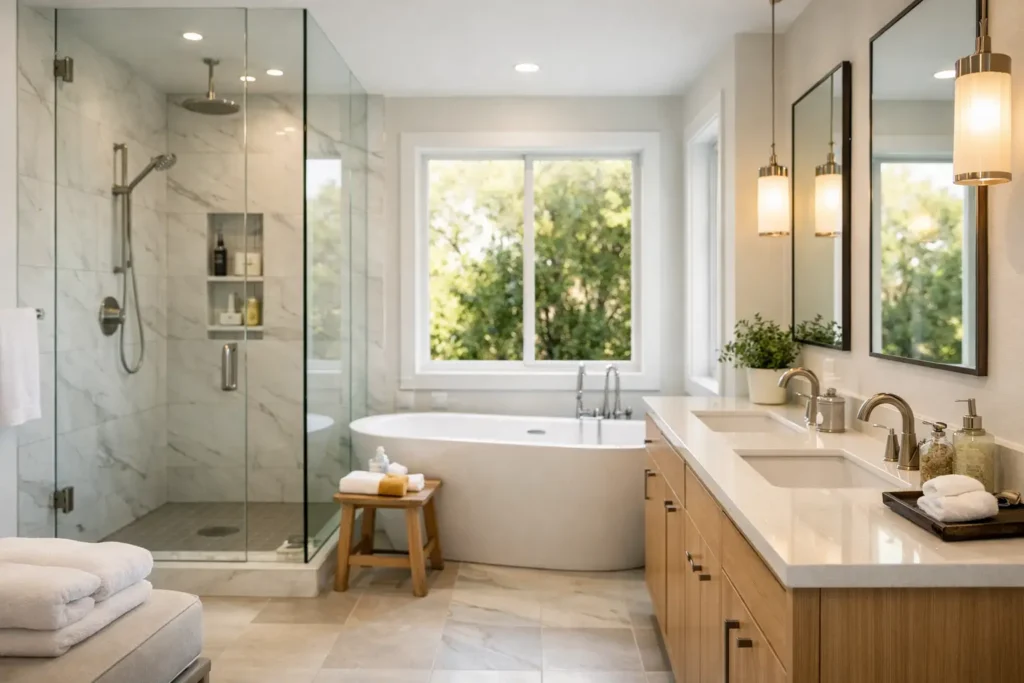
A bathroom can lose a buyer before they notice the rest of the house. Peeling caulk, a leaking faucet, dim lighting, or a worn vanity signals deferred maintenance and future expense. The best bathroom upgrades for resale do more than look fresh in listing photos. They make the room feel clean, functional, and ready for the next owner.
For most homeowners, the smart goal is not a luxury showpiece. It is a well-built bathroom that matches the home’s price range, works reliably, and does not create delays before listing. Start with the issues buyers will see and the problems an inspection could uncover. Then put the remaining budget into finishes that improve daily use and visual appeal.
1. Repair Plumbing Problems Before Updating Finishes
A beautiful new vanity does not help if there is a slow leak beneath it. Plumbing repairs are not always the most exciting line item, but they protect the entire project. Address dripping faucets, running toilets, poor water pressure, slow drains, loose shutoff valves, damaged supply lines, and signs of water damage before installing new materials.
Buyers may not test every fixture during a showing, but home inspectors will. A bathroom that operates properly gives buyers confidence that the property has been cared for. It also prevents a small issue from becoming a last-minute credit request or a repair that holds up closing.
If pipes need to be moved for a new layout, weigh the cost carefully. Moving plumbing can make sense when the existing arrangement is truly awkward or when it solves a major functional problem. If the layout works, keeping fixtures in their current locations usually saves money and shortens the renovation timeline.
2. Install a Quality Vanity With Useful Storage
The vanity is one of the strongest resale upgrades because it combines appearance, storage, and function in one piece. An old cabinet with swollen particleboard, peeling doors, or broken drawers makes the full room feel outdated. Replacing it can immediately change the impression of the bathroom.
Choose a vanity size that fits the room without crowding it. In a small bathroom, a floating vanity or a clean-lined single-sink cabinet can make the floor area feel more open. In a primary bathroom or shared family bath, a larger vanity with drawers often has stronger buyer appeal because it adds usable storage.
Durable construction matters. Soft-close doors, smooth drawer operation, moisture-resistant materials, and properly installed hardware create a finished look buyers can feel when they use the space. Neutral cabinet colors such as warm white, natural wood tones, soft gray, or deep navy can work well, depending on the rest of the home. Avoid choosing a dramatic color simply because it is trending if it clashes with the existing style.
Pair the Vanity With a Durable Countertop
A clean countertop makes the vanity look more substantial. Quartz is a common resale-friendly option because it is durable, low maintenance, and available in colors that suit many homes. Solid-surface materials can also work well when the budget is tighter. The key is professional installation, clean edges, and a properly sealed sink connection.
3. Update the Shower or Tub Where Buyers Will Notice
A stained tub, cracked surround, loose tile, or damaged grout can become the focal point for the wrong reason. Shower and tub improvements are among the best bathroom upgrades for resale when the current condition is visibly worn or difficult to clean.
For a hall bathroom, a practical tub-shower combination often makes the most sense. Families with young children may specifically value having a bathtub. Replacing a tub with a walk-in shower in the only full bathroom can limit appeal for some buyers, even if the shower looks more modern.
In a primary bathroom with another tub available elsewhere in the home, a well-designed walk-in shower can be a strong improvement. Use a simple layout, good waterproofing, slip-resistant flooring, and an easy-to-clean glass enclosure. Large-format wall tile can reduce grout lines and make the space feel more current, but the installation must be precise. Poorly aligned tile or weak grout work can make a new bathroom look rushed.
Do not assume every shower needs premium stone, body jets, or specialty tile. Those choices may raise costs without raising the sale price enough to justify them. A clean, durable shower with updated fixtures will usually deliver a better return than a highly personalized design.
4. Improve Lighting and Ventilation Together
Bathroom lighting affects how clean, large, and welcoming the room feels. A single ceiling fixture often leaves shadows around the mirror, which is frustrating for daily grooming and unflattering during a showing. Add clear task lighting at the vanity and use a bright but comfortable overhead fixture for general illumination.
Choose lighting that fits the room’s scale. A small powder room does not need an oversized statement fixture. A primary bathroom should not rely on one weak light in the center of the ceiling. Consistent finishes across the light fixture, faucet, towel bars, and mirror help the room look planned rather than pieced together.
Ventilation is just as important, especially in bathrooms without windows. A properly sized exhaust fan helps control moisture, odors, peeling paint, and mildew. If the existing fan is loud, weak, or not vented correctly, replace it as part of the project. Buyers may not compliment an exhaust fan, but they will notice signs of moisture damage.
5. Replace Dated Fixtures and Hardware
New faucets, shower trim, a toilet, towel bars, and cabinet pulls can create a major visual improvement without changing the entire layout. This is often a cost-effective upgrade when the tile and vanity are still in good condition.
Keep the finishes coordinated. Brushed nickel, chrome, matte black, and warm brass can all work, but mixing several unrelated finishes in one small room tends to look unplanned. Select fixtures from dependable product lines and make sure everything is installed securely. A loose toilet, crooked towel bar, or faucet that splashes outside the sink undermines the value of the update.
A modern, water-efficient toilet is also a practical resale upgrade. Choose a comfortable height and a reliable flushing system. Extremely decorative toilets and unfamiliar smart features may appeal to a narrow audience, while a clean, efficient standard model appeals to nearly everyone.
6. Use Neutral, Durable Surfaces
The most effective bathroom finishes give buyers a clean starting point. Neutral does not have to mean bland. It means the materials can work with different towels, paint colors, and decorating styles after the sale.
Porcelain or ceramic tile is a dependable choice for floors and shower walls because it handles moisture well and comes in a wide range of styles. Select a floor tile with enough texture for safe footing, particularly in a bathroom used by children or older adults. Light to medium tones generally hide water spots and everyday dust better than very dark glossy surfaces.
Paint should be moisture-resistant and professionally applied after all plumbing and wall repairs are complete. Fresh paint will not hide loose drywall, mold staining, or water damage for long. Fix the source first, replace damaged materials where necessary, and then finish the room correctly.
7. Finish the Details Buyers Touch and See
Resale value often comes down to whether a room feels complete. Re-caulk the tub and shower, repair cracked grout, install a framed or well-sized mirror, and make sure outlet covers, switch plates, trim, and door hardware are clean and secure. These details cost far less than a major remodel, yet they shape a buyer’s impression of workmanship.
Before listing, check the bathroom from the doorway. Open every drawer. Run the sink. Flush the toilet. Turn on the fan and lights. Look for gaps, drips, wobbling fixtures, chipped finishes, and cluttered counters. This final walkthrough catches the small defects that can make buyers wonder what else was overlooked.
Spend for the Market, Not for a Fantasy Return
The right budget depends on the home’s value, neighborhood, and condition of nearby properties. A modest home with an outdated but functional bathroom may benefit most from repairs, a new vanity, fixtures, lighting, and paint. A higher-value property with an original 1980s primary bath may justify a more complete renovation.
Avoid overbuilding. Custom luxury features, unusual layouts, and highly personal colors can consume budget that buyers will not repay. At the same time, cutting corners on waterproofing, plumbing, installation, or materials can create expensive problems long after the listing goes live.
A full-service team such as Cobo Kitchen Master & Home Repair can help homeowners coordinate the parts that must work together: plumbing, cabinets, countertops, fixtures, repairs, and installation. Having materials ready and one accountable team can be especially valuable when a sale date is approaching.
The best move is the one that leaves the bathroom looking dependable, easy to maintain, and complete. Give buyers a room they can walk into without making a repair list in their heads, and you have made the kind of upgrade that supports a stronger sale.