
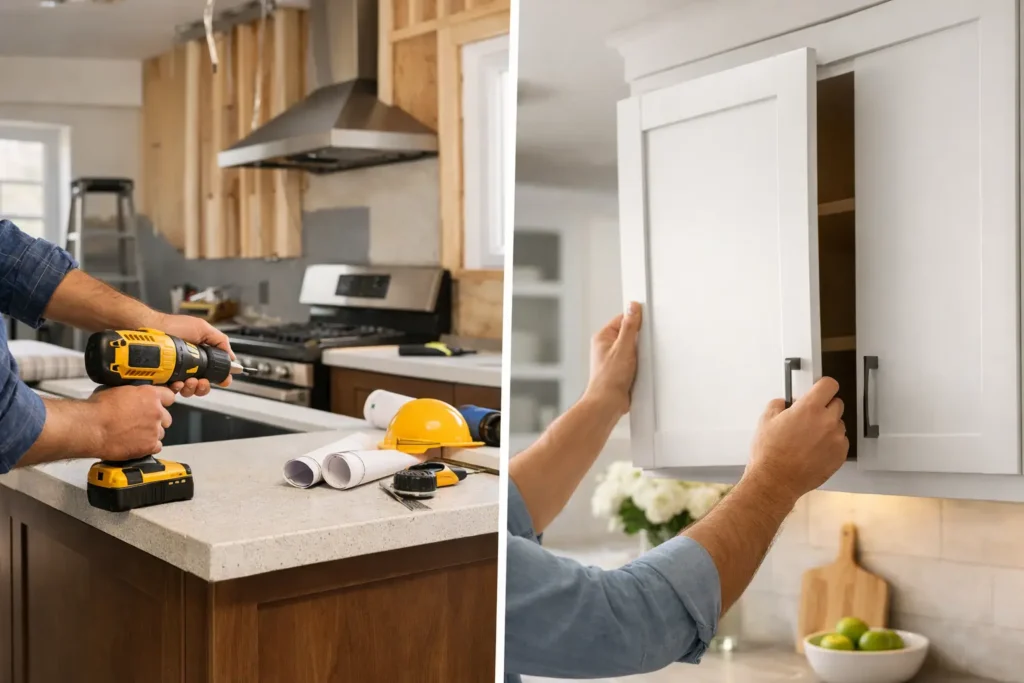
A kitchen can look worn out long before it stops working. Peeling cabinet finishes, dated doors, damaged countertops, poor storage, and awkward layouts can make every meal feel like more work than it should be. When weighing a kitchen remodel vs cabinet refacing, the right answer depends on what is actually failing, what you want to change, and how quickly you need the job completed.
Cabinet refacing can give a structurally sound kitchen a major visual update. A full remodel solves bigger problems, from broken cabinet boxes and limited storage to outdated plumbing, countertops, and layout issues. The key is not choosing the cheapest option on day one. It is choosing the option that will hold up after the work is done.
Kitchen Remodel vs Cabinet Refacing: The Core Difference
Cabinet refacing keeps your existing cabinet boxes in place. The doors and drawer fronts are replaced, exposed cabinet surfaces receive a new veneer or finish, and new hardware is typically installed. The cabinet layout, box construction, and most of the interior storage remain the same.
A kitchen remodel can include new cabinets, countertops, sinks, faucets, lighting, flooring, backsplash, appliances, plumbing updates, and layout changes. You can keep the project focused on cabinets and counters, or rebuild the kitchen from the ground up. That flexibility is why remodeling is the better fit when the problem is more than appearance.
Think of refacing as a finish upgrade. Think of remodeling as a performance and design upgrade.
When Cabinet Refacing Makes Sense
Refacing is a practical option when your cabinet boxes are in good condition and your current layout works for your household. If the cabinets are solid, level, free from water damage, and still provide enough storage, there may be no reason to tear them out just because the doors look dated.
It is often a good choice for homeowners who want a cleaner, more current appearance without moving plumbing or replacing countertops. New doors, drawer fronts, hinges, handles, and finishes can change the entire look of the room while keeping the project contained.
Refacing can also reduce disruption. Since the existing boxes stay in place, there is less demolition and usually less construction debris. That can matter for busy households, rental properties, or homeowners trying to refresh a kitchen before listing a home for sale.
Still, refacing has limits. It does not correct sagging shelves, poor cabinet construction, soft particleboard, water damage beneath the sink, or drawers that have never worked well. It also cannot meaningfully change a cramped layout. Adding a few organizers may help, but it will not turn a poorly planned kitchen into a more functional one.
Good candidates for refacing
Your kitchen may be a strong candidate for refacing if the cabinet boxes are sturdy, the doors are the main issue, the current layout is functional, and you do not need major plumbing or electrical work. It works best when you are improving a kitchen that has good bones.
Before committing, inspect the sink base, lower corner cabinets, drawer tracks, hinges, and cabinet interiors. Water leaks and daily wear show up there first. A cabinet that looks acceptable from across the room may tell a different story once the doors are open.
When a Full Kitchen Remodel Is Worth It
A full remodel is the stronger investment when the kitchen has structural, functional, or layout problems. If cabinets are damaged, undersized, difficult to clean, or poorly configured, refacing may simply put a new face on an old problem.
New cabinets allow you to improve the parts of the kitchen you use every day. You can add deeper drawers for pots, pull-out storage, better pantry space, a dedicated trash cabinet, stronger hinges, and cabinet sizes that fit your actual cooking habits. You can also replace worn countertops, update the sink and faucet, and address plumbing issues while the work area is open.
A remodel is especially valuable when you are changing the layout. Moving a sink, expanding prep space, replacing a failing countertop, opening a wall, or adding an island requires coordinated planning. These projects involve more than cabinet appearance, and trying to work around old cabinets can create unnecessary compromises.
Full remodeling also gives you a cleaner path when materials have been damaged by leaks. Cabinets near dishwashers and sinks are common trouble spots. Swollen cabinet floors, mold concerns, loose laminate, and deteriorating bases should be addressed directly, not covered up.
Signs replacement is the smarter move
Choose a remodel over refacing when cabinets have water damage, warped frames, weak drawers, broken shelves, pest damage, or poor-quality construction. Replacement is also the better choice if you need more storage, want a different layout, or plan to install countertops that require changes to cabinet support and dimensions.
If you have already spent years working around a kitchen that does not fit your needs, that is a practical reason to remodel. A kitchen should support daily life, not create more steps and more clutter.
Cost: Look Beyond the First Number
Cabinet refacing usually costs less than replacing all cabinetry because it avoids full removal and installation of new cabinet boxes. It can be a sensible budget decision when the existing cabinets are truly worth keeping.
But lower upfront cost is not always lower overall cost. If refacing is followed by countertop replacement, plumbing repairs, drawer upgrades, or cabinet repairs, the total can rise quickly. In some kitchens, those added expenses narrow the price difference between refacing and installing new in-stock cabinets.
A remodel costs more because it includes more materials, labor, and coordination. It can also deliver more value when it corrects issues that would otherwise remain. New cabinets, properly installed countertops, updated plumbing fixtures, and a more efficient layout can reduce future repair needs and improve how the home functions every day.
Ask for a clear scope of work before comparing estimates. You should know whether removal, disposal, cabinet installation, countertop installation, sink connection, faucet installation, repairs, and finishing work are included. A low quote that leaves major work to separate contractors is not necessarily a better deal.
Timing and Project Disruption
Refacing is generally faster than a full remodel, but timing depends on the availability of doors, veneer materials, hardware, and labor. A project can still slow down if a contractor is waiting on special-order components or coordinating several suppliers.
A remodel takes more planning, particularly when plumbing, electrical work, countertops, or layout changes are involved. However, a full-service provider with cabinets, countertops, sinks, and faucets available can keep the work moving. Material availability matters. A well-planned remodel with in-stock core materials may be more predictable than a smaller project delayed by missing parts.
The most efficient path is one company that can supply the materials and perform the installation. That means fewer handoffs, clearer accountability, and less time spent trying to schedule separate cabinet, countertop, and plumbing crews.
Questions to Ask Before You Decide
Start with the condition of the cabinets, not the color of the doors. Are the boxes solid? Is there any water damage? Do the drawers glide properly? Does the layout give you enough storage and counter space? Will you need to replace the countertops or update the sink and plumbing soon?
Then consider how long you plan to stay in the home. For a short-term refresh of a functional kitchen, refacing may be the right move. For a long-term home, a growing family, or a kitchen with daily functional problems, a remodel may deliver more lasting value.
Also consider the inconvenience of doing work twice. If you know the countertop, sink, cabinet interiors, or layout need attention within the next few years, completing the work as one coordinated project can be more practical than paying for repeated disruption.
Make the Decision Based on What the Kitchen Needs
Refacing is not a shortcut when the cabinet boxes are strong and the kitchen works well. It is a focused upgrade that can produce a sharp, updated result. A full remodel is not automatically excessive either. It is the right solution when the kitchen needs better storage, stronger materials, updated systems, or a layout that finally works.
Cobo Kitchen Master & Home Repair helps homeowners avoid the delays and confusion that come from splitting a kitchen project between multiple suppliers and contractors. Whether the right answer is a cabinet refresh or a full replacement, start with an honest evaluation of the cabinets, counters, plumbing, and daily use of the space. The best kitchen upgrade is the one that solves the problems you live with now and gives you confidence in the work for years ahead.