
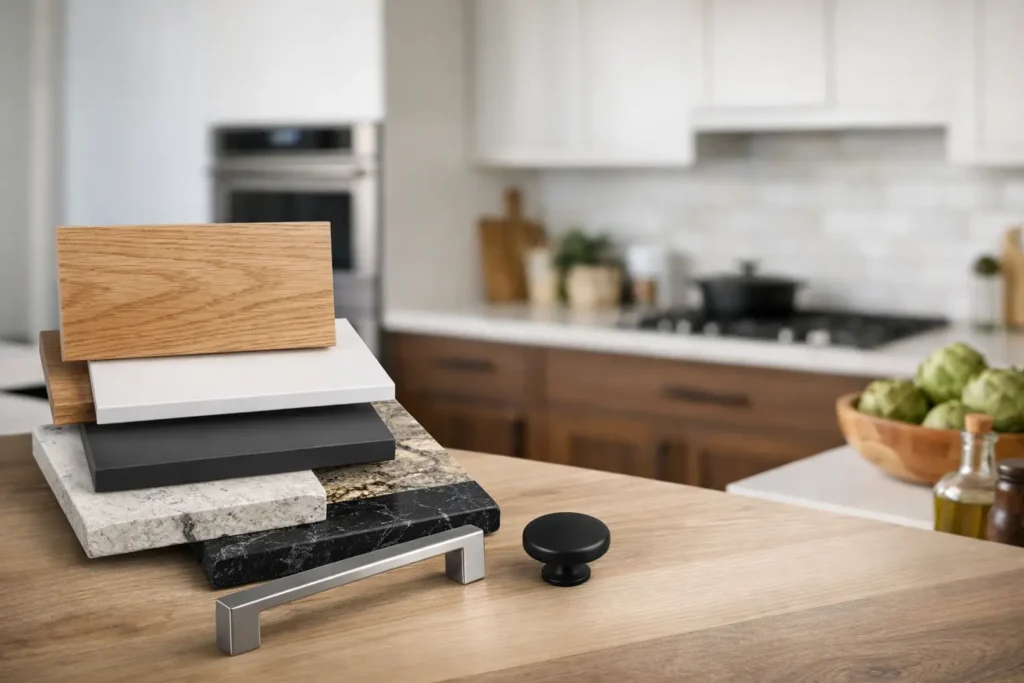
A cabinet door can look perfect in a showroom and still be the wrong choice for a busy home. Heat from the range, steam from the dishwasher, leaks under the sink, kids, pets, and daily use all test the finish, construction, and hardware. The best kitchen cabinet materials are not simply the most expensive ones. They are the materials that fit your budget, your kitchen conditions, and the way your household actually lives.
For most homeowners, the right answer comes down to three priorities: moisture resistance, durability, and appearance. A well-planned cabinet selection also keeps the project moving. When cabinet materials are in stock and installed by one accountable team, you avoid the delays and finger-pointing that often come with separate suppliers and installers.
Best Kitchen Cabinet Materials Compared
Kitchen cabinets are built in parts: the cabinet box, doors and drawer fronts, face frames, shelves, and back panels. A material that works well for a painted door may not be the best choice for a cabinet box near a sink. Ask what is being used in each component, not just what the doors are made of.
Solid wood: classic, strong, and repairable
Solid wood remains a premium choice for cabinet doors, drawer fronts, and face frames. Popular species include maple, oak, birch, cherry, and hickory. Wood brings natural grain, warmth, and a substantial feel that many homeowners want in a traditional, transitional, or custom-style kitchen.
Its biggest advantage is longevity. Quality solid wood doors can be refinished or repaired when they get scratched or when you want a different color years later. Wood also holds screws and hardware well, which matters for heavily used drawers and doors.
The trade-off is movement. Wood expands and contracts with humidity changes, so it can develop small gaps at joints or minor finish changes over time. It also costs more than engineered materials and requires a quality finish to protect it from kitchen moisture. Solid wood is a strong investment when you want a natural finish or a painted cabinet with a higher-end construction feel.
Plywood: the dependable cabinet-box upgrade
Plywood is one of the best materials for cabinet boxes because it is layered for strength and stability. It handles screws well, resists sagging better than lower-density board products, and performs reliably in kitchens with regular humidity and heavy use.
Not all plywood is the same. Cabinet-grade plywood has a smoother surface and stronger core than low-cost construction plywood. For sink bases and cabinets near dishwashers, quality plywood with sealed edges provides extra peace of mind.
Plywood usually costs more than particleboard, but homeowners often see the value in a stronger cabinet structure. If your kitchen is a high-traffic space, or if you plan to stay in the home for years, plywood boxes are worth serious consideration.
MDF: best for smooth painted cabinet doors
Medium-density fiberboard, commonly called MDF, is made from fine wood fibers compressed with resin. It has no visible grain, which makes it an excellent surface for smooth painted doors, slab fronts, and detailed routed profiles. If you want a clean white, navy, gray, or black painted kitchen, MDF can deliver a very consistent finish.
MDF is stable and does not expand and contract like solid wood. That helps painted doors maintain a clean appearance through seasonal changes. It is also generally more affordable than solid wood.
Moisture is the concern. Standard MDF can swell if water reaches an unfinished edge or damaged finish. It is not the material to leave exposed under a leaking sink or in a poorly ventilated area. Properly finished MDF doors perform well, but the cabinet boxes near plumbing should be protected with moisture-resistant materials and careful installation.
Particleboard: budget-friendly when properly finished
Particleboard is made from wood particles and resin pressed into panels. It is common in entry-level and many mid-range cabinet boxes because it provides a flat, economical base for laminate or thermofoil finishes.
This material can be a practical choice for a cost-conscious remodel, especially when the panels are fully covered with durable melamine or laminate and the cabinet is installed away from ongoing moisture. It can also be quite stable in a dry, climate-controlled kitchen.
However, particleboard is less forgiving of water damage than plywood. Once it swells, it usually cannot be restored. It also has weaker screw-holding power, particularly after repeated hardware adjustments. For a rental property, a light-use kitchen, or a tightly controlled budget, it may make sense. For a sink base, a busy family kitchen, or a long-term renovation, upgrading the box material can prevent avoidable repairs later.
Laminate and melamine: durable surfaces with practical value
Laminate and melamine are surface finishes applied over an engineered wood core, often particleboard or MDF. They are not usually the core cabinet material, but they have a major effect on durability, cleaning, and cost.
Laminate is known for resisting scratches, stains, and daily wear. It is available in solid colors, wood looks, and modern textures. Melamine is a resin-coated finish that is common inside cabinet boxes and on economical slab doors. Both are easy to wipe clean and work well in hardworking kitchens.
The weak point is usually the edge. If an edge band or seam is damaged, moisture can reach the core underneath. Professional fitting, clean cuts for appliances, and properly sealed areas around sinks help protect these cabinets. Laminate is a smart choice when easy maintenance and a controlled budget matter more than the look of natural wood grain.
Thermofoil: clean-looking, but choose carefully
Thermofoil doors use a vinyl-like finish heat-bonded over MDF. They can create a smooth, uniform painted appearance at a lower price than painted wood. Because the surface wraps around the door, there are no painted seams to maintain on the face.
Thermofoil is easy to clean, but it is sensitive to excessive heat. Doors close to an oven, toaster oven, or other heat source may peel if heat shields are missing or installation is not handled correctly. Damage is also difficult to repair invisibly. Thermofoil can work well in a lower-cost remodel, but homeowners should understand where it performs best and where a laminate, painted MDF, or wood door may be the safer long-term option.
How to Choose the Right Material for Your Kitchen
Start with the wet areas. The sink base, dishwasher side panels, and cabinets beside a refrigerator water line need the most protection. Plywood boxes, sealed interiors, and careful plumbing connections are especially valuable in these locations. A small leak that goes unnoticed can ruin an inexpensive cabinet base quickly.
Next, consider how the kitchen is used. A busy household with frequent cooking, children, and heavy pantry storage needs strong drawer boxes, dependable hardware, and surfaces that clean easily. Solid wood or MDF doors paired with plywood boxes are a common higher-performance combination. A rental or resale-focused update may call for durable laminate or melamine cabinets that look sharp without stretching the budget.
Then match the material to the finish. Natural stains belong on real wood or quality wood veneer. Smooth painted finishes often look their best on MDF or carefully prepared wood. Contemporary flat-panel kitchens work well with laminate, melamine, or painted MDF. The finish should support the material instead of fighting it.
Finally, look beyond the door sample. Ask about shelf thickness, drawer construction, hinges, edge treatment, toe kicks, and installation. A strong cabinet can still fail early if it is not leveled, securely fastened, or protected around plumbing. Good materials need good execution.
Avoid the Costly Mistake: Choosing by Price Alone
The lowest cabinet quote may leave out the details that determine how the kitchen performs after installation. Thin shelves can sag. Weak drawer bottoms can loosen. Unsealed cutouts can absorb water. Low-grade hinges can create crooked doors and constant adjustments.
A better approach is to decide where to invest. Put durability near water, in drawer systems, and in the cabinet boxes that carry the load. If needed, save on door style complexity or choose a practical finish rather than sacrificing the structure of the kitchen.
Cobo Kitchen Master & Home Repair helps homeowners select in-stock cabinets and materials that fit the job, then handles installation without passing responsibility between multiple companies. That means fewer delays, clear accountability, and a finished kitchen built for daily use.
The right cabinet material should make life easier after the remodel, not create another item to worry about. Choose surfaces you can clean, boxes that can handle the load, and moisture protection where it counts. That is how a kitchen stays functional long after the installers leave.