
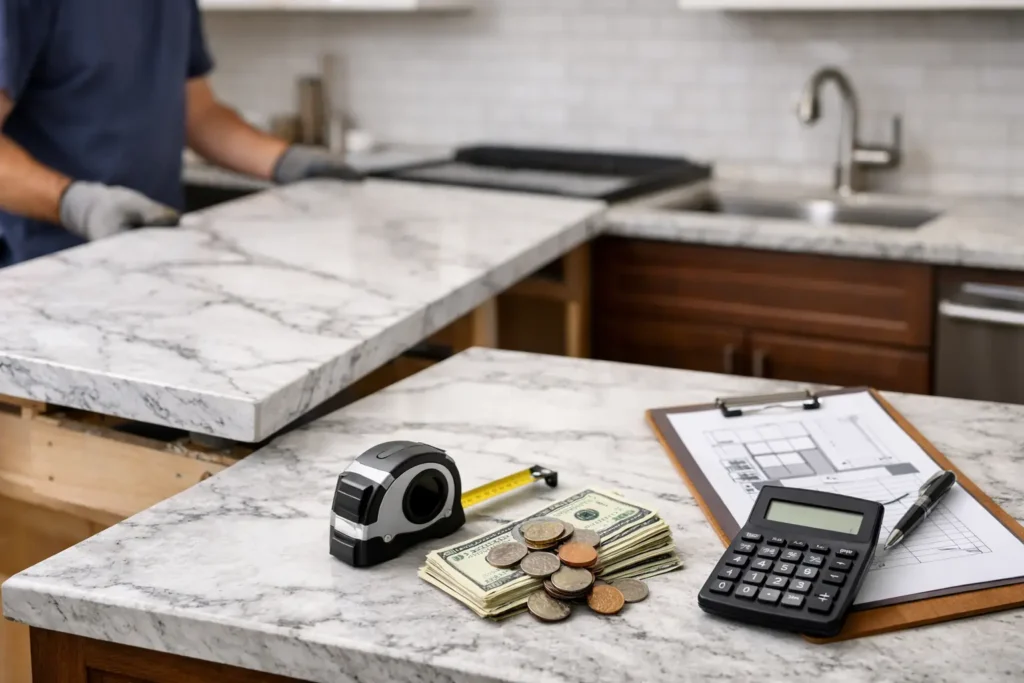
Sticker shock usually hits when a homeowner sees the slab price first and assumes that is the whole job. It is not. Countertop replacement cost depends on the material, the layout, the number of cutouts, the condition of the existing tops, and how smoothly the installation can move from removal to finish work.
If you are planning a kitchen or bathroom update, the fastest way to stay on budget is to understand what you are actually paying for. A new countertop is part product, part fabrication, and part installation. When one piece gets overlooked, the final number climbs.
What affects countertop replacement cost
The biggest cost driver is the material itself. Laminate is usually the most budget-friendly option. Granite and quartz sit higher because the material is more expensive and the fabrication process is more precise. Marble often costs more still, not just because of the slab price, but because homeowners usually expect a higher-end finish and detail work to match.
Size matters too, but not just in square footage. A simple run along one wall costs less than an L-shaped kitchen with an island, waterfall edge, cooktop opening, and multiple seams. Every sink cutout, faucet hole, corner, edge profile, and finished side adds labor.
The condition of your current setup also changes the price. If old countertops come off cleanly, demolition is straightforward. If there is water damage, loose cabinets, bad plumbing connections, or wall repairs needed after removal, the scope grows fast. That is why low advertised numbers often leave out real-world site conditions.
Typical countertop material costs
Material pricing varies by region, stock, color pattern, thickness, and availability. For most homeowners, here is the practical range to expect before final labor and project-specific add-ons.
Laminate
Laminate is often the lowest-cost replacement path. Many projects land around $20 to $60 per square foot installed, depending on brand, edge style, and whether the job is basic or custom. It is a solid choice for rental properties, utility areas, or homeowners who want a clean new look without a major investment.
The trade-off is durability and resale appeal. Laminate has improved, but it still does not perform like stone when it comes to heat resistance, long-term wear, and premium finish.
Butcher block
Butcher block commonly runs about $40 to $100 per square foot installed. It brings warmth and character, and some homeowners like that it can be sanded and refinished over time.
The catch is maintenance. Wood needs sealing and more day-to-day care than quartz or granite. In a busy kitchen, that matters.
Granite
Granite often falls between $50 and $150 per square foot installed. Entry-level colors can be reasonable, but exotic slabs push the total much higher. Granite remains popular because it gives a natural stone look with strong resale value.
Price swings usually come from slab selection and fabrication complexity. A standard countertop in a common color is one thing. A large island in a dramatic pattern with matching backsplash is another.
Quartz
Quartz usually lands around $60 to $160 per square foot installed. It is one of the most requested materials because it offers a clean, upscale look with less maintenance than many natural stones.
Quartz pricing often depends on brand, pattern, thickness, and edge treatment. It can cost more than laminate or some granite options, but many homeowners choose it for consistency, durability, and easy upkeep.
Marble and other premium stone
Marble and premium surfaces often start around $75 per square foot installed and can run well above $200. These are usually design-driven purchases. They can look exceptional, but they also come with higher expectations for care, precision, and budget.
For homeowners focused on function, speed, and value, premium stone is not always the smartest fit. It depends on how you use the space and what level of maintenance you are willing to accept.
Labor and installation costs are a major part of the total
One of the most common mistakes is comparing slab prices without comparing the full install scope. Fabrication and labor are not side costs. They are a major part of countertop replacement cost.
Professional installation often includes field measurements, template creation, removal of old tops, transport, cutting, polishing, setting the new surface, sink and cooktop cutouts, and sealing where needed. If plumbing disconnect and reconnect is involved, that may be priced separately. So may backsplash work.
A simple install on solid cabinets is much cheaper than a project where the base cabinets need leveling first. Stone tops require proper support. If the cabinets are out of level or poorly secured, an experienced installer has to correct that before the slab goes in.
Hidden costs that catch homeowners off guard
This is where budgets go sideways. The estimate looked manageable until the add-ons started showing up.
Demolition and disposal are often separate. Sink and faucet reconnection may be separate too, especially if old shutoff valves, drain lines, or supply lines need replacement. If you are changing from a drop-in sink to an undermount sink, the scope changes again.
Then there are repairs behind the old countertop. Water damage around the sink base, wall patching after backsplash removal, and cabinet reinforcement are all common. None of these are unusual. They are just the kind of work that shows up once the old materials come out.
Timing can also affect cost. If materials are backordered, your project can stall between demolition and installation, creating extra inconvenience and sometimes more labor coordination. That is one reason homeowners value companies that keep cabinets, countertops, and core materials in stock and can move the job forward without delays.
Countertop replacement cost by project type
A small bathroom vanity top is usually the least expensive replacement because there is less material and fewer fabrication demands. A typical bathroom project may range from a few hundred dollars for basic laminate to a few thousand for quartz or stone with custom details.
A standard kitchen is where most homeowners see the wider pricing spread. A modest kitchen with laminate might stay in the low thousands. A mid-range quartz or granite kitchen can quickly move into the $3,000 to $7,000 range or more, depending on square footage, cutouts, and edge details. Large kitchens with islands and premium slabs can go well beyond that.
Outdoor kitchens, laundry rooms, and rental turnovers each have their own pricing logic. Outdoor work may require weather-resistant materials. Rentals often prioritize speed and cost control. Family homes usually balance appearance, durability, and long-term value.
How to keep costs under control without cutting corners
The best way to manage price is to simplify where it counts. Choose a standard edge instead of a premium decorative profile. Use a readily available color instead of a special-order slab. Keep the layout simple if possible.
It also helps to address the whole scope at once. If your sink, faucet, plumbing, cabinets, and countertop all need attention, coordinating through one company is often more efficient than hiring separate trades and hoping schedules line up. That is especially true when speed matters. Cobo Kitchen Master & Home Repair works this way because homeowners do not want to chase suppliers, fabricators, installers, and plumbers just to finish one room.
Do not choose based on the lowest estimate alone. A low number can leave out demo, disposal, plumbing reconnection, cutouts, or finish work. Ask what is included, what could change the price, and whether materials are actually available now.
When replacement makes more sense than repair
Sometimes homeowners try to stretch an old countertop another year with patchwork fixes. That can work for minor cosmetic issues. But if the surface is swelling, cracked, poorly supported, badly stained, or no longer fits the sink and cabinet setup you need, replacement is usually the better investment.
New countertops also make more sense when you are already updating cabinets, changing the sink, or correcting plumbing problems. Doing the work together reduces repeat labor and avoids paying to remove and reinstall surrounding parts later.
Getting a realistic estimate
A solid estimate should account for material, measurements, fabrication, demolition, disposal, installation, cutouts, and any related plumbing or cabinet adjustments. If your kitchen has corners, seams, an island, a farmhouse sink, or wall panels, those details should show up clearly.
You want a number based on the actual job, not a vague square-foot guess. Clear pricing comes from clear scope. That protects your budget and keeps the project moving.
Countertop replacement cost is not just about what looks good in the showroom. It is about choosing a surface that fits your home, your timeline, and the way you actually use the space. The right job is not the cheapest one on paper. It is the one that gets done properly, without delays, and holds up long after the installers leave.