
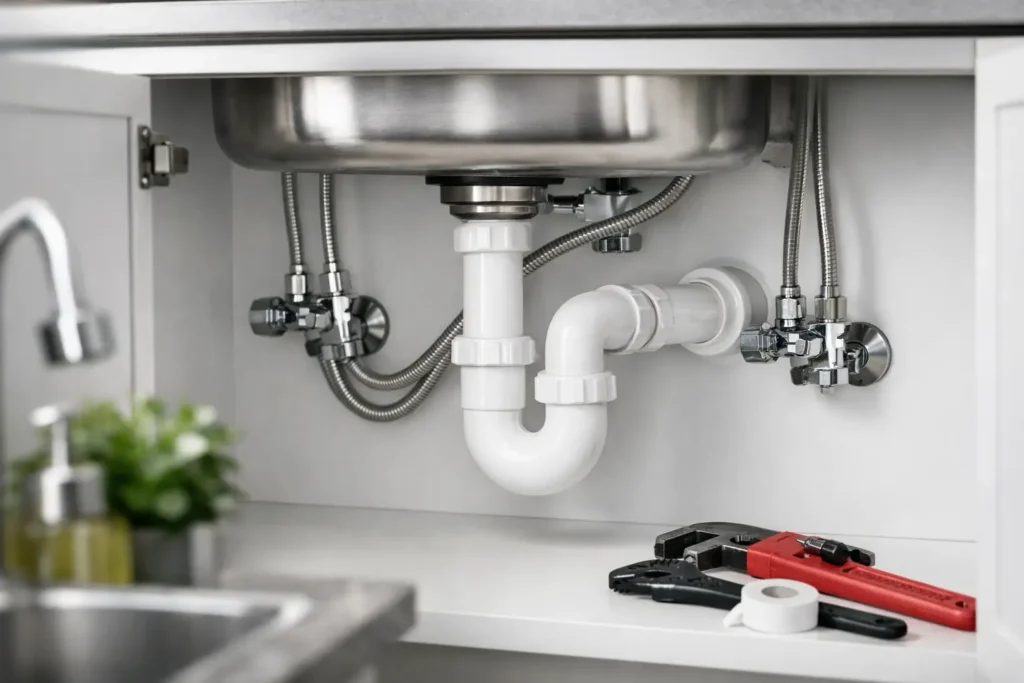
A kitchen remodel can stall for one simple reason – the sink is ready, the countertop is set, but the kitchen sink plumbing underneath is wrong, outdated, or leaking. That is where small plumbing problems turn into real project delays. If the drain line sits too high, the garbage disposal will not fit. If the shutoff valves fail, the faucet install stops. If the trap is pieced together badly, you get odors, clogs, and callbacks.
For homeowners, this is more than an inconvenience. It affects how quickly the kitchen goes back into service, how well the new fixtures perform, and whether the finished work actually lasts. Good plumbing behind the cabinet doors is what keeps the visible part of the remodel from becoming a recurring repair.
What kitchen sink plumbing actually includes
Most people think about the faucet and basin. The working system is much bigger than that. Kitchen sink plumbing includes the hot and cold water supply lines, shutoff valves, faucet connections, drain assembly, P-trap, branch drain, venting, dishwasher drain connection, and in many kitchens, a garbage disposal line as well.
Every one of those parts has to be sized, aligned, and installed correctly. A sink can look perfect from above and still be set up for slow drainage or leaks below. That is why plumbing should never be treated like the last small step in a kitchen project. It is part of the structure of the kitchen, not just an accessory.
In older homes, the challenge is often hidden wear. Corroded pipes, frozen shutoff valves, bad slope on drain lines, and patched repairs from previous owners can all create problems once new fixtures are added. In newer remodels, the issue is often fit and compatibility. A deeper sink bowl, a larger disposal, or a new cabinet layout can change everything under the sink.
Why kitchen sink plumbing causes so many problems
The kitchen sink gets used hard every day. Grease, soap, food scraps, hot water, detergents, and constant on-and-off pressure all wear down the system over time. Unlike a bathroom sink, the kitchen drain line handles heavier waste and more frequent use, so weak installations show up fast.
A common issue is poor drain configuration. If the trap arm is too long, if the slope is off, or if the wrong fittings are used, the sink may drain slowly from day one. Another frequent problem is an under-sink setup that was forced into place instead of properly planned. That usually shows up after a remodel, when a new sink or disposal gets connected to old plumbing that was never meant to handle it.
Leaks are another major concern because they often go unnoticed until the cabinet floor is damaged. A small drip at a compression fitting or basket strainer can soak wood, swell particle board, and create mold conditions long before the homeowner sees visible water.
Signs your kitchen sink plumbing needs attention
Some problems are obvious. Water under the sink, a backed-up basin, or a dripping faucet connection gets attention fast. Others are easier to ignore until they become expensive.
If your kitchen sink drains slowly, makes gurgling sounds, smells foul even after cleaning, or backs up when the dishwasher runs, the plumbing system is telling you something is wrong. The same goes for shutoff valves that will not turn, disposal connections that vibrate loose, or drain pipes that were taped, glued, or improvised instead of properly fitted.
During a remodel, warning signs show up even earlier. If the sink location changes, if the new sink is deeper, or if the cabinet interior is tighter than before, the old plumbing may no longer be usable as-is. This is where planning matters. A fast install only works when the rough plumbing supports the finish work.
Repair or replace? It depends on the condition below the sink
Not every kitchen plumbing issue requires a full replacement. Sometimes a targeted repair is the smart move. Replacing a worn basket strainer, a cracked tailpiece, or a failed shutoff valve can solve the problem without opening walls or reworking the whole system.
But there are times when partial repair just delays the next failure. If the pipes are badly corroded, the trap setup is wrong, or the drain line has recurring blockage due to poor layout, replacing the affected section is usually the better investment. The same is true when remodeling around old plumbing that was never installed cleanly in the first place.
The right decision comes down to condition, access, and timing. If you are already replacing cabinets, countertops, or the sink itself, that is often the best time to correct plumbing issues properly. Waiting until after the finish work is complete can mean extra labor and avoidable disruption.
Kitchen sink plumbing during a remodel
This is where many projects either move smoothly or get stuck. Homeowners often choose the visible items first – cabinets, countertops, sink, faucet, disposal – and assume the plumbing will adapt easily. Sometimes it does. Often it does not.
A farmhouse sink may need different support and drain positioning. A deeper single-bowl sink changes the available space for the trap and disposal. New base cabinets can shift access points. Stone countertop installation may depend on the sink and faucet setup being right before final placement.
That is why one-company coordination matters. When the same team understands the cabinet layout, countertop cutout, sink specs, and plumbing requirements, the work moves faster and cleaner. There is less finger-pointing, fewer scheduling gaps, and a much lower chance of discovering a plumbing conflict after materials are already in place.
For busy households, that matters. The kitchen is not a room people can leave half-finished for weeks while different contractors sort out who handles what.
Common kitchen sink plumbing mistakes
Bad plumbing is not always dramatic. Sometimes it is just installed in a way that guarantees problems later. Using the wrong trap size, stacking too many slip-joint connections, over-tightening fittings, skipping proper venting, or creating a drain path with poor slope are all common mistakes.
Another issue is mixing old and new components without checking compatibility. A new faucet on failing shutoff valves is risky. A heavy disposal hanging from a loose or aging drain assembly is asking for leaks. Even a simple dishwasher drain line needs the right routing to prevent backflow and odor problems.
Cheap fixes also create repeat service calls. Flexible corrugated drain parts, temporary sealants used as permanent repairs, and makeshift adapters may seem fast in the moment, but they do not deliver dependable results. A kitchen is too high-use for shortcuts.
When speed matters most
Some plumbing issues can wait a day. Others cannot. If the sink drain is leaking into the cabinet, if the shutoff valve fails, if the disposal connection breaks, or if the kitchen cannot drain at all, the problem affects the whole home right away.
Fast response is not just about convenience. It limits water damage, protects surrounding materials, and keeps the repair from interfering with the rest of the project. When materials are already in stock and the installation team can handle both plumbing and related kitchen work, the timeline stays under control.
That is one reason homeowners choose Cobo Kitchen Master & Home Repair. When the sink, cabinet, countertop, and plumbing work all need to come together, speed only helps if the execution is right the first time.
What homeowners should expect from professional kitchen sink plumbing
You should expect more than a quick connection and a test run. Professional work starts with checking the existing supply and drain conditions, confirming fixture compatibility, and identifying any code or performance issues before installation begins.
You should also expect clean alignment under the sink, secure connections, proper support for accessories like disposals, and shutoff valves that function when needed. Good workmanship shows in the details homeowners rarely see at first but rely on every day afterward.
There is also value in honest guidance. Sometimes the best answer is a simple repair. Sometimes the better answer is replacing outdated parts now to avoid opening the cabinet again in three months. A reliable contractor should tell you the difference clearly.
Kitchen sink plumbing is one of those systems that seems simple until it holds up a remodel, causes cabinet damage, or leaves you without a working kitchen. When it is planned correctly and installed cleanly, everything around it works better. That is the kind of work that saves time, avoids repeat problems, and lets the kitchen function the way it should.