
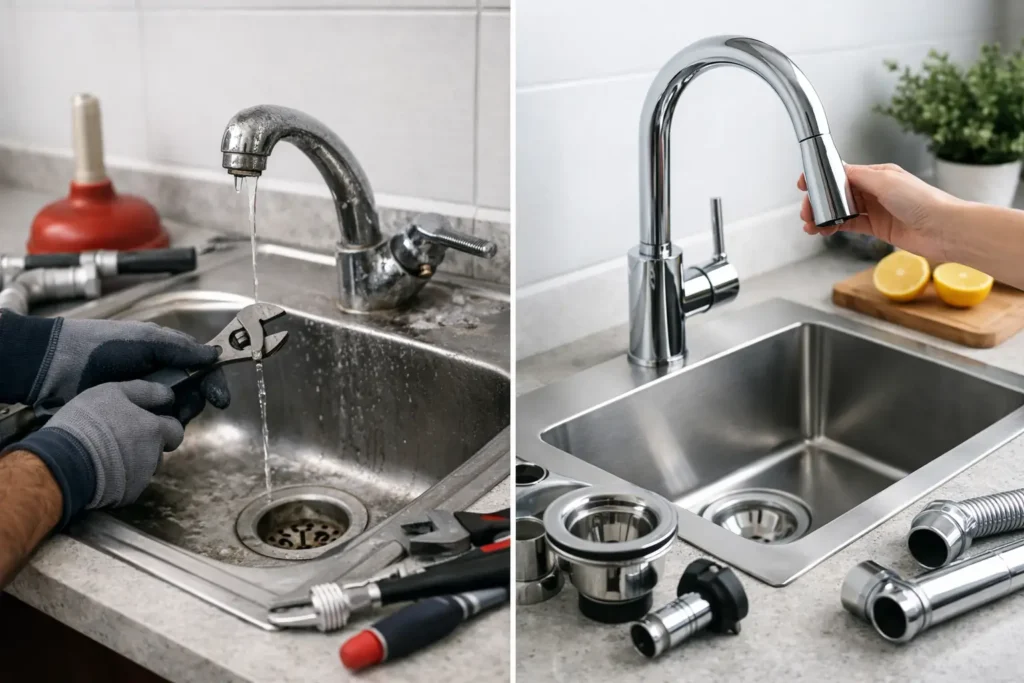
A kitchen sink usually gives you warning signs before it turns into a bigger problem. Maybe the basin is stained beyond cleaning, the drain keeps leaking under the cabinet, or the faucet area has started to loosen and shift. When that happens, most homeowners ask the same question: should you repair or replace kitchen sink problems now, or keep patching it and hope it lasts?
The right answer depends on the sink’s condition, the plumbing around it, and how long you want the fix to hold. Some issues are minor and worth repairing. Others are a sign that replacement will save time, money, and repeat service calls.
How to decide whether to repair or replace kitchen sink problems
Start with the type of problem, not just the visible damage. A slow leak from a drain connection is very different from a cracked sink bowl or a rusted mounting system. If the issue is isolated, accessible, and not affecting the surrounding countertop or cabinet, a repair often makes sense. If the sink is failing in more than one area, replacement is usually the better move.
Age matters too. An older sink that has already been recaulked, reconnected, and adjusted several times is often near the end of its useful life. At that point, paying for another repair can feel cheaper in the moment, but it may only buy a little time.
When a kitchen sink is worth repairing
A repair is usually the smart option when the sink itself is structurally sound and the problem is limited to one component. Many service calls fall into this category.
A leaking P-trap, loose drain assembly, worn plumber’s putty, failed caulking line, or a bad sink strainer can often be fixed without replacing the full sink. The same goes for a faucet issue that makes it seem like the sink is the problem when it is really the hardware above it.
Minor cosmetic damage can also be repaired in some cases. Small scratches, light surface stains, and basic seal failures do not automatically justify replacement. If the sink still fits the space well, drains properly, and has no cracks or severe rust, repair is often the more practical route.
Repairs also make sense when the countertop opening is unusual or when the existing sink is tied into a disposal, dishwasher line, or custom plumbing setup that would make replacement more involved. In those situations, a good repair can help you avoid turning a small issue into a larger project.
Signs replacement is the better investment
Some sinks are simply past the point where repair is worth it. Cracks in porcelain, deep rust in steel, soft spots around mounting points, and repeated leaks around the rim are all signs that the sink is failing as a unit, not just in one spot.
If water has been getting into the sink base cabinet, replacement becomes even more urgent. Cabinet floors can swell, mold can develop, and hidden moisture damage can spread behind walls or into adjacent materials. A cheap repair is no bargain if the real cost shows up later in cabinet repair or countertop replacement.
Replacement is also the better option if the sink no longer meets your needs. Many homeowners are dealing with shallow, outdated basins that splash constantly, hold less cookware, and make cleanup harder than it should be. If you are already paying for labor, it may make sense to install a better sink instead of putting more money into an old one you do not like.
The hidden cost of waiting too long
One of the biggest mistakes homeowners make is waiting until the sink failure becomes obvious. A slow drip under the sink can go unnoticed for weeks. By the time you see staining, smell moisture, or notice cabinet damage, the problem has already spread.
Delaying the decision to repair or replace kitchen sink issues can also make the job more expensive. What starts as a drain leak may reveal corroded supply lines, a damaged shutoff valve, loose sink clips, or water damage around the countertop cutout. The longer it sits, the less likely it is to stay a simple fix.
That is why speed matters. A fast inspection gives you a clearer picture before the damage moves beyond the sink itself.
Material matters more than most homeowners think
Not every sink ages the same way. Stainless steel sinks are common because they are durable and relatively easy to maintain, but lower-gauge models can dent, flex, and separate around the edges over time. Porcelain sinks can last for years, but once they crack or chip badly, repairs are usually cosmetic at best.
Composite sinks are attractive and durable, but damage can be harder to correct cleanly. Cast iron sinks are heavy and solid, but when they fail, replacement often requires more labor because of the weight and fit.
The sink material affects both the repair options and the replacement cost. It also affects how well the sink will hold up if your household uses the kitchen hard every day. A busy family kitchen needs a different level of durability than a lightly used sink in a rental or secondary space.
Don’t judge the sink without checking the plumbing
A kitchen sink problem is not always a sink problem. In many homes, the real issue is underneath or behind it. Bad supply lines, drain alignment problems, disposal vibration, poor prior installation, or failed seals around the countertop can all make a sink seem worse than it is.
That is why a proper evaluation matters. Replacing a sink without correcting the plumbing setup can leave you with the same leaks and callbacks. On the other hand, repairing plumbing around a sink that is already cracked or rusted can mean paying twice.
The best approach is to look at the whole assembly together – sink, faucet, drain, disposal, supply lines, shutoffs, mounting method, caulking, and cabinet condition. That tells you whether repair is enough or whether replacement is the cleaner long-term fix.
Repair vs. replacement during a remodel
If you are already updating countertops, cabinets, or faucets, replacement usually makes more sense. Once surrounding materials are being removed or upgraded, it is the right time to install a sink that fits the new layout and finish.
Trying to preserve an old sink during a kitchen update can create unnecessary labor, and it often leaves the finished space looking mismatched. A new countertop with an old, stained sink rarely feels like a completed job.
This is where working with one company makes a real difference. If the same team can supply the sink, handle the plumbing, and complete the installation, you avoid delays and finger-pointing between trades. For homeowners who want the work done without managing multiple contractors, that matters.
When a fast replacement is the smarter choice
Homeowners often assume replacement means a long project. It does not have to. If the sink size is standard and materials are available, replacement can move quickly, especially when the installer already handles plumbing and interior repair work.
That speed is important when the kitchen is your main work zone every day. A family can manage a temporary inconvenience. What most people do not want is a half-finished sink project stretching out because materials are on backorder or one contractor is waiting on another.
That is one reason companies like Cobo Kitchen Master & Home Repair focus on in-stock materials and full-service execution. When the product and labor are lined up together, the decision to replace becomes a lot easier because the timeline is more predictable.
A simple way to make the call
If the sink has one isolated issue and the basin, mounting, and surrounding materials are still in good shape, repair is usually the practical answer. If the sink has structural damage, recurring leaks, visible corrosion, or is already causing cabinet or countertop problems, replacement is usually the smarter investment.
And if you are stuck in the middle, think about this question: are you trying to solve a small problem, or are you trying to stop the next one? That usually tells you where the money should go.
The best kitchen sink decision is not the cheapest line item on paper. It is the one that restores function, protects the surrounding space, and does not leave you dealing with the same issue again a month from now. If your sink is already sending warning signs, now is the right time to deal with it before the repair gets bigger than the fixture itself.