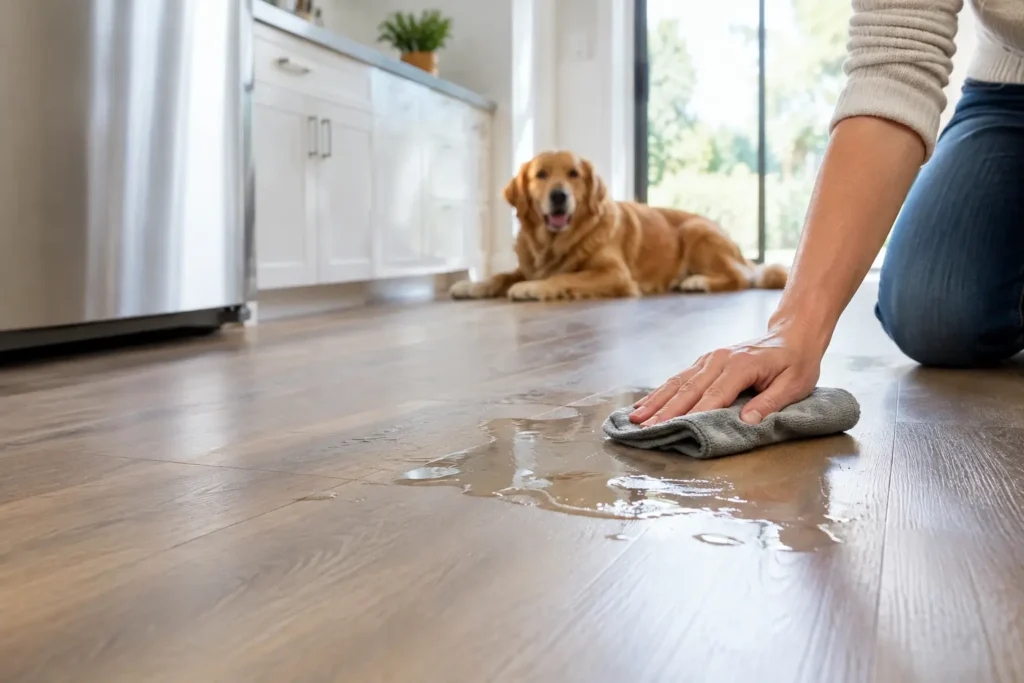
A wet bath mat, a leaking dishwasher, a child’s spilled drink, or a pet bowl tipped over at dinner should not turn into a flooring emergency. Waterproof flooring gives homeowners a practical layer of protection in the rooms that see the most traffic, moisture, and daily wear.
The right floor can make cleanup faster, protect the subfloor, and keep a kitchen or bathroom renovation looking finished for years. But “waterproof” does not mean every material performs the same way. Product construction, installation quality, and what sits underneath the floor all matter.
What Waterproof Flooring Actually Protects
Waterproof flooring is designed to prevent water from soaking through the surface and damaging the plank, tile, or core. Most quality waterproof options can handle everyday spills, wet shoes, splashes around sinks, and routine mopping without swelling, warping, or staining.
That is different from water-resistant flooring. Water-resistant products can slow moisture down, but they may absorb water or fail when a spill sits too long. For a powder room with limited use, water resistance may be enough. For a full bathroom, laundry room, kitchen, or entryway, waterproof protection is usually the safer choice.
There is one limit homeowners should understand: waterproof flooring is not a solution for an active plumbing leak or standing water left for days. Water can still reach the edges, seams, baseboards, cabinets, and subfloor. If a supply line fails or a toilet overflows, stop the water source first and address the damage quickly.
Best Waterproof Flooring Options for Kitchens and Baths
The best material depends on the room, the condition of the existing floor, your budget, and how you want the finished space to look. A floor that works well in a busy kitchen may not be the best fit for a shower-adjacent bathroom or an uneven older home.
Luxury Vinyl Plank and Luxury Vinyl Tile
Luxury vinyl plank, often called LVP, is one of the most common choices for waterproof kitchens, bathrooms, and living areas. It gives homeowners the look of wood or stone while standing up to moisture, scratches, and heavy foot traffic.
LVP is available in click-lock floating systems and glue-down products. Floating floors can be efficient to install over a properly prepared surface, while glue-down vinyl may be a better choice for certain commercial spaces, large open areas, or locations with strong sunlight. The trade-off is that vinyl can telegraph imperfections below it. A rough or uneven subfloor needs correction before installation.
Luxury vinyl tile offers many of the same benefits in stone, concrete, and ceramic-inspired looks. It is a practical option when you want a clean tile appearance without the cold feel and grout maintenance of traditional tile.
Porcelain and Ceramic Tile
Porcelain tile is a dependable waterproof flooring choice for bathrooms, laundry rooms, mudrooms, and kitchens. It is dense, durable, and highly resistant to moisture. Properly installed tile can last for decades, which makes it a strong long-term investment.
Tile does require more preparation than vinyl. The floor must be stable, level, and built to support the material. Cracked grout, loose tile, and poor waterproofing around tubs or showers can create problems beneath the surface. Tile also feels harder and cooler underfoot, although rugs or radiant heat can help in bathrooms.
Ceramic tile can work well too, but porcelain is generally the better choice in high-moisture areas because it absorbs less water. For busy households, choose a textured or matte finish that provides better traction when wet.
Sheet Vinyl
Sheet vinyl remains a practical option for homeowners who want water protection at a lower price point. Because it is installed in broad sheets, it has fewer seams where moisture can work its way down. That makes it useful for laundry rooms, bathrooms, and rental properties where durability and easy cleaning matter.
The design selection may not feel as high-end as premium LVP or porcelain tile, but modern sheet vinyl has improved significantly. A professional installation is especially important because cuts around toilets, vanities, and walls must be accurate to keep the floor protected and finished cleanly.
Waterproof Laminate
Some newer laminate products are marketed as waterproof, and they can be a good fit for kitchens or main living areas when installed correctly. They often provide a realistic wood appearance and a firmer feel underfoot than vinyl.
Still, read the product warranty carefully. Many waterproof laminate warranties depend on quick spill cleanup, sealed edges, and specific installation requirements. It may not be the first choice for a full bathroom with frequent moisture around a tub or shower. If your home has young children, pets, or recurring plumbing concerns, vinyl or porcelain may offer more peace of mind.
Choosing Waterproof Flooring by Room
A kitchen needs a floor that can handle dropped pans, food spills, dishwasher leaks, and constant traffic. LVP, luxury vinyl tile, and porcelain tile are usually strong choices. If you are replacing cabinets or countertops at the same time, plan the floor layout before installation begins. Cabinet placement, appliance clearance, and finished floor height all affect the final result.
Bathrooms need more than a waterproof surface. They need careful attention at the toilet flange, tub edge, vanity plumbing, and transition points. Porcelain tile is a proven bathroom option, while waterproof vinyl can provide a warmer, faster-installing alternative. For a bathroom remodel, address any soft spots in the subfloor before covering them. New flooring will not fix hidden moisture damage.
Laundry rooms and mudrooms benefit from durable materials with easy cleanup. Sheet vinyl, LVP, and porcelain all work well. In a mudroom, choose a finish that hides dirt and resists slipping. In a laundry room, consider installing a drain pan under the washing machine and checking supply hoses regularly. Flooring is part of the protection plan, not the entire plan.
For basements, the condition of the concrete slab is the deciding factor. Moisture vapor, cracks, and uneven areas should be evaluated before any flooring goes down. Waterproof vinyl is often a good basement choice, but the slab may need leveling or moisture mitigation first.
Installation Is Where Protection Can Fail
A quality product can still perform poorly if it is installed over the wrong surface or finished carelessly. The subfloor must be clean, dry, structurally sound, and flat enough for the flooring system. Skipping this step can cause gaps, movement, cracked grout, or visible high and low spots.
Expansion space matters with floating floors. Vinyl and laminate need room at the perimeter to expand and contract with temperature changes. That gap is covered with baseboard or shoe molding, but it should not be sealed in a way that prevents normal movement unless the manufacturer specifically calls for it.
Transitions also deserve attention. Doorways, tub edges, exterior entries, and the connection between flooring and cabinets are common weak points. The correct trim, caulk, or sealant helps prevent water from reaching the subfloor while keeping the installation neat.
If a renovation includes plumbing changes, coordinate that work before the flooring is finished. Moving a sink, toilet, dishwasher, or refrigerator line after installation can lead to unnecessary cuts and repairs. Cobo Kitchen Master & Home Repair can coordinate flooring, plumbing, cabinets, countertops, and interior repair work under one team, helping homeowners avoid the delays that happen when several contractors work separately.
What Waterproof Flooring Costs Over Time
The least expensive material is not always the lowest-cost decision. A budget floor that needs replacement after a minor leak can cost more than a higher-quality material installed correctly from the start.
Vinyl products generally offer a strong balance of cost, speed, comfort, and water protection. Tile usually costs more because of labor, preparation, grout, and setting materials, but it can provide exceptional longevity. Laminate may fit a tighter budget in lower-moisture areas, provided you understand its limits.
When comparing estimates, ask what is included beyond the flooring itself. Removal of old materials, subfloor repair, leveling, trim, transitions, furniture moving, toilet removal and reset, and disposal can change the final price. A clear scope prevents surprises after work begins.
Care That Keeps the Floor Looking New
Waterproof flooring is low-maintenance, not maintenance-free. Wipe spills up promptly, use a doormat at exterior doors, and place felt pads under furniture legs. Avoid soaking floors with excessive water, especially near seams and walls.
Use cleaning products approved for the specific material. Abrasive powders, steam tools used incorrectly, and harsh chemicals can damage finishes or leave residue. For tile, inspect grout and caulk periodically. For vinyl and laminate, watch for lifting edges, gaps, or damage around appliances and plumbing fixtures.
A good floor should make the room easier to live in, not create another item on your repair list. Choose a material that matches how your household actually uses the space, prepare the surface properly, and do not ignore small leaks. That is how waterproof protection becomes a lasting home improvement instead of a short-term fix.