
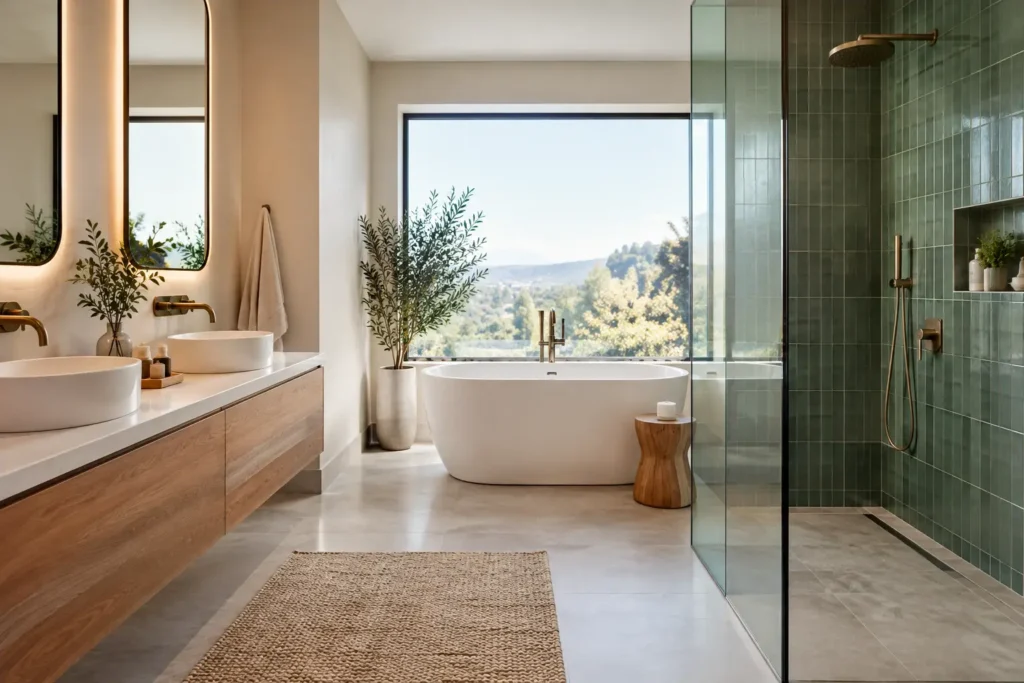
A bathroom renovation should solve problems, not create new ones. The strongest bathroom design trends 2026 are less about chasing a showroom look and more about building a space that is easier to use, easier to clean, and made to hold up for years. Homeowners are choosing warmer finishes, smarter storage, better lighting, and layouts that make everyday routines faster.
That does not mean every trend belongs in every home. A compact hall bathroom has different needs than a primary suite, and a rental property calls for different material choices than a long-term family home. The right plan starts with how the room is used, what needs repair, and which improvements will deliver lasting value.
Bathroom Design Trends 2026: Practical, Warm, and Built to Last
The cold, all-white bathroom is giving way to spaces with more texture and personality. Expect to see natural wood tones, soft earthy tile colors, brushed metal fixtures, and layered lighting. These choices make a bathroom feel more comfortable without sacrificing a clean, organized finish.
The biggest shift is practical: homeowners want materials that look good on day one and still perform after years of moisture, cleaning products, kids, guests, and busy mornings. That means selecting durable flooring, properly installed waterproofing, reliable plumbing fixtures, and vanities with storage that actually works.
A good renovation brings those decisions together. Installing an expensive tile on top of poor preparation is not a trend. It is a future repair bill.
Warm Wood Vanities Replace the Sterile Look
Natural and wood-look vanities are leading the move toward warmer bathrooms. White oak, medium walnut tones, and muted greige finishes add contrast against light walls and stone-look surfaces. They also work well in both modern and traditional homes, which makes them a safer choice than an overly specific color trend.
For a smaller bathroom, a floating vanity can make the floor feel more open and simplify cleaning underneath. In a larger bathroom, a furniture-style double vanity offers more storage and gives the room a finished, custom look.
The trade-off is maintenance and material quality. Bathrooms are wet rooms. A low-grade cabinet box, exposed raw edges, or poor installation can swell and fail quickly. Choose cabinets designed for bathroom moisture, make sure wall connections are secure, and address any plumbing leaks before new cabinetry goes in.
Large-Format Tile Means Fewer Grout Lines
Large-format porcelain tile remains a strong choice for floors and shower walls in 2026. Bigger tiles create a cleaner visual line and reduce the number of grout joints that collect soap residue and mildew. Stone-look porcelain gives homeowners the appearance of marble, travertine, or limestone with less maintenance and more predictable performance.
Soft beige, sand, warm gray, clay, and muted green are replacing the stark cool-gray palette. These colors feel current without being difficult to match later if you update paint, towels, or hardware.
Tile size should match the room and the installer’s plan. Very large tile can look excellent in a shower, but it requires a flat, properly prepared surface. On a shower floor, smaller mosaics are often the better option because the extra grout lines improve traction and allow the tile to follow the slope to the drain. Style should never override drainage and safety.
Curbless Showers Are Growing, but Planning Comes First
Walk-in showers with low or no thresholds continue to gain attention because they look clean and make access easier. A curbless shower can make a small bathroom feel larger, and it can be a smart long-term decision for homeowners planning to age in place.
But this is not a simple cosmetic upgrade. The shower floor needs correct slope, waterproofing, drain placement, and enough depth below the finished floor to create that slope. In some homes, the existing framing or plumbing location may make a fully curbless design more involved and more expensive.
A low-profile curb is often the practical alternative. It still delivers a modern appearance while allowing the installer more flexibility to protect the floor structure and control water. The best choice depends on the home, the budget, and the condition of the existing bathroom.
Better Lighting Does More Than a New Mirror
Bathroom lighting is becoming more layered and more useful. One overhead fixture is rarely enough, especially at the vanity where people shave, apply makeup, manage skincare, and get ready for work.
A strong layout usually combines general ceiling lighting with vanity lighting placed at face level or on both sides of the mirror. This reduces shadows that overhead fixtures create under the eyes and chin. Backlit mirrors can add a clean modern detail, but they should support the room’s main lighting rather than replace it.
Warm-neutral bulbs generally make finishes and skin tones look more natural than harsh blue-white lighting. Dimmers are also worth considering. Bright light is useful on weekday mornings; softer light makes late-night routines less jarring.
Electrical work needs to be handled correctly, especially near sinks, showers, and tubs. Properly placed GFCI protection, rated fixtures, and professional installation are not optional details.
Storage Is Becoming a Design Feature
Open shelves can look good in photos, but most bathrooms need closed storage. Homeowners are moving toward deeper drawers, built-in organizers, recessed medicine cabinets, and tall linen storage where space allows. These features keep counters clear and make a bathroom feel calmer without adding square footage.
Drawers are especially useful in vanity bases because they bring toiletries forward instead of forcing you to reach into a dark cabinet. In a shared bathroom, separate drawer zones can prevent the daily clutter that builds up around one sink.
For a small bathroom, look for unused wall space. A recessed cabinet between studs, niches in a shower wall, or a narrow storage tower can add function without making the room feel crowded. Before adding a niche, confirm where plumbing and electrical lines run. A good-looking feature should not create unnecessary demolition or compromise the wall assembly.
Statement Fixtures, With a Sensible Finish Choice
Brushed nickel, warm brass, matte black, and mixed-metal combinations all have a place in 2026 bathroom design. The key is coordination, not matching every item exactly. A brushed nickel faucet can work with a different mirror frame or light fixture if the finishes feel intentional and the overall palette stays controlled.
Matte black creates strong contrast but can show mineral spots in areas with hard water. Warm brass adds character, though finish quality matters because cheaper coatings may wear unevenly. Brushed nickel remains one of the most forgiving choices for long-term maintenance and resale appeal.
Whatever finish you choose, prioritize proven valves, quality cartridges, and solid installation behind the wall. A faucet is easy to see. The plumbing connections that prevent leaks are what protect the investment.
Spa Features Should Fit Real Routines
Homeowners still want bathrooms that feel like a retreat, but the most useful spa-inspired upgrades are practical. Heated floors, towel warmers, hand showers, bench seating, and quieter exhaust fans all improve daily comfort without demanding a complete luxury build.
A larger shower may be more valuable than a rarely used soaking tub, especially in a primary bathroom with limited square footage. On the other hand, removing the only bathtub in a family home can be a mistake if young children or future buyers are part of the equation. Keep at least one tub when it makes sense for the property and household.
Ventilation deserves the same attention as tile and fixtures. A properly sized, vented bathroom fan reduces moisture that can damage paint, cabinets, drywall, and framing. If a bathroom has recurring mildew, peeling paint, or a musty smell, solve that problem before focusing on decorative upgrades.
Start With the Work Behind the Walls
The most successful bathroom design trends 2026 have one thing in common: they are supported by solid construction. Before selecting a vanity color or shower tile, check for aging supply lines, slow drains, weak subfloors, damaged drywall, failing caulk, and signs of water intrusion.
This is where one company that can handle plumbing, materials, installation, and general repair saves time. Instead of coordinating separate suppliers, plumbers, tile installers, and cabinet crews, homeowners can keep the work moving under one clear plan. Cobo Kitchen Master & Home Repair helps reduce those handoff delays by supplying core materials and completing the installation work with one accountable team.
Choose the upgrades that make your bathroom easier to live with every day. A well-built shower, dependable plumbing, useful storage, and finishes you will still like in five years will always outlast a trend chosen only for a photo.