
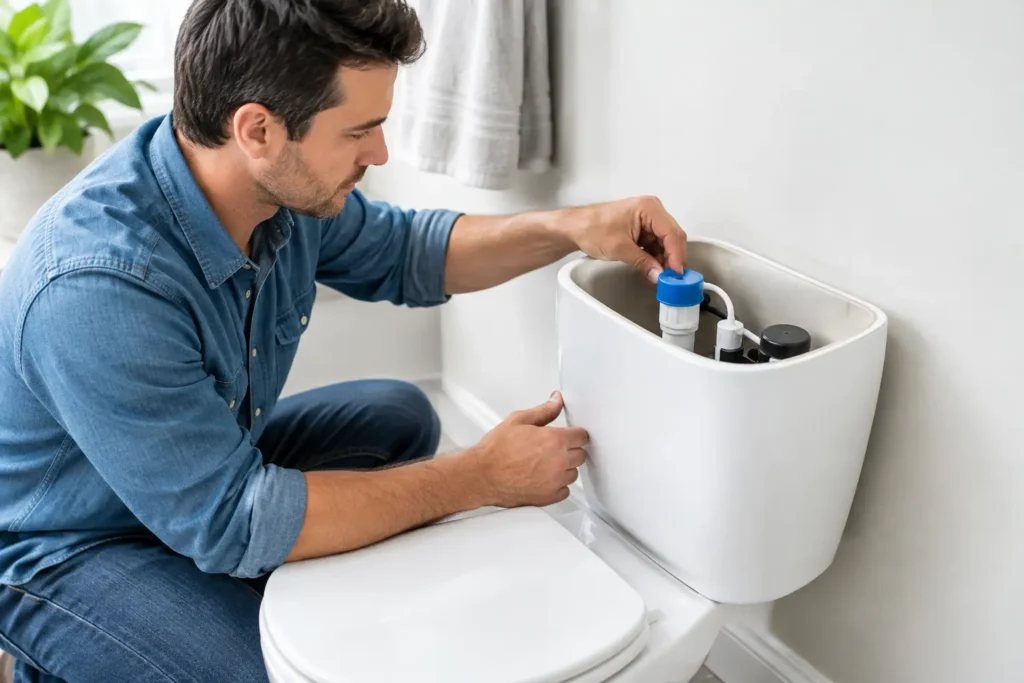
A toilet that runs after every flush is not a minor background noise. It is clean water moving through your plumbing around the clock, raising your water bill and putting extra wear on parts that should last for years. The good news is that learning how to stop toilet running usually starts with a few simple checks inside the tank.
Most running toilets come down to one of three issues: the flapper is not sealing, the fill valve is set incorrectly or failing, or water is spilling into the overflow tube. Start with the easy checks. If the problem keeps returning, do not keep adjusting parts that are worn out. Replace them or have a plumber correct the cause.
First, Confirm Why the Toilet Is Running
Remove the tank lid carefully and set it on a towel or stable surface. Porcelain lids crack easily, and replacement lids often do not fit perfectly.
Look inside the tank while the toilet is running. If water is flowing into the vertical open pipe in the center of the tank, called the overflow tube, the tank is overfilling. That points to the float or fill valve. If the water is below the overflow tube but the toilet still refills every few minutes, water is likely leaking past the flapper and into the bowl.
A quick dye test makes the flapper issue obvious. Put a few drops of food coloring into the tank, wait 15 to 20 minutes without flushing, then check the bowl. Color in the bowl means the flapper is leaking.
How to Stop Toilet Running From a Bad Flapper
The flapper is the rubber seal at the bottom of the tank. When you flush, the chain lifts it so water can move into the bowl. When the flush ends, it should drop back into place and create a tight seal.
Over time, flappers become warped, stiff, coated with mineral buildup, or simply worn out. This is the most common reason a toilet runs intermittently, especially if you hear the tank refill for a few seconds long after nobody has used it.
Start by checking whether the flapper is seated flat over the drain opening. Sometimes the chain is too short and holds it slightly open. There should be a little slack in the chain when the flapper is closed. If the chain is tangled, straighten it and test the flush again.
If the flapper looks damaged or feels hard rather than flexible, replace it. Shut off the water supply valve behind the toilet, flush the toilet, and hold the handle down to drain as much water from the tank as possible. Unhook the old flapper from the overflow tube and disconnect its chain from the flush lever. Install the new flapper according to its size and style, reconnect the chain with slight slack, then turn the water back on.
Do not assume every flapper fits every toilet. Bring the old part or confirm your toilet model before buying a replacement. A close-but-not-quite match can keep leaking and waste your time.
Adjust the Water Level and Float
If water is reaching the top of the overflow tube, the fill valve is allowing too much water into the tank. This is usually an adjustment issue at first, but it can also mean the fill valve is failing.
Modern toilets commonly use a fill valve with a small float cup that slides up and down the valve body. Older toilets may have a floating ball attached to a metal or plastic arm. In either case, the goal is the same: stop the water level about 1 inch below the top of the overflow tube, or at the level marked inside the tank.
For a float cup, turn the adjustment screw on the fill valve gradually. For a float ball, gently adjust the screw where the arm connects to the fill valve, if one is present. Some older models require careful bending of the arm, but replacement is usually the better choice if the hardware is corroded or difficult to adjust.
Flush after each adjustment and let the tank refill completely. A water level that is too high sends water down the overflow tube. A level set too low can cause a weak flush. Take the extra minute to get it right.
Check the Refill Tube Position
The small flexible refill tube sends water into the overflow tube while the tank refills. It should be clipped to the top edge of the overflow tube, not pushed down inside it.
If the refill tube is inserted too far into the overflow pipe, it can create a siphon effect that continuously pulls water from the tank. Reposition it so there is an air gap between the end of the refill tube and the water inside the overflow tube. This small correction can stop an otherwise confusing running-toilet problem.
Replace a Faulty Fill Valve
A fill valve controls the water entering the tank. If it hisses continuously, does not shut off after the float rises, refills slowly, or needs constant adjustment, replacement is often the dependable fix.
Replacing a fill valve is a manageable repair for many homeowners, but take your time. Shut off the water supply, flush and drain the tank, then place a small bucket and towel under the connection beneath the tank. Disconnect the supply line, remove the old valve’s mounting nut, and lift the old assembly out.
Install the new fill valve at the height directed by the manufacturer. Make sure the top of the valve sits above the overflow tube and that the refill tube is clipped correctly. Reconnect the water line, turn the supply back on slowly, and inspect underneath the tank for leaks.
Do not overtighten plastic nuts. Hand-tight plus a small additional turn is normally enough. Overtightening can crack the tank or damage the new part, creating a larger repair than the one you started with.
When the Problem Is Not Inside the Tank
Not every sound near a toilet means the toilet itself is running. A whistling noise may come from a restricted shutoff valve or worn supply line. A toilet that bubbles, drains slowly, or changes water level in the bowl may point to a drain or vent issue. Those problems need a different repair than a flapper or fill valve replacement.
You should also look for water around the base of the toilet. A running tank does not usually cause floor leaks. Water at the base can indicate a loose supply connection, condensation, a cracked tank, or a failed wax ring. If the toilet rocks when you sit on it, stop using it until it can be secured and inspected. Movement can damage the drain seal and allow hidden floor damage.
Know When to Call a Plumber
A basic flapper or fill valve repair is often straightforward. But repeated toilet problems deserve a professional diagnosis, especially when they affect more than one fixture or keep coming back after new parts are installed.
Call for plumbing service when you see a cracked tank or bowl, persistent leaks at the base, a shutoff valve that will not close, rusted or seized connections, drain backups, or water damage around the toilet. If you manage a rental property or a busy household bathroom, a quick professional repair can cost far less than continued water waste or a damaged subfloor.
Cobo Kitchen Master & Home Repair handles practical plumbing repairs with the same focus used on bathroom renovations: find the real cause, use the right parts, and complete the work without unnecessary delays.
A running toilet rarely fixes itself. Turn off the water supply if the tank will not stop filling, address the source before it becomes a higher bill or a leak, and keep the bathroom working the way it should.