
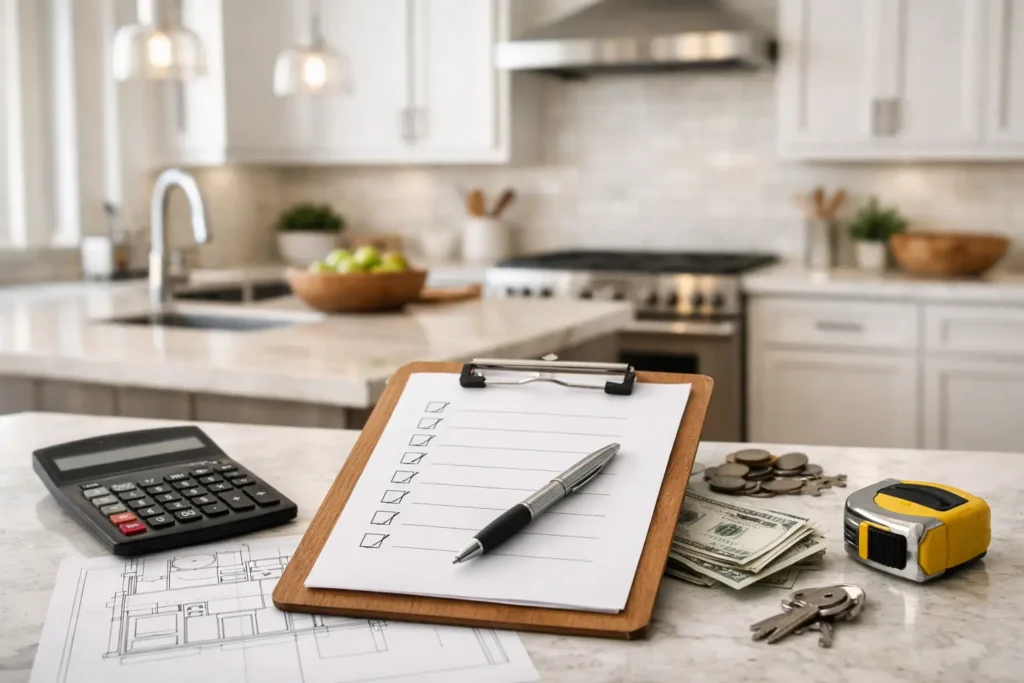
A kitchen project usually goes off track long before demolition starts. The problem is not just price. It is incomplete planning, missing line items, and assumptions that fall apart once walls open up. A solid kitchen remodel budget checklist keeps the job grounded from day one, so you know where the money is going and what can change.
If you are trying to remodel without wasting weeks on backorders, surprise labor charges, or last-minute upgrades, start with the numbers in the right order. Budgeting a kitchen is not only about picking a total. It is about separating must-haves from nice-to-haves, understanding where labor and materials really land, and leaving room for the issues older kitchens tend to hide.
Start your kitchen remodel budget checklist with scope
Before you price cabinets or countertops, define the level of remodel. This is where many homeowners get into trouble. They say they want a kitchen remodel, but the cost difference between a surface update and a full rework can be significant.
A cosmetic remodel usually means keeping the same layout and focusing on visible finishes. That may include new cabinets, countertop replacement, a backsplash, updated fixtures, paint, and appliance swaps. A full remodel goes further and can involve moving plumbing, changing electrical, replacing drywall, repairing subfloor, and reworking the layout.
If you keep the sink, stove, and major appliances in roughly the same place, your budget usually stays more controlled. Once you start moving plumbing or gas lines, labor costs rise quickly. Sometimes the change is worth it. Sometimes it is not. A better kitchen is not always the one with the most dramatic layout change. It is often the one that solves storage, workflow, and durability without adding unnecessary construction.
The core categories every budget should include
Most kitchens break down into a few major cost groups. Your kitchen remodel budget checklist should account for each one clearly instead of combining everything into one rough guess.
Cabinets
Cabinets often take the largest share of the budget. The price depends on size, material, door style, finish, and whether the cabinets are stock, semi-custom, or fully custom. For many homeowners, in-stock cabinet options make the most sense because they control cost and avoid long project delays.
Installation also matters. Even quality cabinets can look wrong if they are not leveled, aligned, and secured properly. Budget for both the product and the labor, not just the box price.
Countertops
Countertop cost depends on material, edge profile, square footage, cutouts, and installation complexity. A simple layout with one sink opening is more predictable than a kitchen with multiple seams, waterfall edges, or unusual angles.
This is also where homeowners tend to upgrade late in the process. They start with one material in mind, then change to something more expensive after cabinets are already selected. That kind of shift can pressure the rest of the budget fast.
Plumbing and fixtures
If you are replacing the sink, faucet, garbage disposal, or water lines, put those in the plan early. Even when plumbing stays in place, old shutoff valves, worn connections, or drain issues may need repair once work begins.
If your kitchen has had leaks in the past, plan for possible corrective work behind the wall or under the sink. Ignoring that now may cost more later.
Electrical and lighting
Kitchen remodels often uncover outdated wiring, insufficient outlets, or poor lighting placement. Budget for lighting fixtures, under-cabinet lighting if needed, outlet updates, switch replacements, and any code-related corrections.
A kitchen that looks new but still has dim task lighting or poorly placed outlets will not feel finished. This category is easy to underestimate because much of it sits behind walls or under cabinets.
Backsplash, flooring, and paint
These finish items may look secondary, but together they can make up a meaningful portion of the project. Tile cost is one part of the equation. Prep work, layout, cuts, grout, and labor all add up.
Flooring can also become more expensive if the old floor has damage underneath or if appliance removal and reinstall are involved. Paint is usually one of the smaller line items, but it should still be included instead of treated as an afterthought.
Labor and installation
A low material number does not mean a low total project cost. Skilled labor is what turns boxes and slabs into a working kitchen. Your checklist should separate labor by trade when possible, especially if the project involves cabinetry, plumbing, countertop installation, tile, drywall repair, or finish work.
Working with one company that can supply materials and handle installation usually reduces confusion here. It also makes scheduling easier, which can save money indirectly by preventing delays between trades.
Don’t forget the hidden costs
The most accurate kitchen remodel budget checklist includes money for the items nobody sees in the showroom.
Permits may be necessary depending on the scope of work. Demolition and debris removal should be priced before the job starts, not added casually halfway through. If walls are opened, you may find water damage, mold, framing problems, or aging pipes that need attention.
There are also practical household costs. If your kitchen is down for several days or weeks, you may spend more on takeout, temporary meal setup, or storage. Those are not construction costs, but they affect the real budget all the same.
A smart rule is to hold a contingency fund of 10 to 20 percent, depending on the age of the home and the complexity of the remodel. In a newer kitchen with a simple replacement project, 10 percent may be enough. In an older home with plumbing or electrical concerns, 15 to 20 percent is more realistic.
Set priorities before you choose finishes
Homeowners often start with surface choices because they are easier to picture. But budget control gets easier when priorities come first.
Ask a few direct questions. What is failing right now? What slows down daily use? What absolutely needs to be replaced for the kitchen to function better? If your cabinets are falling apart, that matters more than a premium faucet finish. If the plumbing under the sink is unreliable, fix that before spending heavily on decorative upgrades.
This is where trade-offs become practical. You may choose durable, in-stock cabinets and put more of the budget into countertop quality. Or you may keep a simpler countertop and invest in better storage solutions. A good remodel is not the one with the most upgrades. It is the one where the spending matches how you actually use the kitchen.
Price timing matters more than many homeowners expect
One reason budgets drift is timing. Materials that are available now help protect both schedule and cost. Special-order items can delay installation, which may extend labor scheduling and create added expenses.
That is why many homeowners prefer a one-stop contractor that can supply cabinets, sinks, faucets, countertops, and installation under one roof. It reduces the usual gaps between ordering, delivery, and labor coordination. For busy households, that speed matters just as much as the line-item price.
At Cobo Kitchen Master & Home Repair, that all-in-one approach is part of what helps projects move without the usual slowdowns. When core materials are in stock and the same team handles the work, the budget is easier to protect.
A practical way to build your number
Start with your total comfort limit, then break it down by category instead of shopping blindly. Many homeowners do better with a target range than one exact figure. For example, if your limit is $25,000, decide how much should go to cabinets, countertops, labor, plumbing, electrical, and contingency before you finalize selections.
As a general rule, cabinets and installation often take the biggest share. Countertops and labor follow closely. Plumbing, electrical, finishes, and hidden repairs fill in the rest. The exact split depends on your layout, material choices, and whether you are replacing or relocating key components.
Get clear written pricing whenever possible. Make sure estimates identify what is included and what is not. Demo, haul-away, disconnects, reconnects, cutouts, trim work, and minor repairs should not be left vague. Vague estimates are where budget surprises begin.
Kitchen remodel budget checklist questions to ask before work starts
Before you approve the project, make sure your checklist answers a few basic questions. Are the cabinets in stock or on backorder. Does the estimate include installation, hardware, and trim. Are countertop templating and cutouts included. Will plumbing or electrical updates be needed to meet current conditions. What happens if hidden water damage is found.
Those questions are not excessive. They are what keep your budget connected to reality.
A kitchen remodel should make daily life easier, not leave you sorting through change orders and delays. If your budget is built around real scope, clear priorities, available materials, and experienced installation, you have a much better chance of getting the kitchen you want without losing control of the cost. The right checklist does not just protect your money. It protects your timeline, your home, and your peace of mind.