
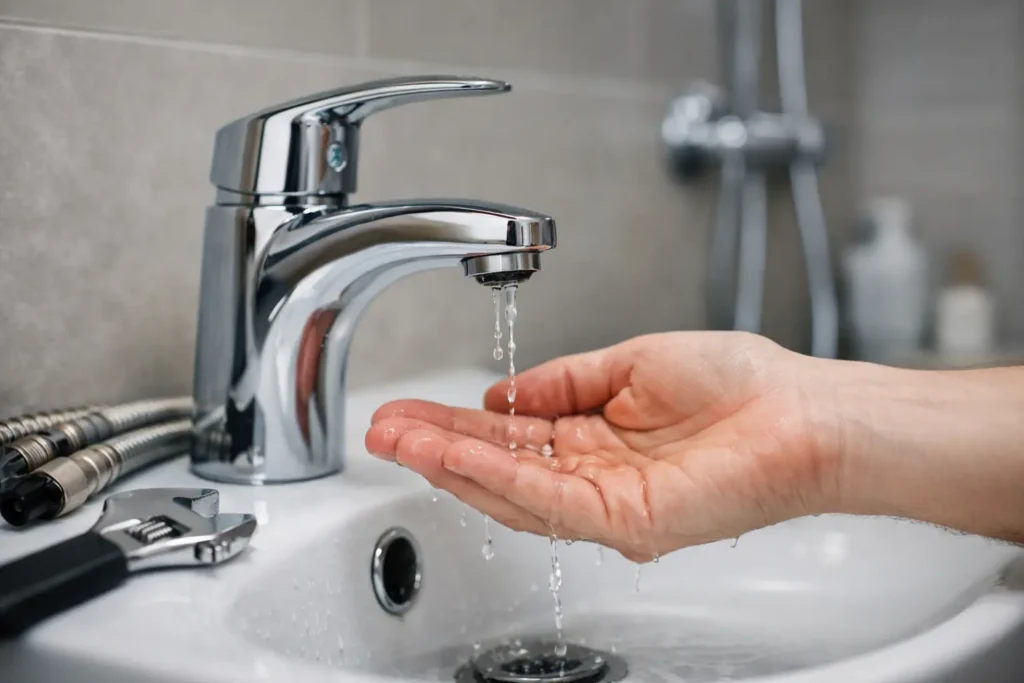
You notice it fastest in the shower. What should be a steady stream turns into a weak trickle, the washing machine takes longer to fill, and the kitchen faucet suddenly feels half-alive. If you are asking what causes low water pressure, the answer can be simple or it can point to a larger plumbing problem that should not wait.
Low water pressure is not one issue. It is a symptom. Sometimes the fix is as minor as a clogged aerator. Other times, it means a hidden leak, a failing pressure regulator, or old pipe buildup that has been reducing flow for years. The key is knowing the difference so you do not waste time guessing while the problem gets worse.
What causes low water pressure in a house?
In most homes, low water pressure comes from one of a few common sources: mineral buildup, partially closed shutoff valves, leaks, pipe corrosion, municipal supply issues, fixture problems, or a pressure regulator that is out of range or failing. The trick is narrowing down whether the problem affects one fixture, one room, or the whole house.
That matters because the location of the problem usually points to the cause. If one bathroom sink is weak but everything else works fine, the issue is likely local to that faucet. If every fixture in the house has dropped in pressure, you are probably dealing with a main plumbing issue or a supply-side problem.
Start with where the pressure is low
Before assuming the worst, check the pattern. Is the pressure low at only one faucet, only on hot water, only upstairs, or throughout the house? That first observation saves time.
If low pressure is limited to a single fixture, the problem is often buildup in the faucet aerator, a clogged showerhead, or a partially blocked supply line. These are common in kitchens and bathrooms, especially in homes with hard water. Sediment collects slowly, so the pressure drop can feel gradual rather than sudden.
If the problem shows up in multiple fixtures, especially both hot and cold, it usually points to a broader plumbing restriction, a valve issue, or a supply problem. If only hot water pressure is low, the issue may be tied to the water heater or sediment buildup in hot water lines.
Clogged aerators and showerheads
This is the easiest place to start and one of the most common answers to what causes low water pressure. Faucet aerators and showerheads collect mineral deposits, sand, and debris over time. Even a small amount of buildup can noticeably reduce flow.
This is especially common after plumbing repairs or water main work in the area. Sediment can break loose and get trapped at fixture outlets. The pressure may seem fine elsewhere, but one faucet or shower becomes weak almost overnight.
If the fixture used to work normally and now does not, this is often the first thing to check. It is a small issue, but it can mimic a larger problem.
Partially closed valves
Low pressure across the house can happen when a main shutoff valve or water meter valve is not fully open. This often happens after plumbing work, leak repairs, or an emergency shutoff. Someone turns the water back on, but not all the way.
There are two valves to think about. One is usually inside the home near where the main water line enters. The other may be at the meter. If either one is not fully open, the whole house can feel underpowered.
This is a straightforward fix when that is the cause. But if you force an older valve that is damaged or seized, you can create a new problem. If it does not move normally, stop there and have it checked.
Hidden plumbing leaks
Leaks do not always show up as water on the floor. A leak behind a wall, under a slab, or in a crawl space can reduce pressure while also driving up your water bill. In some cases, the drop in pressure is the first sign homeowners notice.
A hidden leak becomes more likely if the pressure loss is sudden, if you hear water running when fixtures are off, or if you see damp spots, staining, mold, or warm areas on the floor. Older supply lines, loose fittings, and shifting pipes can all lead to this kind of problem.
This is not the kind of issue to ignore for a week and hope it improves. Pressure problems tied to a leak tend to get worse, and the water damage cost can outpace the repair quickly.
Pipe corrosion and mineral buildup
In older homes, especially those with galvanized steel pipes, corrosion inside the pipe can narrow the opening and restrict water flow. The outside of the pipe may look fine while the inside is slowly closing up. That means lower pressure, uneven flow, and recurring fixture issues.
Hard water creates a similar problem through mineral scale. Calcium and other deposits collect inside pipes, valves, cartridges, and fixtures. It usually builds gradually, which is why many homeowners adjust to poor pressure over time without realizing how much flow they have lost.
This is where age matters. If the house is older and the pressure has been declining for months or years, the piping itself may be the issue. Spot repairs can help in some cases, but there is a point where repiping or replacing problem sections is the more dependable fix.
Problems with the pressure regulator
Some homes have a pressure regulator installed on the main water line to control incoming water pressure. When it fails, pressure can swing too low or too high. Both are bad for the plumbing system.
A failing regulator often affects the entire house. You may notice weak flow at every fixture, poor shower performance, or pressure that changes from one moment to the next. Sometimes homeowners describe it as the water feeling normal in the morning and weak later in the day, even without heavy usage.
This is not a guess-and-check repair. Pressure should be tested properly before a regulator is adjusted or replaced. Too low is inconvenient. Too high can damage fixtures, supply lines, and appliances.
Municipal supply or neighborhood issues
Sometimes the problem is not inside your house at all. City water main repairs, hydrant use, heavy neighborhood demand, or utility maintenance can temporarily reduce pressure. If the drop happened suddenly and neighbors are seeing the same thing, the source may be external.
This is more likely when the whole house is affected at once and there has been no recent plumbing work inside. It can also happen during peak demand hours in some areas, especially in older neighborhoods with aging infrastructure.
Still, do not assume the city is the cause without checking. Utility issues happen, but homeowners also lose time blaming the supply when the real issue is a valve, leak, or regulator on their side.
Water heater-related pressure problems
If low pressure only affects the hot water side, the water heater deserves attention. Sediment buildup in the tank can interfere with flow, especially in older units or homes with hard water. A partially closed valve near the heater can also reduce hot water pressure.
In other cases, the issue may be in the hot water lines themselves, not the heater. Mineral scale and corrosion tend to show up there too. If hot water pressure is weak at every fixture but cold water seems normal, that is a strong clue.
Because water heaters involve heat, pressure, and valves, this is not the best place for trial-and-error repairs unless the issue is very obvious.
What you can check before calling a plumber
A few quick checks can help you narrow it down. See whether the problem affects one fixture or all of them. Compare hot and cold water. Check whether the main water shutoff appears fully open. Remove and inspect a faucet aerator if only one sink is affected.
Also pay attention to timing. If pressure dropped right after plumbing work, sediment or a valve issue is likely. If it dropped with no warning and you hear water where you should not, think leak first.
What you do not want to do is keep forcing valves, tearing into walls, or replacing fixtures blindly. Low water pressure looks simple from the outside, but the cause is not always where the symptom appears.
When low water pressure needs professional repair
If pressure is low throughout the house, if it changed suddenly, if only the hot water side is weak, or if there are signs of a hidden leak, it is time for a proper inspection. The same goes for older homes with original piping, repeated clogs, or pressure that has been getting worse over time.
This is where a professional diagnosis saves money. A pressure test, fixture check, valve inspection, and evaluation of the supply lines can tell you whether the problem is minor or part of a bigger plumbing failure. Companies like Cobo Kitchen Master & Home Repair handle these issues with the speed homeowners need, especially when pressure loss is tied to a leak or active plumbing damage.
Low water pressure is frustrating, but it is also useful. It tells you something in the system is not working the way it should. Catch it early, fix the real cause, and your plumbing has a much better chance of staying reliable when you need it most.